
Key Takeaways
- Local tube bending services cut lead times from months to days. Geographic proximity enables JIT delivery, rapid prototyping, and faster quoting—compressing timelines that international suppliers cannot match.
- Hidden costs erode offshore savings. Global sourcing may offer 10–30% lower unit prices, but logistics expenses, tariffs, quality issues, and inventory holding frequently negate the difference.
- CNC tube bending reduces cycle times by up to 95%. Automation delivers consistent output, eliminates rework bottlenecks, and cuts production costs by 20–40% compared to traditional methods.
- In-house equipment requires 70–80% utilization to achieve positive ROI. For variable or seasonal demand, outsourcing to regional partners often delivers stronger returns than owned machinery.
- Supply chain resilience protects production schedules. Local fabrication partners buffer against geopolitical events, trade disputes, and shipping disruptions that shut down offshore supply without warning.
Global supply chains have exposed manufacturers to risks that local sourcing avoids. Shipping delays, tariffs, communication barriers, and geopolitical disruptions all threaten production schedules when tube fabrication happens overseas. Local tube bending services offer an alternative—shorter lead times, faster feedback loops, and supply chain resilience that distance makes impossible.
This guide examines how regional tube fabrication partners reduce logistical risk, how CNC tube bending technology enhances speed and consistency, and when local sourcing delivers better ROI than offshore alternatives. For engineering and procurement teams evaluating their tube manufacturing logistics, the strategic case for local partnerships is clear.
What Is Local Tube Bending and How Does It Affect Tube Manufacturing Logistics?
Local tube bending services reshape how manufacturers manage production timelines and costs. Understanding the logistics behind regional versus offshore tube fabrication helps engineering and procurement teams make smarter sourcing decisions.
What Are Local Tube Bending Services in a Modern Manufacturing Context?
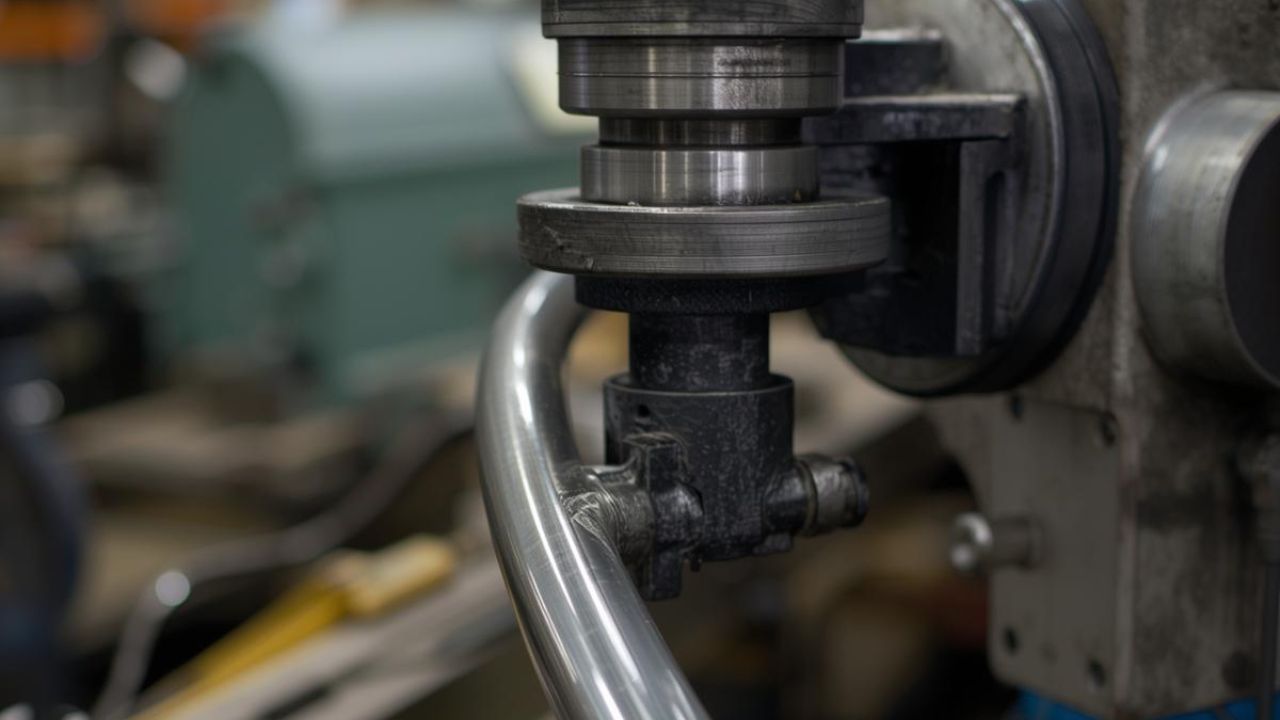
Local tube bending services are domestic or regional fabrication partners that produce bent tube components within close geographic proximity to the customer. This proximity enables Just-in-Time (JIT) manufacturing, giving teams greater agility for rapid prototyping and swift design iterations. High-mix, low-volume production environments benefit most, where flexibility matters more than pure unit cost.
How Does Regional Tube Fabrication Differ from Offshore Tube Fabrication?
Regional tube fabrication trades apparent cost savings for predictability and control. Global sourcing may present 10–30% lower initial unit prices, but hidden costs frequently negate these savings. Logistics expenses, quality control issues, excessive inventory, and supply chain complexity add up fast. Local sourcing also eliminates tariffs—such as the 15% tariff on certain Chinese imports—that inflate landed costs.
Why Does Tube Manufacturing Logistics Matter to Engineering and Procurement Teams?
Tube manufacturing logistics directly determine project timelines. Typical lead times for custom pipe bends range from 4–12 weeks depending on complexity and workload. Specialty materials add 8–16 weeks. Unique tooling adds 4–6 weeks. Non-destructive examination adds 1–3 weeks. Teams that understand these variables can plan realistic schedules and avoid costly production delays.
How Does Using Local Tube-Bending Providers Improve Supply-Chain Resilience and Reduce Lead Times?
Local tube bending providers offer two critical advantages: faster turnaround and insulation from global disruptions. Both factors strengthen supply chain resilience and keep production on schedule.
How Do Local Tube Bending Services Create Short Lead Times?
Local tube bending services compress timelines dramatically. Lead times drop from weeks or months with international suppliers to mere days with regional partners. Engaging fabricators early in the design phase allows optimization for manufacturability, often shortening schedules by several weeks. Clear, complete specifications accelerate the process further—reducing quoting time from days to hours.
Why Does Geographic Proximity Improve Supply Chain Resilience?
Geographic proximity buffers manufacturers against geopolitical events, trade disputes, and shipping bottlenecks. When global logistics fail, local partners keep production moving. This advantage drives major investment decisions. Welded Tube of Canada invested $50 million in a new U.S. facility in Lackawanna, NY, citing local vendor supply chain strength and advanced transportation networks as key factors.
How Does Reduced Transit Risk Stabilize Production Schedules?
Shorter supply lines mean fewer variables. Localized supply chains eliminate high logistics expenses and the complexity of managing global networks. Reduced transit distance lowers transportation costs and cuts exposure to international shipping disruptions. Production schedules become predictable when parts arrive in days rather than weeks.
Why Do Overseas Tube Fabrication Models Introduce Logistical Risk?
Offshore tube fabrication introduces variables that local sourcing avoids. Extended supply lines, communication gaps, and global instability all threaten production continuity.
How Do Long Shipping Routes Disrupt Tube Manufacturing Logistics?
Long shipping routes create inherent risk. Extended transit times and shipping bottlenecks delay deliveries unpredictably. Hidden costs compound the problem—excessive inventory holding ties up capital, and quality control issues often surface only after parts arrive. These disruptions ripple through production schedules.
Why Do Communication Delays Increase Production Uncertainty?
Communication breakdowns stall projects before fabrication even begins. Incomplete or inaccurate information leads to significant delays in quoting and production. Time zone differences stretch response times. Language barriers create misunderstandings. Every coordination challenge with offshore suppliers adds uncertainty to the timeline.
How Do Global Supply Shocks Expose Offshore Tube Fabrication Weaknesses?
Global supply shocks hit offshore models hardest. Geopolitical events and trade disputes create disruptions that distant suppliers cannot quickly overcome. This vulnerability drives reshoring decisions. Pendle Engineering in the UK invested over £1 million in tube processing equipment post-pandemic to support its reshoring strategy, capitalizing on customers seeking to localize their supply chains.
What Logistical Advantages Do Regional Tube Fabrication Partners Provide?
Regional tube fabrication partners deliver advantages that distance makes impossible: faster feedback, real-time collaboration, and flexible scheduling. These benefits translate directly to shorter lead times and predictable production.
How Do Faster Feedback Loops Improve Production Coordination?
Faster feedback loops eliminate bottlenecks. Alaark Tooling & Automation reduced custom bend die lead time from over a week to consistently meeting one-week deadlines through standardized designs. The same approach cut quoting time to under an hour. When questions get answered in hours instead of days, projects move forward without stalling.
Why Does Real-Time Collaboration Matter in Tube Fabrication Projects?
Real-time collaboration catches problems before they become costly. Design-for-manufacturability (DFM) principles—standardizing bend radii and material selections—accelerate production by aligning designs with available tooling. Digital communication tools and CAD file sharing streamline information exchange between customers and fabricators. Changes happen in real time, not after weeks of back-and-forth.
How Does Local Scheduling Improve Manufacturing Predictability?
Local scheduling adapts to changing needs without international coordination delays. Manufacturers gain flexibility to adjust timelines, shift priorities, and respond to urgent orders. The broader economic impact reinforces this trend: 55 Canadian-led projects in one U.S. region resulted in $508.9 million in investment and 1,487 jobs created or retained. Regional partnerships build manufacturing predictability at every level.
How Does CNC Tube Bending Enhance Speed, Consistency, and Flexibility?
CNC tube bending transforms tube fabrication from a slow, variable process into a fast, repeatable one. Speed, consistency, and flexibility work together to support short lead times at any production volume.
How Does CNC Tube Bending Support Short Lead Times at Scale?
CNC tube bending delivers dramatic time savings. Cycle times drop by up to 95% compared to traditional methods. Automation and minimized manual intervention reduce overall production costs by 20–40%. These efficiencies scale—whether producing ten parts or ten thousand, CNC technology maintains speed without sacrificing precision.
Why Does Process Consistency Reduce Downstream Delays?
Consistent output eliminates rework and inspection bottlenecks. CNC machines produce complex three-dimensional geometries in a single work step, eliminating numerous welding and inspection procedures. All-electric tube benders add operational efficiency, consuming up to 90% less energy than traditional hydraulic systems. Predictable quality means parts move through production without delays.
How Does CNC-Driven Tube Fabrication Enable Faster Design Iteration?
CNC technology accelerates the design-to-production cycle. Schwarze-Robitec demonstrates time savings of up to 95% with CNC versus traditional welding—particularly beneficial in high-pressure applications where precision matters most. Modern CNC automation reduces the need for extensive post-fabrication inspection, letting engineering teams iterate faster and bring designs to production sooner.
What Are the True Costs of In-House vs. Outsourced Tube Bending?
The decision between in-house tube bending and outsourcing depends on more than equipment price tags. Utilization rates, hidden costs, and production volume determine which model delivers better ROI.
What Is the Capital Investment Required for In-House CNC Tube Bending?
In-house CNC tube bending requires significant upfront capital. Industrial-grade CNC tube benders start upwards of $100,000 new, with high-capacity used models reaching nearly $400,000. Ongoing costs add up: annual maintenance and repairs run $1,000–$3,000, while tooling and dies cost $2,000–$10,000. These expenses exist whether the machine runs at full capacity or sits idle.
What Utilization Rate Is Needed for Positive ROI?
High utilization is essential for in-house equipment to pay off. A $50,000 CNC bender can be recouped in 12–24 months—but only with consistent, high-volume production. Companies must maintain machine utilization above 70–80% to achieve positive ROI. Below that threshold, the math favors outsourcing.
What Hidden Costs Does Outsourcing Help Avoid?
Outsourcing eliminates hidden costs that erode in-house margins. Scrap and rework account for 3–10% of total material costs. Unscheduled downtime can cost up to $15,000 per minute in high-volume environments. Green Alternative Systems successfully leveraged outsourcing to manage labor costs and avoid idle machinery expense during off-peak periods. For variable or seasonal demand, partnerships with local tube bending services often deliver stronger returns than owned equipment.
When Is Local Tube Bending the Right Strategic Choice for Manufacturers?
Not every project requires local sourcing. Understanding which scenarios favor regional tube fabrication helps manufacturers allocate resources strategically.
Which Projects Benefit Most from Local Tube Bending Services?
Local tube bending services deliver the most value where speed and flexibility matter. Projects requiring rapid prototyping, swift design iterations, and JIT delivery benefit from short lead times that only proximity provides. High-mix, low-volume production environments gain the most—agility outweighs marginal unit cost differences when product variety is high and volumes shift frequently.
When Does Supply Chain Resilience Outweigh Unit Cost Savings?
Supply chain resilience becomes the priority when external risks threaten continuity. Trade disputes, tariffs, or geopolitical instability can shut down offshore supply without warning. Resilience also wins when total cost of ownership—including hidden costs like inventory, quality issues, and delays—exceeds apparent unit-price savings from global sourcing. The cheapest part means nothing if it arrives late or fails inspection.
How Do Engineering-Led Teams Gain Long-Term Value from Regional Tube Fabrication?
Regional tube fabrication partnerships offer financial and operational advantages. Outsourcing converts capital expenditure (CapEx) into operating expenditure (OpEx), preserving cash and reducing financial risk. Teams gain immediate access to state-of-the-art CNC tube bending equipment and expertise without significant upfront investment. Capital stays focused on core business activities while fabrication partners handle the rest.
Partner with CRD MFG, Inc. for Reliable Local Tube Bending Services
CRD MFG, Inc. delivers the supply chain resilience and short lead times your projects demand. As a regional tube fabrication partner, we combine advanced CNC tube bending technology with the responsiveness that offshore suppliers cannot match.
Our team works directly with engineering and procurement professionals to optimize designs for manufacturability, compress timelines, and eliminate the hidden costs of global sourcing. Whether you need rapid prototyping, advanced tube laser cutting solutions, JIT delivery, or consistent high-volume production, we have the capacity and expertise to keep your operations on schedule. Contact CRD MFG, Inc. today to discuss your tube bending requirements.
