
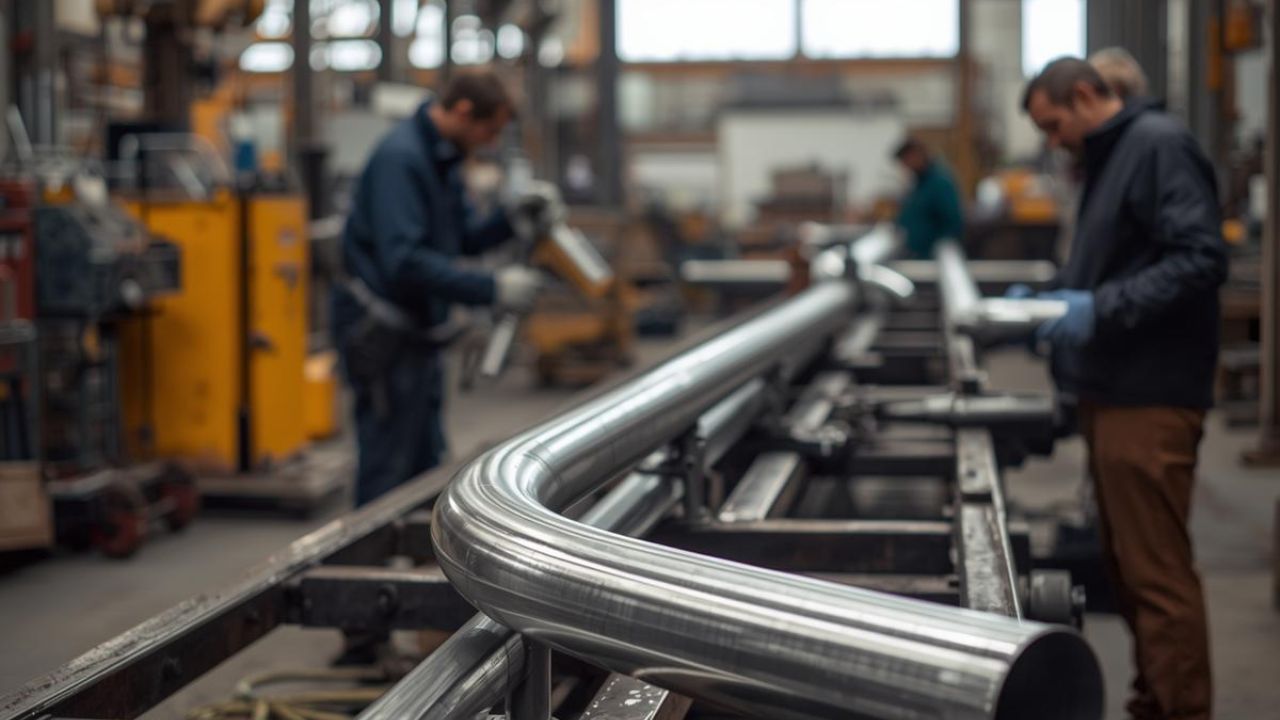
Tube and pipe assemblies form the backbone of fluid and gas distribution systems across industrial sectors. These engineered components connect individual tubes and pipes through welding, brazing, or mechanical fittings to create hydraulic, pneumatic, or structural systems. Effective tube assembly design balances material properties, manufacturing constraints, and performance requirements. Understanding the interplay between material selection, bending techniques, and quality standards enables engineers to optimize performance and manufacturability.
Key Takeaways
- Material quality and wall thickness directly impact structural integrity and maximum operating pressure in pressurized applications
- CNC automation and laser springback technology have increased manufacturing precision to ±0.25mm tolerances and improved first-pass success rates to 98%
- Custom fabrication accounts for 35-40% of the global market and requires significant engineering and tooling investments
- Optimizing the bend radius to 1.5-2 times the tube diameter minimizes stress concentration and reduces manufacturing defects
- Vertical integration strategies can reduce lead times by 80-90% while improving sustainability and quality control
What Are Tube and Pipe Assemblies and Their Core Functions?
Tube and pipe assemblies are fabricated systems that transport fluids, gases, or structural loads through engineered pathways. These assemblies integrate bends, fittings, and connectors to route materials efficiently within equipment. Core functions include fluid conveyance in hydraulic systems, structural support in frameworks, and thermal management in cooling systems. Each application demands specific material properties and fabrication techniques for long-term performance.
Assemblies must maintain pressure integrity, dimensional accuracy, and corrosion resistance throughout their service life. Manufacturing precision ensures proper fit within complex equipment layouts where space constraints dictate tight tolerances. The design phase establishes bend radii, wall thickness specifications, and joint configurations that determine performance capabilities and production feasibility.
What Materials Are Commonly Used in Tube and Pipe Assemblies?
Aircraft applications employ Inconel, titanium, and stainless steel alloys to withstand extreme temperatures and pressures. These materials resist corrosion and maintain material selection for tube bending steel aluminum and specialty alloys across demanding aerospace environments. Stainless steel dominates industrial applications due to its balance of strength, corrosion resistance, and formability. Carbon steel provides cost-effective solutions for non-corrosive environments.
ASTM and ISO material certification standards verify chemical composition and mechanical properties for quality assurance. Manufacturers reference these standards to ensure materials meet specified tensile strength, yield strength, and elongation requirements. Copper and aluminum alloys serve specialized applications requiring superior thermal conductivity or lightweight construction.
How Do Tube and Pipe Assemblies Differ by Industry Applications?
Automotive cooling systems utilize standard assemblies with established specifications for radiators and air conditioning components. HVAC ductwork employs larger-diameter tubes with simpler geometries. Aerospace hydraulic systems demand industries that rely on custom pipe bending applications across sectors with tight tolerances and advanced materials. Medical devices incorporate biocompatible polymers and stainless steel alloys meeting stringent regulatory requirements.
Automotive custom fabrication includes exhaust manifolds, fuel delivery systems, and structural roll cages. Each industry imposes unique design constraints based on operating pressures, temperature ranges, and environmental exposure. Aerospace assemblies valued at USD 1,678.9 million in 2025 represent the most demanding segment with 8.9% projected annual growth. Medical tubing markets worth USD 12.53 billion demonstrate 8.0% growth rates driven by healthcare technology advancement.
What Are the Key Components of Tube and Pipe Assemblies?
Primary components include straight tube sections, bent segments, and connector fittings. Bends redirect flow paths to navigate spatial constraints within equipment housings. Fittings provide transition points between different tube diameters, thread types, or connection methods. Support brackets and mounting hardware secure assemblies to prevent vibration-induced fatigue failures.
Sealing elements like O-rings and gaskets maintain pressure integrity at connection points. End caps and plugs terminate flow paths where required. Component selection and integration determine assembly functionality and manufacturing complexity.
Why Is Material Quality and Wall Thickness Critical in Assembly Design?
Material quality determines the mechanical properties that govern how tubes respond to bending forces and operational stresses. High-quality materials with consistent grain structure and chemical composition exhibit predictable behavior during fabrication and service. Wall thickness directly affects structural capacity and manufacturability, as thinner walls reduce weight but increase collapse risk.
Quality materials certified to ASTM or ISO standards ensure repeatability across production runs. Inferior materials may contain impurities or inconsistent microstructures that compromise structural integrity in tube fabrication. Proper material selection, balanced with appropriate wall thickness, creates assemblies that meet performance requirements without over-engineering.
How Does Wall Thickness Affect Structural Integrity and Bending?
Wall thickness experiences a reduction in bent areas as the outer surface stretches under tensile stress. The inner surface simultaneously compresses, creating an asymmetric stress distribution that thins the outer wall by 10-30%, depending on bend severity. Structural integrity deteriorates when wall thinning exceeds material ductility limits, leading to cracking or failure.
The Barlow formula establishes maximum operating pressure based on wall thickness, material strength, and tube diameter relationships. Engineers calculate the minimum wall thickness required to contain specified pressures with appropriate safety margins. Insufficient thickness compromises pressure containment and accelerates fatigue crack propagation. Materials with better ductility and elasticity accommodate bending-induced thickness variations while maintaining structural performance.
What Material Properties Influence Manufacturability and Performance?
Ductility determines a material’s ability to deform without fracturing during bending operations. Materials with higher elongation percentages accommodate tighter bend radii and complex geometries without cracking. Yield strength establishes the stress level at which permanent deformation begins, affecting springback compensation requirements.
Work hardening characteristics determine how material properties change during plastic deformation. Some alloys strengthen significantly during forming, making subsequent bends more difficult and requiring annealing between operations. Corrosion resistance affects long-term performance in environments exposed to moisture, chemicals, or elevated temperatures.
How Do Certifications Impact Material Selection?
Material certifications verify that chemical composition and mechanical properties meet industry standards. ASTM specifications define precise requirements for carbon content, alloying elements, and heat treatment procedures, ensuring consistent material behavior. ISO certifications provide internationally recognized standards facilitating global supply chain management. Aerospace applications require additional certifications demonstrating traceability from raw material production through final assembly.
Certified materials command higher prices but eliminate uncertainty about performance characteristics. Evaluating pipe bending companies’ essential certifications and standards verifies that suppliers maintain proper documentation and testing protocols. Medical device manufacturers mandate certifications proving biocompatibility and sterility maintenance. Material certification costs typically represent 2-5% of total material expenses but provide essential quality assurance.
How Do Market Trends and Consumer Preferences Influence Design Choices?
Market dynamics shape tube assembly design specifications as buyers prioritize different attributes based on application requirements and budget constraints. The global shift from pandemic-era supply chain resilience toward cost optimization has rebalanced purchasing priorities in 2025. Buyers now evaluate the total cost of ownership rather than focusing exclusively on initial unit prices. This evolution drives design decisions emphasizing long-term durability, maintenance reduction, and manufacturing efficiency.
Consumer preferences vary significantly across geographic regions and industry sectors, affecting specification requirements and acceptable price ranges. North American buyers emphasize quality certifications and rapid delivery, while Asia Pacific markets prioritize cost competitiveness and high-volume production capability.
What Are the Primary Buyer Priorities in Tube and Pipe Assemblies?
Material quality commands 30% decision-making weight as buyers recognize that inferior materials increase lifecycle costs. Cost and total cost of ownership considerations account for 26% of purchase decisions. Complex B2B purchases involve multiple stakeholders in 72% of transactions, requiring designs that satisfy diverse technical and financial criteria. Engineering and technical roles exert 30-35% influence over final decisions.
Finance and management personnel contribute 10-15% influence focused on budget constraints and return on investment. Experienced procurement professionals with 50+ years tenure represent 15-20% of decision-makers and value established supplier relationships. Mid-career specialists aged 35-50 comprise 50-60% of decision-makers and balance innovation adoption with risk management. The finding that 81% of buyers have preferred vendors at first contact highlights the critical importance of reputation and proven performance.
How Do Regional Demand and Industry Sectors Affect Assembly Specifications?
The global tube and pipe assembly market, valued at USD 701.8 billion in 2025, exhibits significant regional variation. North America commands 35% of the global market share with emphasis on precision tolerances and advanced material certifications. The United States accounts for 30% of North American demand, concentrated in aerospace, automotive, and oil-gas sectors. Asia Pacific growth rates exceeding 8% CAGR reflect rapid industrialization and expanding manufacturing capacity.
Europe maintains 22% market share with stringent environmental regulations driving specification requirements for recyclability and energy efficiency. Regional demand patterns affect acceptable lead times, with North American buyers expecting 2-4 week delivery versus 6-8 weeks typical in other markets.
Which Segments Drive Growth in Custom and Specialty Tube Fabrication?
Standard tube assemblies maintain a 45-50% market share, serving high-volume applications with established specifications. Custom tube fabrication captures 35-40% market share and represents the fastest-growing segment driven by specialized application requirements. Specialty tubing commands 10-15% market share in applications demanding exotic materials or extreme performance characteristics. Aircraft tube and duct assemblies valued at USD 1,678.9 million in 2025 will reach USD 3,938.3 million by 2035.
Medical tubing markets growing from USD 12.53 billion in 2025 to USD 18.41 billion by 2030 demonstrate 8.0% annual growth. Custom fabrication growth stems from increasing design complexity and performance demands that standard products cannot satisfy. Specialty tubing applications include semiconductor manufacturing equipment, nuclear power systems, and advanced medical devices.
What Manufacturing Methods Are Used for Tube and Pipe Assembly Production?
Manufacturing methods determine the precision, complexity, and cost structure of tube and pipe assembly production. The selection among available techniques depends on required bend radii, material characteristics, production volumes, and tolerance specifications. Each method employs distinct mechanical principles to form tubes without compromising wall thickness or introducing defects. How does CNC tube bending work? Understanding automated precision bending has revolutionized manufacturing capabilities through programmable control systems.
Modern facilities integrate multiple bending methods to optimize production efficiency across diverse product portfolios.
How Do Rotary Draw, Mandrel, and Compression Bending Differ?
Rotary draw bending utilizes a fixed die and a rotating bending die to form tubes around predefined radii with precise angular control. This method dominates precision applications, accounting for 40-45% of tube bending operations. Mandrel bending inserts a mandrel inside the tube to prevent collapse or wrinkling during bending on thin-walled components. The mandrel support enables tighter bend radii and maintains circular cross-sections, representing 25-30% of applications.
Compression bending clamps the tube and pushes it against a stationary die without internal mandrel support. This cost-effective method suits simpler bends with larger radii where internal collapse is not a concern. Rotary draw bending achieves the tightest tolerances at ±0.5 degrees angular accuracy and ±0.25mm positional precision.
When Is Roll Bending Preferred in Tube Fabrication?
Roll bending employs a series of rollers to gradually curve tubes through multiple passes that incrementally increase curvature. This method accounts for 5-10% of tube bending applications focused on large-radius bends in structural components. Large-radius bends exceeding 10 times the tube diameter are constrained to roll-bending methods due to tooling limitations. The gradual forming process minimizes localized stress concentration and wall thickness variation compared to single-pass bending operations.
Roll bending excels at producing consistent radius curves over extended lengths required for architectural and industrial framework applications. The method accommodates thicker-walled tubes that resist bending forces without specialized tooling investments.
How Are CNC Automation and Laser Springback Technologies Transforming Manufacturing?
CNC automation adoption increased from 45% in 2021 to 78% in 2025, fundamentally changing production capabilities and quality consistency. Modern CNC systems achieve tolerances of ±0.25mm through precise servo motor control and real-time position feedback. Production efficiency improvements of 40-60% versus manual methods stem from reduced setup times and elimination of operator skill variability. Automated systems program complex multi-plane bends are impractical using manual equipment.
Laser springback technology adoption accelerated from 12% in 2021 to 45% in 2025, addressing the challenge of material elastic recovery. The technology employs laser measurement to quantify springback after bending and automatically adjusts subsequent bend angles to compensate. First-pass success rates improved from 85% to 98%, dramatically reducing scrap costs and production delays. Quality control in tube fabrication standards and best practices now incorporates these technologies to ensure consistent dimensional accuracy.
How Are Cost and Total Cost of Ownership Evaluated Across Assembly Types?
Total cost of ownership encompasses initial unit price plus long-term durability, maintenance requirements, and supply chain reliability factors. Buyers increasingly recognize that focusing solely on purchase price overlooks significant lifecycle costs from premature failures and operational downtime. TCO analysis requires evaluating material selection, manufacturing quality, and expected service life under actual operating conditions.
Cost structures vary dramatically across standard, custom, and specialty assembly categories due to differing engineering requirements and production volumes. What are tube assembly services complete guide to integrated manufacturing explains how integrated suppliers reduce total costs through streamlined production workflows.
What Are the Price Ranges by Product Category and Quality Tier?
Standard assemblies in the budget tier range from USD 50 to 150 for basic configurations. Premium standard assemblies command USD 500-2,000 through advanced materials, tighter tolerances, and comprehensive quality documentation. Custom fabrication budget offerings span USD 200-800 for moderately complex designs with standard materials. Premium custom fabrication exceeds USD 3,000-15,000+ for complex geometries, exotic materials, and stringent tolerance requirements.
Specialty tubing budget options range from USD 500 to 2,000 for applications requiring modest performance enhancements. Premium specialty tubing commands USD 10,000-50,000+ for extreme operating conditions, rare materials, or unique certification requirements. Volume pricing provides 20-40% discounts for orders exceeding minimum quantity thresholds.
How Do Engineering and Tooling Costs Influence Custom Fabrication Pricing?
Over-specification of tolerances increases costs by 50-100% when demanding precision tighter than functionally necessary. High switching costs associated with custom tooling and quality certifications create significant barriers to changing suppliers. Custom fabrication requires upfront engineering investments representing 5% of total project costs for design validation and manufacturability analysis. Tooling costs account for 10% of project expenses and include die sets, mandrels, and fixtures specific to each assembly configuration.
Complex geometries requiring specialized tooling or multiple bending operations compound costs through extended setup times and reduced throughput. Can tube bending handle complex designs, capabilities, and limitations explained, detailing how design complexity affects manufacturing feasibility and cost structures. First-article inspection costs add 3-5% to initial production runs but are amortized across subsequent orders.
What Is the Impact of Inventory and Logistics on Overall Costs?
Inventory carrying costs for standard assemblies represent 15-20% of total costs through warehousing, insurance, and capital tied up in stock. Custom assemblies manufactured to order eliminate inventory costs but extend lead times and reduce scheduling flexibility. Logistics expenses vary by shipment size and urgency, ranging from 5% for full truckload deliveries to 15% for expedited freight.
Regional manufacturing reduces logistics costs by 20-30% compared to transcontinental shipping while improving delivery reliability and sustainability. Packaging requirements for precision assemblies add 2-4% to logistics costs. Vertical integration strategies minimize logistics complexity by consolidating manufacturing operations at a single facility.
What Engineering Guidelines Ensure Optimal Tube Assembly Performance?
Engineering design guidelines for tubes balance performance requirements against manufacturing constraints to create producible assemblies that meet specifications. The optimization process requires understanding material behavior, tooling limitations, and cost drivers that affect initial production and lifecycle performance. Best practices for assemblies emerge from decades of industry experience across aerospace, automotive, and industrial applications. Proper application of these guidelines reduces defect rates, minimizes production costs, and ensures assemblies perform reliably throughout their service life.
Design engineers must consider the complete manufacturing process from material procurement through final inspection when establishing specifications. Conservative tolerance specifications allow broader material and process selection while reducing costs without compromising functional performance.
How Should Bend Radius and Complexity Be Optimized?
Minimizing bend complexity reduces defect potential and custom tooling requirements that drive up production costs by 10-20%. Optimizing bend radius using 1.5-2 times tube diameter minimizes stress concentration and wall thickness reduction. Each bend introduces potential for defects, including wrinkling, flattening, and dimensional deviation that multiply with increasing geometry complexity. Simplifying bend sequences where functionally acceptable reduces setup requirements and improves first-pass yield rates.
Tight bend radii below 1.5 times the diameter require mandrel support and slower production rates to prevent collapse or surface defects. Large bend radii above 3 times the diameter of the waste material increase the assembly envelope without performance benefits. The optimal radius balances spatial constraints against manufacturing efficiency and material utilization.
What Are Practical Tolerance Specifications for Assemblies?
Specifying tolerances conservatively for the application function avoids over-engineering that increases costs without performance improvement by 50-100%. Modern CNC systems achieve ±0.25mm positional tolerances and ±0.5 degree angular accuracy as practical manufacturing limits. Tighter specifications require specialized measurement equipment and extended inspection time that compounds costs exponentially. Functional tolerance analysis determines the minimum precision required for assemblies to perform their intended purpose.
Angular tolerances affect how assemblies mate with connecting components and influence overall system alignment and stress distribution. Positional tolerances govern clearance requirements and determine whether assemblies fit within available space envelopes. Aerospace tube forming requirements meeting AS9100 standards demonstrate how critical applications balance stringent tolerances against manufacturing feasibility and cost constraints.
How Does Material Selection Balance Performance and Manufacturability?
Selecting materials with appropriate ductility and elasticity ensures tubes accommodate bending stresses without cracking or excessive springback. Materials with elongation values below 15% risk fracture during tight-radius bends regardless of process controls. High-strength alloys provide superior performance but require greater bending forces and specialized tooling that increases production costs. The optimal material balances mechanical properties against formability characteristics and long-term corrosion resistance.
Stainless steel remains preferred for 40-45% of applications due to excellent corrosion resistance and moderate forming characteristics. Aluminum alloys serve weight-sensitive applications but require careful heat treatment control. Carbon steel offers cost advantages in non-corrosive environments. Exotic alloys like Inconel and titanium serve extreme temperature applications but multiply material costs by 5-10 times versus conventional options.
How Do Industry Leaders Implement Vertical Integration for Assembly Advantage?
Industry leaders pursue vertical integration strategies to control quality, reduce lead times, and capture greater value throughout the manufacturing process. Bringing tube assembly production in-house eliminates coordination complexity with external vendors and ensures consistency across production runs. Vertical integration enables tighter process control and faster response to engineering changes during product development cycles.
The aerospace sector demonstrates particularly compelling vertical integration benefits where precision requirements and regulatory compliance demand exceptional process control. Investment in internal capabilities requires significant capital but generates returns through improved margins and competitive differentiation.
What Are the Benefits of In-House Tube and Pipe Assembly Production?
In-house production provides direct quality control throughout all manufacturing stages without dependency on external supplier capabilities. Companies eliminate communication delays and revision misunderstandings that occur when coordinating with third-party fabricators. Engineering teams collaborate directly with production personnel to optimize designs for manufacturability during development phases. Proprietary processes and specialized tooling developed internally create competitive barriers that external competitors cannot easily replicate.
Capital investment in tube bending equipment and skilled workforce development requires 3-5 year payback periods for moderate production volumes. Reduced inventory requirements result from just-in-time production capabilities that respond rapidly to changing demand patterns. Internal production enables continuous improvement initiatives that systematically reduce defect rates and cycle times.
How Does Vertical Integration Improve Sustainability and Lead Times?
Deutsche Aircraft reduced lead times by 80-90% through vertical integration that eliminated external supplier coordination and transportation delays. Bringing production in-house decreased environmental impact by eliminating long-distance transportation of components. Local production supports sustainability goals by reducing carbon emissions from freight while providing greater supply chain transparency.
Shorter lead times improve customer responsiveness and reduce inventory carrying costs. Rapid prototyping capabilities enable faster product development cycles and accelerated time-to-market. Transportation elimination reduces packaging requirements and associated waste generation.
What Lessons Can Be Drawn from the Aerospace Sector Case Study?
The Deutsche Aircraft vertical integration case study demonstrates quantifiable benefits achievable through strategic manufacturing consolidation. Kai Arndt, Co-CEO, stated that in-house tube assembly production cut lead times by 80-90% while improving sustainability. Aerospace applications demand exceptional quality standards that benefit from integrated production control and continuous process monitoring. The case illustrates how vertical integration in pipe-bending engineering creates competitive advantages through superior responsiveness and quality assurance.
Lessons include the importance of significant capital investment in advanced equipment and skilled workforce development programs. Companies must carefully evaluate which manufacturing operations provide strategic value versus those better sourced externally. Vertical integration succeeds when internal capabilities exceed external supplier performance on quality, delivery, and total cost metrics.
Designing Tube and Pipe Assemblies: Synthesizing Market, Material, and Manufacturing Insights
Effective tube assembly design synthesizes market intelligence, material science, and manufacturing capabilities into optimized engineering solutions. The global market valued at USD 701.8 billion in 2025 demonstrates robust 7.7% annual growth driven by aerospace, medical, and industrial sectors. Material quality and wall thickness specifications directly determine both structural integrity in tube fabrication and manufacturability constraints. CNC automation and laser springback technologies have transformed production capabilities, achieving ±0.25mm tolerances and 98% first-pass success rates.
Engineering best practices for assemblies emphasize conservative tolerance specifications, optimized bend radii, and material selection balanced against performance requirements. Total cost of ownership evaluation reveals that initial price represents only one component of lifecycle costs, including maintenance, replacement frequency, and supply chain reliability. Vertical integration strategies demonstrated by aerospace leaders reduce lead times by 80-90% while improving quality control and sustainability performance. These integrated insights enable engineers to design assemblies that meet technical requirements while remaining economically viable.
The tube and pipe assembly industry continues evolving through technological advancement and shifting market dynamics that reward precision, reliability, and responsive manufacturing capabilities. Companies that master the interplay between material properties, manufacturing processes, and market demands position themselves for sustained competitive advantage. As industries demand increasingly complex geometries and stringent performance specifications, manufacturers must invest in advanced equipment and engineering expertise. CRD MFG, Inc. applies these principles through integrated design-to-production capabilities that eliminate multi-vendor complexity while maintaining precision standards across aerospace, automotive, and industrial applications.
Ready to Build It Right the First Time?
Translating tight tolerances and complex geometries from design specs into finished assemblies is where most projects either succeed or stall. CRD MFG, Inc. handles CNC tube bending, laser tube cutting, robotic welding, and full assembly under one roof — with a dedicated project manager overseeing your job from first cut to final inspection. No vendor handoffs. No production blind spots. Whether you’re working through a prototype or scaling to full production runs, contact CRD MFG, Inc. to discuss your tube and pipe assembly requirements.
