
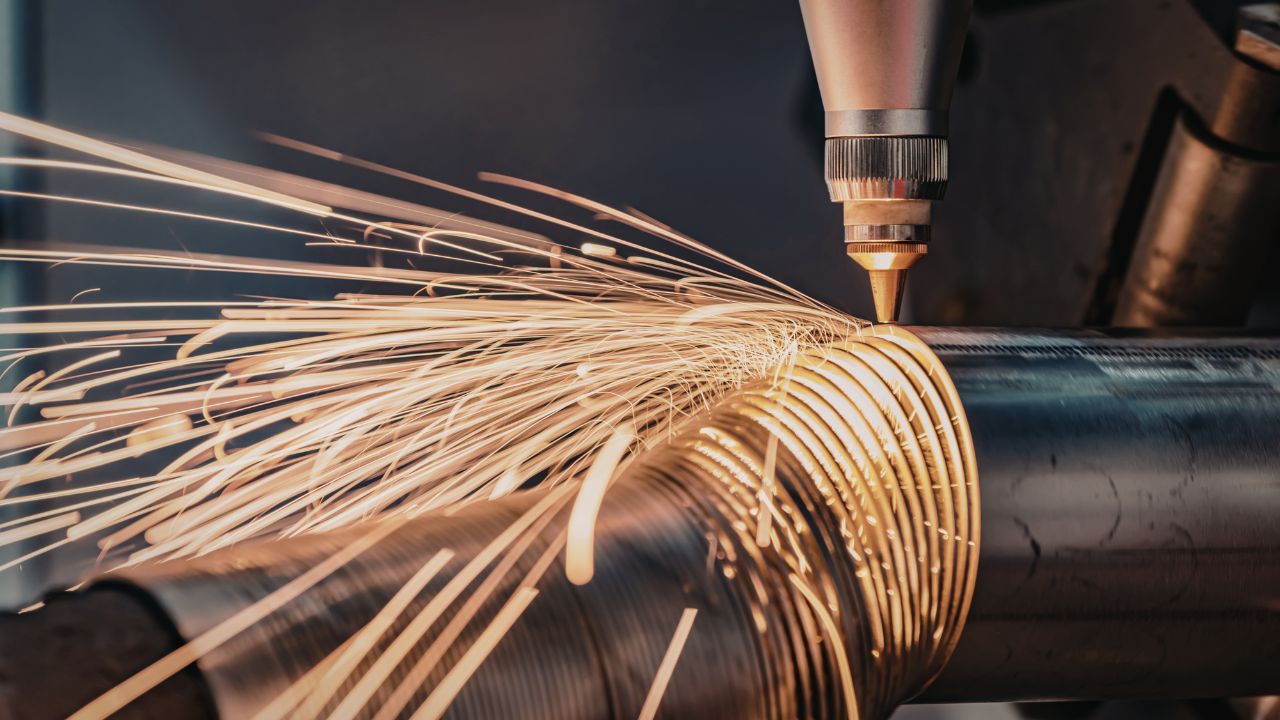
CNC laser cutting transforms rapid prototyping by combining computer-controlled precision with high-speed material processing capabilities. This technology enables manufacturers to produce complex parts quickly while maintaining tight tolerances across prototype iterations.
The global CNC laser cutting market reached USD 7.1 billion in 2023 and is projected to grow to USD 18.43 billion by 2034. Asia-Pacific dominates with 39.7% market share, driven by advanced manufacturing capabilities in the automotive and aerospace sectors.
Key Takeaways
- Fiber lasers hold 45% market share with 20-30% electrical efficiency for metal cutting applications
- CNC laser cutting delivers precision through computer-controlled systems with automated nesting software
- AI-powered features, including collision prevention and temperature monitoring, enhance cutting accuracy
- Market valued at USD 7.1 billion in 2023, with projected growth to USD 18.43 billion by 2034
- Manufacturers prioritize cutting speed (25%) and accuracy (22%) when selecting laser equipment
What Is CNC Laser Cutting and How Does It Support Rapid Prototyping?
CNC laser cutting uses computer-controlled lasers to cut materials with high precision by focusing concentrated light energy. This process eliminates tooling costs and enables same-day modifications to prototype manufacturing designs through simple software updates.
The technology supports rapid iteration cycles essential for product development across aerospace, automotive, and industrial applications. Manufacturers achieve consistent repeatability across production runs while maintaining flexibility to adjust designs between batches.
What Are the Key Types of CNC Laser Cutting Technologies?
Fiber lasers deliver power via optical fiber with up to 12kW+ output for industrial metal cutting. These systems use solid-state technology that converts electrical energy into focused laser beams through rare-earth-doped glass fibers.
CO2 lasers operate at a 10.6 micrometer wavelength using gas-based generation suitable for both metals and non-metals. Solid-state lasers use Nd:YAG technology with high peak power for thick material penetration, while excimer lasers employ UV technology with minimal thermal effects for precision applications.
How Do CNC Laser Cutting Machines Improve Prototyping Speed?
Multi-axis laser cutters enable flexible manufacturing by processing complex three-dimensional geometries without repositioning workpieces. Automated nesting software maximizes material utilization by arranging parts efficiently, reducing waste by up to 15% compared to manual layouts.
Material handling automation streamlines production by loading, positioning, and removing parts without operator intervention. These integrated systems reduce cycle times and enable production speed benefits through continuous operation across multiple shifts.
What Accuracy Advantages Does CNC Laser Cutting Offer?
CNC laser cutting maintains tolerances within ±0.1mm through closed-loop feedback systems that continuously adjust beam positioning. AI-powered collision prevention systems monitor tool paths in real-time, preventing equipment damage while maintaining dimensional accuracy.
Real-time temperature monitoring using infrared sensors ensures consistent cut quality by adjusting laser power based on material heat dissipation. This precision enables manufacturers to achieve the quality standards required for aerospace components and medical device prototypes.
Which Laser Technologies Dominate the CNC Market and Why?
Fiber lasers hold 45% market share due to superior electrical efficiency and minimal maintenance requirements for metal fabrication. CO2 lasers maintain 35% share through proven reliability and versatility across diverse material types.
Solid-state lasers represent 15% of installations where high peak power justifies greater maintenance demands. Excimer lasers occupy a specialized 5% niche for applications requiring UV wavelength precision without thermal distortion.
What Are the Pros and Cons of Fiber Laser Cutting?
Fiber lasers achieve 20-30% electrical efficiency compared to CO2 lasers at 5-15%, reducing operational energy costs significantly. Budget fiber systems range $150k-$250k while premium units exceed $600k, contrasting with CO2 budget options at $50k-$100k.
High initial cost for fiber laser systems limits adoption among smaller manufacturers despite lower maintenance expenses. Material limitations restrict fiber lasers to metals only, excluding non-metallic materials like wood, acrylic, and certain ceramics.
How Do CO2 and Solid State Lasers Compare in Prototyping Applications?
CO2 lasers excel at non-metals, including plastics, wood, and fabrics, versus fiber lasers limited to metals. These systems require larger footprint installations due to gas resonator chamber dimensions and beam delivery mirror arrangements.
Solid-state lasers demand high maintenance intervals for lamp replacement and optical system alignment adjustments. CO2 systems maintain market presence through established service networks and operator familiarity despite lower efficiency ratings.
When Is Excimer Laser Cutting Used for Prototyping?
Excimer lasers use UV laser technology with minimal thermal effects, ideal for medical device microfabrication and semiconductor processing. Premium systems cost $500k-$2M+, limiting adoption to specialized applications requiring cold ablation capabilities.
These systems hold 5% market share concentrated in industries where material thermal damage eliminates alternative cutting methods. Applications include polymer stent patterning and flexible circuit board fabrication, requiring submicron precision.
How Do Consumer Priorities Influence CNC Laser Cutting Equipment Selection?
Manufacturers rank cutting speed and efficiency as the top factor at 25% priority when selecting laser equipment. Operational throughput directly impacts production capacity and determines return on investment timelines for capital equipment purchases.
Accuracy and precision requirements represent 22% of decision weighting, followed by operating costs at 20% priority. Production quality considerations influence 18% of equipment choices, with manufacturers balancing initial investment against long-term operational expenses.
Why Are Speed and Efficiency Top Factors for Manufacturers?
Speed determines daily production volume capabilities and affects the ability to meet tight prototype delivery schedules. Efficiency encompasses both material utilization through automated nesting and energy consumption during operation cycles.
Faster cutting speeds reduce per-part costs by increasing throughput without proportional labor increases. Rapid prototyping solutions depend on equipment that minimizes setup time while maintaining consistent processing speeds across varied materials.
How Is Precision Valued in Rapid Prototyping Decisions?
Precision requirements ensure prototype parts fit properly in assemblies without costly rework or design modifications. Tight tolerance capabilities reduce iteration cycles by producing accurate parts on first attempts.
Manufacturers working with aerospace and medical applications prioritize precision laser cutting services that maintain repeatability across production runs. Dimensional accuracy directly impacts product performance and reduces quality control inspection time during prototype validation.
What Role Do Operating Costs and Quality Play?
Operating costs encompass energy consumption, consumable replacements, and routine maintenance intervals affecting total ownership expenses. Lower operating costs justify higher initial equipment investments through reduced per-part production expenses over time.
Quality consistency eliminates scrap rates and rework expenses that erode profit margins on prototype contracts. Manufacturers balance upfront capital against long-term operational savings when evaluating laser tube cutting equipment options.
What Recent Innovations Integrate AI into CNC Laser Cutting?
Artificial intelligence integration enhances laser cutting through predictive maintenance algorithms that reduce unplanned downtime. Machine learning systems analyze cutting parameters and automatically optimize settings based on material properties and part geometry.
The 2025 Deloitte manufacturing survey indicates 80% of executives plan significant smart manufacturing investments. These technological advances position AI as a fundamental component of next-generation laser cutting systems.
How Does AI Enhance Automation and Accuracy?
AI systems monitor real-time sensor data to adjust laser power, speed, and focal position dynamically during cutting. Adaptive control compensates for material thickness variations and thermal expansion without operator intervention.
Neural networks trained on thousands of cutting scenarios predict optimal parameters for new materials and geometries. This automation reduces setup time while improving first-part accuracy across diverse production requirements.
What Are Examples of AI-Powered Features in Laser Systems?
Collision prevention systems use computer vision to detect potential crashes before they occur during multi-axis operations. Automated path planning algorithms generate efficient tool paths that minimize cutting time while avoiding obstacles.
Temperature monitoring via infrared sensors provides feedback for power adjustment, preventing thermal distortion in heat-sensitive materials. Pattern recognition software identifies defects in real-time, triggering automatic adjustments or part rejection before quality issues propagate.
How Will AI Adoption Shape the Future of Rapid Prototyping?
Physical AI robots with enhanced autonomy will transform material handling and part inspection within laser cutting cells. 22% of manufacturers plan to use physical AI in two years, more than doubling current adoption rates.
Autonomous systems will enable lights-out manufacturing for rapid prototyping operations requiring continuous production cycles. Integration of AI-driven quality inspection reduces human oversight requirements while maintaining stringent accuracy standards for speed and accuracy in fabrication.
How Does CNC Laser Cutting Compare to Other Manufacturing Processes for Prototyping?
CNC laser cutting eliminates tooling costs and setup time compared to stamping or traditional machining methods. The process handles complex geometries, including tight-radius curves and intricate internal cutouts, impossible with mechanical cutting tools.
Laser systems maintain consistent edge quality across production runs without tool wear degradation affecting part dimensions. This reliability makes laser cutting preferred for low-volume prototype runs where tooling investment cannot be justified.
What Are the Advantages Over Traditional Cutting Methods?
Laser cutting produces minimal burr formation, reducing secondary deburring operations required with mechanical sawing or shearing. Non-contact processing eliminates workpiece distortion from clamping forces necessary in milling operations.
Heat-affected zones remain narrow compared to plasma or oxy-fuel cutting, preserving material properties near cut edges. Programming flexibility enables rapid design changes through software updates without physical tool modifications.
How Does Laser Cutting Complement CNC Tubing Bending and Brazing?
The CNC tube bending market, valued at USD 425.0 million in 2024, serves applications requiring automated precision bending capabilities. The braze alloys market reached USD 3.81 billion, supporting joints in HVAC systems requiring leak-proof assemblies.
Exhaust systems combine laser-cut flanges with CNC tube bending for complex three-dimensional routing geometries. Brazed tube assemblies benefit from laser-cut preparation, ensuring proper fit-up before thermal joining processes.
When Is Laser Cutting the Preferred Method in Industrial Applications?
Aerospace applications demand CNC laser cutting for precision components requiring tight tolerances and minimal heat distortion. Aircraft structural brackets and fluid system fittings utilize laser cutting for consistent quality across production batches.
The automotive industry relies on laser cutting for body panels requiring complex edge preparation and mounting holes. Precision manufacturing in these sectors prioritizes repeatability and dimensional accuracy that laser systems consistently deliver.
What Are the Main Challenges and Considerations With CNC Laser Cutting?
Initial equipment investment represents a substantial capital commitment ranging from $50k budget systems to $2M+ premium installations. Operating costs include electrical consumption, assist gas supply, and periodic optical component replacement, affecting total ownership expenses.
Material limitations restrict certain laser types to specific substrate categories, requiring equipment selection aligned with production requirements. Operator skill levels influence cutting quality and productivity, with training investments necessary for optimal system utilization.
How Do Initial Costs Affect Adoption in Rapid Prototyping?
Capital constraints in rural manufacturing areas limit access to advanced laser cutting technology for smaller fabricators. Rural areas represent only 2.9% of tech-adopting firms, concentrating laser cutting capabilities in urban industrial centers.
Budget limitations force manufacturers to balance equipment capabilities against immediate financial resources during expansion planning. Leasing options and used equipment markets provide entry points for operations unable to justify new premium system purchases.
What Are Material Limitations and Maintenance Requirements?
Fiber lasers cut only metallic materials, excluding non-conductive substrates like wood, ceramics, and many plastics. CO2 systems handle broader material ranges but require periodic mirror alignment and gas mixture maintenance.
Consumable components, including nozzles, lenses, and protective windows, require replacement at intervals depending on operational hours. Preventive maintenance schedules must be followed to prevent performance degradation and unexpected production interruptions.
How Does Operator Skill Impact Performance and Outcomes?
33% of manufacturers cite talent shortage as the primary barrier to adopting advanced manufacturing technologies. Experienced operators optimize cutting parameters, troubleshoot quality issues, and maintain consistent productivity levels.
Limited access to specialized technical support in rural areas compounds training challenges for distributed manufacturing operations. Lead time reduction depends on skilled personnel who can program complex parts and adjust processes efficiently.
How Does CNC Laser Cutting Shape the Future Landscape of Rapid Prototyping?
The CNC laser cutting market projects growth from USD 7.1 billion in 2023 to USD 18.43 billion by 2034. This expansion reflects increasing demand for rapid prototyping solutions across automotive, aerospace, and general industrial manufacturing sectors.
CAGR ranges from 7.4% to 12.0%, depending on regional adoption rates and technology advancement pace. Asia-Pacific dominates with 39.7% market share, driven by concentrated manufacturing infrastructure and government technology investment initiatives.
Technological convergence between laser cutting hardware and AI-powered software systems will define next-generation prototyping capabilities. Manufacturers implementing integrated smart manufacturing platforms gain competitive advantages through reduced development cycles and improved product quality. Companies like CRD MFG exemplify this evolution by combining advanced laser cutting with comprehensive fabrication services under single-source coordination.
The manufacturing sector stands at an inflection point where traditional equipment capabilities merge with intelligent automation. Investment in CNC laser cutting technology positions organizations to capitalize on the growing demand for faster product development and customized manufacturing solutions.
Get Your Prototype Cut Right the First Time
Complex geometries. Tight tolerances. Deadlines that don’t move. At CRD MFG, Inc., our laser cutting process is built for exactly that — tube, pipe, and sheet metal parts cut to spec with CNC precision, from prototype to full production run.
No departmental runaround. You get one project manager, direct communication, and parts that come back accurately. Whether you’re working in stainless steel, aluminum, or carbon steel for applications like sanitary food-grade tube fabrication services or industrial exhaust systems, our CNC laser cutter handles the geometry so you don’t have to redesign around your manufacturer. Request a Quote from CRD MFG, Inc., and let’s get your project moving.
