
Key Takeaways
- The CNC tube bending market reached USD 425.0 million in 2024 and is projected to grow at 5.3% CAGR through 2032
- Hydraulic benders dominate with 55% market share, while fully electric machines gain traction among younger operators
- Machine capability and flexibility rank as the highest priority (28%) for manufacturers making equipment decisions
- AI integration and physical AI systems are set to transform tube bending processes, with 22% of manufacturers planning adoption within two years
- Urban manufacturers account for 97.1% of technology adoption, while rural facilities face capital and support constraints
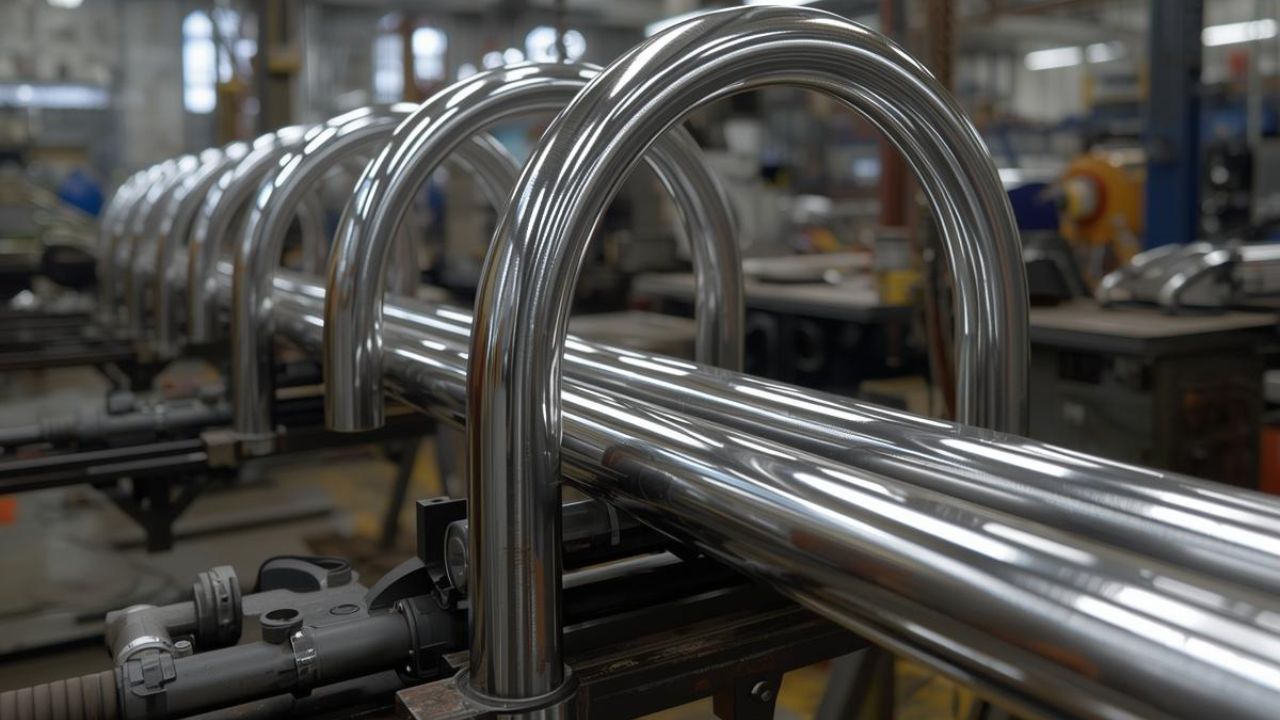
CNC tubing bender technology represents a critical manufacturing capability for producing complex tubular components across automotive, aerospace, and industrial sectors. Modern systems combine computer numerical control with hydraulic, electric, or hybrid drive mechanisms to achieve repeatable precision in bending operations. The technology has evolved from manual processes to fully automated high-precision CNC tube bending services capable of multi-axis bending, multi-radius tooling, and real-time process monitoring.
Recent innovations in tube bending focus on precision manufacturing tools that enhance production quality while reducing cycle times and operator dependency. Manufacturers now benefit from intelligent systems integrating artificial intelligence, IoT connectivity, and advanced servo controls to optimize bend quality and minimize scrap rates. These advancements address growing demands for higher throughput, tighter tolerances, and improved material utilization.
What Is CNC Tubing Bender Technology and Why Is It Important?
CNC tubing bender technology automates the process of forming tubes and pipes into precise geometric configurations using computer-controlled positioning systems. This automation enables manufacturers to produce consistent, repeatable bends meeting exact specifications for critical applications in automotive exhaust systems, aerospace fluid lines, and structural frameworks. The technology eliminates manual measurement and adjustment, reducing human error while increasing production speed.
The importance of advanced CNC equipment extends beyond basic automation to encompass quality control and design flexibility. Modern CNC benders store digital bend programs recalled instantly, allowing rapid changeovers between part configurations without retooling delays. This capability supports lean manufacturing and enables economical production of both high-volume runs and low-quantity custom fabrications.
What Are the Main Types of CNC Tubing Benders?
Hydraulic tube benders use fluid power systems for high force generation, ideal for heavy-duty applications requiring substantial bending force on thick-walled materials. These machines employ hydraulic cylinders to drive the bending head and control pressure die movements. Hydraulic systems dominate the market with 55% share and offer proven reliability for demanding production environments.
Fully electric tube benders use servo-motor-driven axes with no hydraulics, providing precise positioning control through digital feedback systems. These machines hold 30% market share and appeal to manufacturers prioritizing energy efficiency and precision over raw power capacity. Hybrid tube benders combine hydraulic power with electric control, offering a balance between force capacity and positioning accuracy while representing 15% of the market.
Which Industries Drive Demand for CNC Tubing Benders?
The automotive sector accounts for 41% of the tube-bending market demand, driven by requirements for exhaust systems, fuel lines, and structural components. Manufacturers serving this industry require high-volume production capabilities with consistent quality to meet stringent OEM specifications.
Aerospace fluid conveyance lines use CNC tube bending for hydraulic systems, fuel distribution, and pneumatic control assemblies. These applications demand exceptional precision and material traceability, often requiring vacuum brazing or welding as secondary operations. Automotive exhaust systems require tube bending technology capable of forming complex manifold geometries with tight radius bends while maintaining wall thickness uniformity.
How Has the Market for CNC Tubing Benders Evolved Recently?
The CNC tube bending market, valued at USD 425.0 million in 2024, reflects steady growth driven by automotive electrification and aerospace expansion. Market analysts attribute this valuation to increased adoption of electric vehicles requiring specialized battery cooling systems and structural components.
The tube bending market, projected to reach USD 605.0 million by 2032, demonstrates confidence in sustained industrial demand across multiple sectors. This projection assumes continued investment in manufacturing automation and the replacement of aging hydraulic equipment with newer electric systems. The tube bending market CAGR of 5.3% indicates moderate but stable expansion aligned with broader manufacturing trends.
How Do Different CNC Tubing Bender Systems Compare?
System comparison begins with understanding fundamental differences in power delivery and control mechanisms across hydraulic, electric, and hybrid platforms. Each technology offers distinct advantages depending on production requirements, material specifications, and operational priorities. Manufacturers must evaluate these systems based on application-specific criteria, including bend complexity, material thickness, production volume, and available floor space.
Performance characteristics vary significantly between system types, affecting precision, cycle time, energy consumption, and maintenance requirements. Choosing equipment involves balancing initial capital investment against long-term operating costs and production flexibility needs.
What Are the Advantages and Limitations of Hydraulic Benders?
Hydraulic machines hold 55% market share due to proven performance in high-force applications and lower initial capital requirements. These systems excel at bending thick-walled materials and large-diameter tubes where substantial force generation is necessary. Experienced operators (50+) prefer hydraulic systems based on familiarity with maintenance procedures and operational characteristics developed over decades.
Hydraulic tube benders priced from $80k-$500k+ offer accessible entry points for smaller fabricators while providing upgrade paths to premium capabilities. However, hydraulic systems have higher power consumption compared to electric alternatives and generate more noise during operation. Potential fluid leaks represent an ongoing maintenance concern requiring regular inspection and periodic seal replacement.
How Do Fully Electric Benders Improve Precision and Efficiency?
Fully electric machines hold 30% market share, gaining traction as manufacturers prioritize energy efficiency and environmental sustainability. These systems eliminate hydraulic fluid requirements, reducing maintenance complexity and eliminating leak-related downtime. Electric systems have higher precision than hydraulic systems, achieving positioning accuracy within 0.1 degrees through closed-loop servo control.
Fully electric tube benders priced from $120k-$600k+ reflect advanced servo motor technology and sophisticated control systems. These machines are quieter than hydraulic systems, typically operating at 65-70 decibels compared to 80-85 decibels for hydraulic equipment. Younger workforce (ages 18-35) prefers fully electric machines due to intuitive touchscreen interfaces, reduced physical demands, and digital connectivity features supporting remote monitoring.
What Role Do Hybrid Systems Play in Production Flexibility?
Hybrid machines hold 15% market share, serving manufacturers requiring both high force capacity and precision positioning in a single platform. These systems combine hydraulic power units for primary bending force with electric servo motors controlling auxiliary axes and pressure die positioning. Hybrid designs enable manufacturers to process a wider range of materials and geometries without maintaining separate equipment.
Hybrid tube benders priced from $400k-$800k+ represent significant capital investments justified by versatility across diverse production requirements. Complex maintenance requirements stem from dual power delivery mechanisms requiring both hydraulic and electrical expertise.
What Are the Primary Factors Influencing CNC Tubing Bender Purchases?
Equipment purchase decisions involve evaluating multiple technical and financial criteria that directly impact production capabilities and long-term profitability. Manufacturers must assess how different systems align with current production requirements while considering future capacity needs. The decision framework extends beyond simple cost comparison to encompass total cost of ownership, operator skill requirements, and integration with existing processes.
How Does Machine Capability Affect User Decisions?
Machine capability and flexibility ranks 28% in tube bending priorities, reflecting manufacturers’ need for equipment accommodating diverse part geometries. This priority emphasizes the value of multi-stack tooling, left-right bending capability, and programmable auxiliary axis control.
Capability assessment includes evaluating maximum tube diameter, minimum bend radius, available bending axes, and tooling compatibility. Manufacturers increasingly demand modern features, including automatic springback compensation, collision detection, and 3D simulation software for offline programming.
Why Is Tooling Compatibility Critical for Manufacturers?
Tooling compatibility constrains equipment upgrade decisions because existing tooling inventories often represent investments exceeding the cost of new machines. Manufacturers maintaining extensive tooling libraries for legacy equipment face substantial replacement costs when transitioning to incompatible systems.
Suppliers offering backward-compatible tooling systems or adapter solutions gain a competitive advantage. Manufacturers evaluate whether new equipment can utilize existing mandrels, wiper dies, clamp dies, and pressure dies without modification.
How Do Cost and Production Efficiency Shape Buying Choices?
Production efficiency ranks 24% in tube bending priorities, reflecting manufacturers’ focus on cycle time reduction and throughput optimization. Faster cycle times directly impact manufacturing capacity, enabling facilities to meet production schedules without adding shifts or equipment. Electric benders typically offer 15-20% faster cycle times through quicker axis acceleration.
Cost considerations rank 22% in tube bending priorities, encompassing both initial capital investment and ongoing operational expenses. Manufacturers analyze the total cost of ownership, including energy consumption, maintenance requirements, and expected equipment lifespan. Electric systems consume 30-40% less energy than hydraulic equipment, generating substantial operating cost savings over 10-15 year lifecycles despite higher purchase prices.
What Are the Trends in Demographic and Regional Adoption of CNC Tubing Benders?
Demographic patterns reveal generational differences in technology preferences and operational approaches across the manufacturing workforce. Regional factors, including infrastructure access, technical support availability, and capital resources, create distinct adoption patterns between urban and rural manufacturing facilities.
How Does Urban vs. Rural Location Impact Technology Adoption?
Urban areas account for 97.1% of tech-adopting firms, benefiting from concentrated technical expertise, service infrastructure, and skilled workforce availability. Metropolitan manufacturing clusters provide access to specialized training programs, rapid parts delivery, and on-site technical support.
Rural areas represent 2.9% of tech-adopting firms, facing challenges including limited access to specialized technical support and extended response times. Rural manufacturers face capital constraints for advanced systems due to smaller production volumes and limited access to favorable financing terms.
What Preferences Differentiate Younger and Experienced Operators?
Younger workforce (ages 18-35) prefers fully electric machines featuring touchscreen interfaces, wireless connectivity, and data analytics capabilities. This demographic values digital documentation, remote monitoring, and automated quality reporting that simplifies record-keeping.
Experienced operators (50+) prefer hydraulic systems based on decades of familiarity with mechanical controls and troubleshooting procedures. This group values direct mechanical feedback, simple maintenance procedures, and proven reliability over digital features.
How Is Digital Interface and IoT Connectivity Influencing Adoption?
Digital interfaces incorporating touchscreen controls, 3D visualization, and intuitive menu structures reduce operator training time and improve programming efficiency. Modern systems enable offline programming where engineers develop bend sequences on desktop computers before uploading to production equipment.
IoT connectivity enables real-time production monitoring, predictive maintenance scheduling, and integration with enterprise resource planning systems. Connected machines transmit cycle times, bend quality metrics, and tool wear indicators to centralized dashboards. Remote diagnostics allow equipment vendors to troubleshoot issues without dispatching technicians.
What Recent Innovations Are Enhancing CNC Tubing Bender Technology?
Innovations in tube bending focus on integrating artificial intelligence, expanding tooling flexibility, and reducing environmental impact through electrification. These advancements address persistent manufacturing challenges, including operator skill shortages, quality consistency, and energy consumption.
Recent developments demonstrate clear trajectories toward autonomous operation, sustainable manufacturing practices, and expanded process capabilities. Manufacturers adopting these innovations report measurable improvements in first-piece quality, cycle time reduction, and overall equipment effectiveness.
How Is AI Integration Transforming Tube Bending Processes?
Agentic AI provides autonomous decision-making capabilities in manufacturing, enabling systems to adjust bending parameters dynamically based on real-time sensor feedback. These systems monitor material springback, wall thickness variation, and temperature changes to optimize bend quality without operator intervention. AI algorithms learn from production history to predict optimal settings for new materials and geometries.
22% of manufacturers plan to use physical AI within two years, representing robots with enhanced autonomy for material handling and part inspection tasks. Physical AI systems coordinate with CNC benders to automate loading, unloading, and quality verification, reducing labor requirements while improving process consistency.
What Advances in Multi-Stack and Multi-Radius Tooling Are Emerging?
Multi-stack tooling systems enable simultaneous bending of multiple tubes or sequential bends at different radii without manual tool changes. These innovations reduce setup time and expand production flexibility. Advanced quick-change tooling mechanisms allow operators to reconfigure machines in minutes rather than hours.
Multi-radius capability within single tool stacks eliminates the need to interrupt production for radius changes during complex bending sequences. This capability particularly benefits aerospace applications where complex fluid routing requires multiple radius transitions within single tube assemblies.
How Are Sustainability Goals Influencing Electrification?
Corporate sustainability commitments drive the accelerating adoption of fully electric tube-bending systems that eliminate hydraulic fluid consumption and reduce energy use. Manufacturers pursuing carbon neutrality targets prioritize electric equipment offering 30-40% lower energy consumption.
Electric systems support sustainable manufacturing through reduced noise pollution, improved workplace air quality, and elimination of fluid leak risks. Equipment suppliers increasingly market environmental advantages alongside traditional performance metrics.
How Can Manufacturers Leverage Innovations to Improve Production Quality?
Production quality improvements result from combining advanced equipment capabilities with optimized process parameters and skilled operator oversight. Modern CNC tubing bender technology enables manufacturers to achieve tighter tolerances, improved surface finish, and enhanced dimensional consistency.
Manufacturers achieving measurable quality improvements invest in comprehensive operator training, regular equipment calibration, and systematic process documentation. Successful implementations balance equipment capabilities with organizational processes supporting continuous improvement.
What Operational Efficiencies Do Modern CNC Benders Enable?
Modern CNC benders reduce cycle times through faster axis acceleration, optimized tooling designs, and automated material handling integration. These efficiency gains translate directly to increased production capacity without corresponding increases in labor or floor space. Advanced systems complete complex multi-bend sequences 20-30% faster through improved motion profiles.
Automated setup procedures minimize changeover time between different part programs, supporting economical production of smaller batch sizes. Digital tool libraries store dimensional data for all tooling components, enabling automatic offset calculations.
How Does Automation Reduce Reliance on Skilled Operators?
Skilled operator shortage affecting 33% of manufacturers drives investment in automation technologies, reducing dependency on specialized expertise. Automated systems incorporate expert knowledge into software algorithms that guide less experienced operators through complex setups.
Automation compensates for skill gaps through built-in quality controls, automatic error detection, and guided troubleshooting procedures. Systems monitor critical parameters, including bend angle, rotation position, and material feed rates, alerting operators to deviations before defects occur.
What Impact Do Flexible Technologies Have on Supply Chain Resilience?
Flexible manufacturing technologies enable rapid response to supply chain disruptions by supporting in-house production of components previously sourced externally. Manufacturers equipped with versatile CNC benders can quickly adapt to changing customer requirements or material substitutions without extensive retooling.
Multi-capability equipment reduces dependence on specialized vendors for custom bent components, shortening lead times and improving delivery reliability. Facilities can maintain smaller inventories while responding quickly to urgent customer needs.
How Does CNC Tubing Bender Technology Fit Into the Broader Manufacturing Ecosystem?
CNC tubing bender technology integrates with complementary manufacturing processes, including laser cutting, welding, and brazing, to create complete fabrication workflows. Modern facilities coordinate these technologies through shared CAD/CAM systems and unified production scheduling platforms.
Understanding process synergies helps manufacturers optimize equipment investments and workflow organization. Facilities designing integrated production cells reduce material handling, improve quality consistency, and minimize work-in-process inventory.
What Synergies Exist Between CNC Benders, Laser Cutting, and Brazing?
Laser tube cutting systems work upstream from CNC benders, preparing accurately cut and profiled tube blanks ready for bending operations. Precision laser cutting ensures correct tube length and eliminates secondary deburring operations. Coordinated programming between laser cutting and bending systems maintains dimensional relationships critical for assembly.
Brazing operations follow tube bending to create leak-proof assemblies for fluid conveyance applications in automotive and aerospace systems. Accurate tube bending ensures proper joint alignment and consistent gap dimensions critical for successful brazing outcomes.
How Does Integrated AI Benefit Multiple Manufacturing Processes?
80% of manufacturing executives plan to invest 20%+ of budgets in smart manufacturing initiatives incorporating AI across multiple production processes. Integrated AI systems optimize scheduling across laser cutting, tube bending, and welding operations to maximize throughput.
AI-powered collision prevention systems in laser cutting protect expensive optics and workpieces from programming errors. Similar systems in tube bending prevent tooling crashes by simulating complete bend sequences before execution. Adaptive control for varying material properties adjusts process parameters automatically when hardness, thickness, or composition differs from nominal specifications.
What Are the Workforce Implications Across These Technologies?
33% of manufacturers cite talent shortage as the primary barrier to implementing advanced manufacturing technologies across multiple process areas. This challenge extends beyond single equipment types to encompass entire production workflows.
Cross-training operators on multiple technologies improves workforce flexibility and reduces vulnerability to individual skill gaps or employee turnover. Modern equipment interfaces using consistent design principles across laser cutting, tube bending, and welding platforms accelerate multi-process competency development.
Innovations in CNC Tubing Bender Technology Driving Enhanced Production Quality
CNC tubing bender technology continues advancing through electrification, AI integration, and enhanced tooling flexibility that address critical manufacturing challenges. These innovations in tube bending enable manufacturers to achieve tighter tolerances, faster cycle times, and improved material utilization across diverse applications. Market growth projecting 5.3% CAGR through 2032 reflects sustained demand from automotive, aerospace, and industrial sectors requiring precision tube fabrication capabilities.
Production quality improvements result from combining advanced equipment with optimized processes and skilled operator oversight. Manufacturers successfully implementing these technologies report measurable benefits, including reduced scrap rates, improved first-piece quality, and enhanced production flexibility. CRD MFG, Inc. leverages these technological advances to deliver precision tube-bending services supporting complex fabrication requirements.
Strategic investment in modern CNC tubing bender technology positions manufacturers for sustained competitive advantage in evolving markets demanding higher quality and greater flexibility. The convergence of mechanical precision, digital control, and artificial intelligence creates unprecedented opportunities for manufacturers committed to excellence in tube fabrication.
Put the Latest CNC Tube Bending Technology to Work on Your Project
CRD MFG, Inc. runs advanced CNC tube bending equipment and applies the same innovations covered in this article — multi-axis control, tight-tolerance bending, and integrated production workflows — to real fabrication requirements across aerospace, automotive, and industrial applications.
Every project gets a dedicated project manager who handles communication, scheduling, and quality from the first bend to final delivery. No department hand-offs. No status gaps. If your project involves complex geometries, tight tolerances, or high-volume production — from sanitary food-grade tube fabrication services to structural and exhaust assemblies — contact CRD MFG, Inc. to discuss what precision tube bending can do for your program.
