
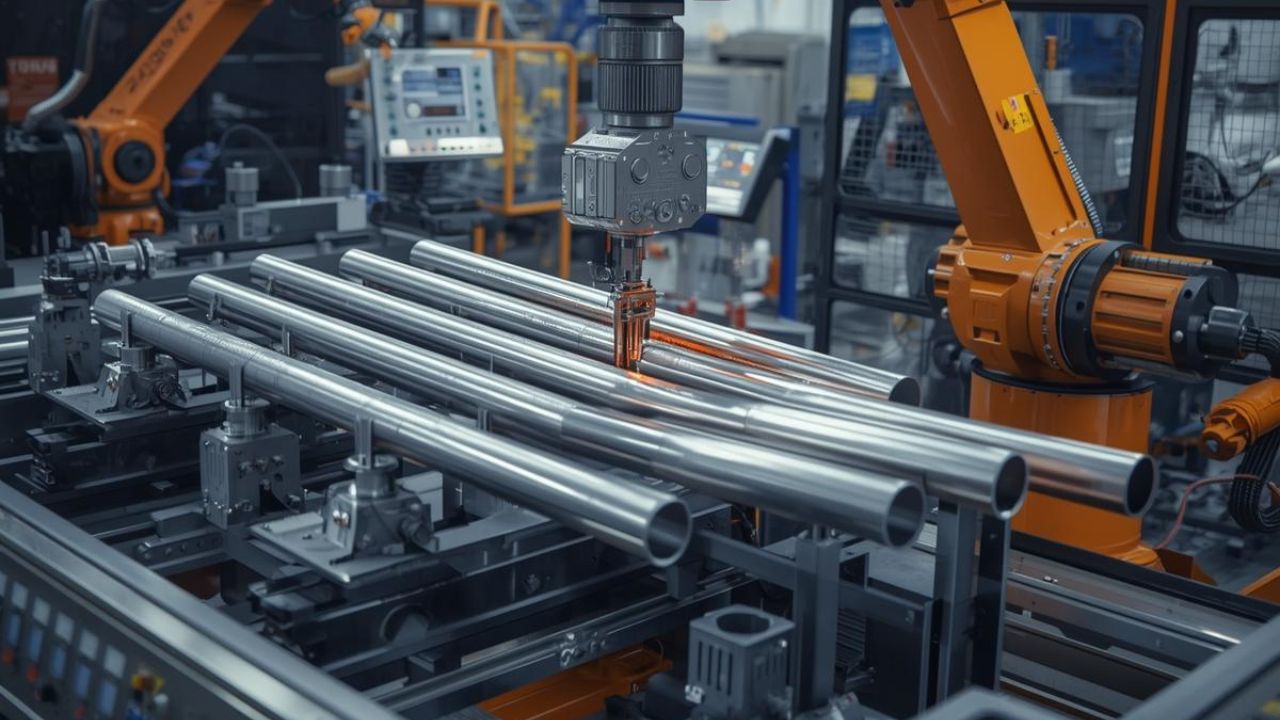
Tube assembly manufacturers have evolved from simple bending operations into comprehensive fabrication partners offering integrated manufacturing solutions. Modern facilities provide testing, finishing, logistics, and customization capabilities that streamline production and reduce total supply chain costs.
These value-added tube assembly services transform basic components into ready-to-install assemblies meeting stringent industry specifications. The shift toward full-service manufacturing reflects growing demand for single-source suppliers who manage complex projects from design through delivery.
The integration of additional manufacturing offerings represents a strategic response to competitive pressures and changing customer expectations across automotive, aerospace, and industrial sectors. Companies seek partners providing complete solutions rather than isolated fabrication tasks, reducing coordination overhead, minimizing quality risks, and accelerating time-to-market.
Key Takeaways
- Value-added services include non-destructive testing, protective coatings, and just-in-time delivery systems
- Lead time reliability ranks as the top priority at 30.5% among B2B manufacturing customers
- Custom tube assemblies range from $1,000 to $10,000+, depending on complexity and material specifications
- CNC bending equipment costs $20,000 to over $100,000 compared to manual systems at $1,000 to $3,000
- The global tube assembly market is valued at $28.2 billion in 2026, with a projected 5.2% annual growth
What Are Tube Assembly Manufacturers and Their Core Fabrication Services?
Tube assembly manufacturers specialize in transforming raw tubing into precision-bent components and complete assemblies for industrial applications. They combine bending, cutting, welding, and finishing processes to produce hydraulic lines, exhaust systems, and structural frameworks. Core fabrication services establish the foundation upon which manufacturers build comprehensive solution portfolios, including material selection, dimensional accuracy control, and basic quality verification.
Modern facilities maintain diverse equipment inventories to handle varying production volumes and complexity levels across different material types. Understanding how modern CNC pipe-bending machines transform raw materials helps buyers evaluate manufacturers’ capabilities.
What Processes Define Basic Tube Fabrication?
Basic tube fabrication centers on controlled deformation of tubular materials to create specific geometries without compromising structural integrity. Mandrel bending uses specialized tooling inserted inside tubes to maintain cross-sectional shape and prevent collapse during tight-radius bends. This process proves essential for applications requiring precise internal diameter maintenance, such as fluid transfer systems in aerospace assemblies. The mandrel supports the tube wall during deformation, eliminating wrinkles and distortion.
Rotary draw bending employs fixed-radius dies that pull tubes around forming tools while maintaining dimensional accuracy across multiple bend angles. Wiper dies prevent rippling on the inside radius where material compression occurs. These techniques enable the production of complex geometries with centerline radii as tight as twice the tube diameter.
How Do Manual, CNC, and Mandrel Bending Differ in Tube Assembly?
Manual bending equipment costs between $1,000 and $3,000, making it accessible for low-volume shops and prototype development. CNC bending systems range from $20,000 to over $100,000, reflecting advanced automation and precision control capabilities. Manual bending prices at $50 to $150 per bend compared to CNC bending at $150 to $500+ per bend.
Manual bending delivers flexibility for small production runs but suffers from slower cycle times and reduced repeatability compared to automated systems. CNC systems require substantial initial investment but provide faster throughput, tighter tolerances, and better consistency across production batches. Mandrel-bending equipment typically costs $2,000 to $8,000+ with service pricing reaching $200 to $600+ per bend due to specialized tooling requirements.
What Constitutes a Custom Tube Assembly?
Custom tube assemblies combine multiple fabrication processes into integrated components ready for installation in finished products. Complete assemblies typically cost between $1,000 and $10,000+, depending on material specifications, bend complexity, and finishing requirements.
These solutions eliminate downstream assembly steps and reduce handling costs for manufacturers seeking turnkey components. Custom work accommodates unique dimensional requirements, specialized material grades, and application-specific performance criteria that standard products cannot satisfy.
Small production runs carry higher per-unit costs due to dedicated tooling, setup time, and quality verification. Manufacturers offset these premiums by reducing customer inventory requirements and simplifying supply chain management through single-source responsibility.
Why Are Value-Added Services Crucial in Tube Assembly Manufacturing?
Value-added services extend basic fabrication capabilities into comprehensive solutions addressing quality assurance, product longevity, and delivery optimization. These enhanced services for manufacturers reduce the total cost of ownership by consolidating multiple processes under single-vendor management. Integration of testing, finishing, and logistics functions eliminates coordination overhead and accelerates project completion. Manufacturers providing complete service portfolios position themselves as strategic partners rather than interchangeable commodity suppliers. The competitive advantage becomes particularly significant in industries with stringent compliance requirements and zero-tolerance quality standards.
What Testing Methods Enhance Quality and Compliance?
Non-destructive testing methods verify structural integrity and material properties without damaging finished assemblies. Ultrasonic testing detects internal flaws, wall thickness variations, and weld defects that visual inspection cannot identify. This technology proves essential for pressure vessels and safety-critical applications where hidden defects could cause catastrophic failures. Hydrostatic pressure testing validates leak integrity and burst strength by subjecting assemblies to controlled pressure cycles simulating operating conditions.
Positive Material Identification uses spectroscopic analysis to confirm alloy composition and prevent material substitution errors. X-ray and magnetic particle inspection reveal surface cracks and subsurface discontinuities in welds and heat-affected zones. These testing protocols ensure regulatory compliance and provide documentation supporting traceability requirements in aerospace and medical device manufacturing.
How Do Specialized Finishing Services Improve Durability and Performance?
Protective coating systems extend component service life by creating barriers against corrosion, chemical attack, and environmental degradation. Fusion-bonded epoxy and abrasion-resistant overlays provide superior protection compared to conventional paint systems in marine and industrial applications. These engineered finishes maintain adhesion and flexibility through thermal cycling while resisting impact damage and UV degradation. Galvanizing deposits zinc coatings that protect underlying steel from oxidation in outdoor installations.
Pickling and oiling processes remove mill scale and surface contaminants while applying temporary corrosion protection for storage and shipment. Custom paint systems accommodate aesthetic requirements and brand color specifications while delivering functional performance. Surface preparation and coating application must follow documented procedures to achieve the specified adhesion strength and coverage uniformity.
In What Ways Do Logistics and Supply Chain Services Add Value?
Integrated logistics services eliminate customer warehouse requirements and reduce inventory carrying costs through vendor-managed programs and just-in-time delivery schedules. Packaging and labeling systems protect finished assemblies during transit while providing tracking information and handling instructions, preventing damage. Kitting and sequencing arrange components in installation order, reducing assembly line downtime and eliminating sorting operations at customer facilities.
Inventory management programs maintain consignment stock at customer locations while retaining vendor ownership until consumption occurs. Value-added services in this category typically cost $100 to $1,000+ per service. The return on investment comes through reduced expediting costs, lower scrap rates, and improved production scheduling flexibility.
How Do Consumer Priorities Influence the Selection of Tube Assembly Services?
Customer priorities shape service offerings as manufacturers align capabilities with documented decision factors driving purchasing behavior. Lead time reliability emerged as the dominant selection criterion, weighted at 30.5% in industry research.
This reflects cascading costs of delayed deliveries across complex supply chains where single-component shortages halt entire production lines. Procurement teams increasingly evaluate suppliers based on Manufacturing Critical-path Time rather than quoted lead times, excluding setup and queue delays.
The emphasis on delivery performance over price-only competition signals market maturation and growing recognition that total cost includes downstream impacts. Research indicates that 33% of customers switch suppliers specifically due to unacceptable lead time performance.
Why Is Lead Time Reliability a Top Priority for B2B Customers?
Schedule adherence directly impacts customer production continuity, working capital requirements, and the ability to fulfill commitments to downstream customers. A single delayed component can idle entire assembly lines, triggering labor inefficiencies and missed revenue targets exceeding component cost. The weighted importance of lead time reliability at 30.5% surpasses quality and cost considerations. This prioritization reflects hidden costs of schedule variability, including expedited shipping, production rescheduling, and customer relationship damage.
Manufacturing organizations operating just-in-time systems maintain minimal buffer inventory, amplifying vulnerability to supplier delivery failures. The 33% customer switching rate for lead time issues demonstrates zero tolerance for chronic delivery problems.
How Do Industry Segments Like Automotive and Aerospace Shape Service Needs?
Automotive applications represent 32% of tube assembly service demand, driven by exhaust systems, fuel lines, and chassis components. Aerospace accounts for 28% of market requirements, reflecting complex hydraulic systems, pneumatic networks, and structural assemblies, where industries that rely on custom pipe bending demand extreme precision. These sectors impose distinct requirements for material certifications, traceability documentation, and quality system compliance. Automotive suppliers prioritize high-volume production efficiency and rapid tooling changes for platform variations.
Aerospace manufacturers require extensive testing protocols, material pedigree tracking, and process qualification documentation that automotive applications typically do not mandate. Asia-Pacific markets show 88% preference scores for advanced bending capabilities, reflecting rapid industrialization. North America leads with 92% preference ratings due to mature aerospace and automotive sectors.
What Regional and Demographic Factors Affect Service Preferences?
Urban manufacturing facilities demonstrate 85% criticality ratings for lead time performance compared to 58% in rural locations, where longer delivery windows remain acceptable. This geographic variation reflects differences in supply chain density, transportation infrastructure, and proximity to customer production facilities. Metropolitan areas support dense supplier networks, enabling rapid response and frequent deliveries impossible in remote locations.
Demographic factors, including facility size, production volume, and customer industry concentration, create distinct service requirement profiles across market segments. Large manufacturers demand comprehensive value-added services, including testing and logistics integration that smaller job shops cannot economically justify.
What Factors Affect Lead Times in Tube Assembly Manufacturing?
Multiple variables influence the calendar time required to transform customer orders into delivered components. Material availability, tooling requirements, and production scheduling directly impact Manufacturing Critical-path Time from order receipt through first unit delivery. Production complexity increases when specifications require custom tooling, specialized materials, or extensive quality verification protocols.
Capacity utilization rates determine whether orders enter immediate production or queue behind the existing workload. Strategic customers often negotiate capacity reservations, guaranteeing access during peak demand periods.
Which Variables Increase or Decrease Lead Times?
Complex geometries requiring multiple setups and custom fixturing extend production cycles compared to standard bend configurations using existing tooling inventories. Custom mandrels and wiper dies add 2-4 weeks to initial order fulfillment, while subsequent runs benefit from available tooling. Harder alloys, including titanium and high-strength stainless steels, require slower bending operations and increase tool wear, requiring more frequent adjustments. Extensive testing and certification requirements common in aerospace applications add inspection time and documentation preparation.
Standard bend radii using in-stock tooling eliminate custom die procurement delays. Softer materials, including aluminum and carbon steel, process faster with less tool wear. Planned orders with advance notice allow production scheduling optimization, while rush requests interrupt existing workflows and trigger premium pricing.
How Does the Quick Response Manufacturing (QRM) Methodology Improve Lead Times?
Manufacturing Critical-path Time measures total calendar days from order receipt until first unit delivery, capturing queue time and setup delays invisible in machine-hour calculations. Quick Response Manufacturing focuses on reducing MCT rather than maximizing equipment utilization, recognizing that speed delivers quality improvements and cost reductions. Understanding how CNC tube bending works reveals opportunities to reduce setup time through automation.
RenewAire achieved 140% revenue growth over five years by applying QRM principles that prioritized lead time reduction across its energy recovery ventilation manufacturing operations. The Wisconsin manufacturer improved on-time delivery performance while expanding capacity without proportional equipment investment.
What Decision Frameworks Help Select the Right Service Type?
Structured evaluation frameworks match order characteristics, including volume, complexity, and precision requirements to appropriate fabrication methods. Manual bending suits small volumes with limited budgets where simple geometries do not justify CNC programming. CNC systems prove optimal for high-precision applications, complex multi-radius configurations, and large production runs that amortize equipment investment. The decision to utilize CNC tubing bender capabilities depends on tolerance requirements and production volume.
Mandrel bending becomes necessary when tight radius requirements or critical applications demand internal profile integrity that conventional methods cannot achieve. Custom assembly services provide turnkey solutions when complete, ready-to-install components reduce customer handling, and eliminate coordination across multiple vendors.
What Are the Cost Considerations Across Different Tube Assembly Services?
Equipment investment requirements, tooling expenses, and labor content create distinct cost structures across manual, CNC, and specialized bending methods. Understanding these economic factors helps buyers evaluate quoted prices and enables manufacturers to justify premium service charges. Initial equipment costs represent capital barriers influencing market entry and capacity expansion decisions. Operational expenses, including tooling wear, setup time, and quality verification, add variable costs that scale with production volume. Service pricing reflects the combination of fixed capital recovery, variable operational costs, and competitive market positioning.
How Do Equipment and Tooling Influence Pricing?
Manual bending equipment costs between $1,000 and $3,000, enabling small shops to enter the market with minimal capital investment. CNC systems require $20,000 to over $100,000, creating entry barriers that concentrate advanced capabilities among established manufacturers. This cost differential directly influences service pricing, with manual operations charging $50 to $150 per bend while CNC facilities command $150 to $500+ per bend. The price premium reflects not just equipment amortization but also superior precision, repeatability, and reduced scrap rates.
Mandrel-bending equipment and specialized tooling add $2,000 to $8,000+ to facility investment, with service pricing reaching $200 to $600+ per bend. Tooling wear represents a significant ongoing expense as mandrels and wiper dies require periodic replacement to maintain dimensional accuracy.
What Are the Price Ranges for Traditional vs. Advanced Bending Techniques?
Manual bending services price between $50 and $150 per bend, reflecting lower equipment costs but higher labor content per unit. CNC bending commands $150 to $500+ per bend, justified by superior precision, faster cycle times, and better repeatability. The price differential narrows as production volumes increase because CNC setup costs get amortized across more units. Choosing a CNC pipe bender requires evaluating the total cost across expected production volumes.
Mandrel bending services range from $200 to $600+ per bend, incorporating tooling wear and specialized expertise required for tight-radius applications. Complete custom tube assemblies span $1,000 to $10,000+, depending on material specifications, bend complexity, welding requirements, and finishing operations.
How Do Value-Added Services Impact Overall Costs?
Additional manufacturing offerings, including testing, finishing, and logistics, typically add $100 to $1,000+ per service, depending on scope and complexity. Non-destructive testing costs reflect equipment investment, operator certification requirements, and documentation preparation supporting traceability and compliance.
Protective coating applications range from simple pickling operations to sophisticated multi-layer systems requiring controlled application environments. These finishing services extend component service life and reduce maintenance costs that can exceed initial purchase price premiums.
Integrated logistics, including kitting, sequencing, and vendor-managed inventory programs, reduce customer warehousing costs and improve production line efficiency. The economic justification for the ROI of precision tube fabrication extends beyond component cost to include total supply chain impact.
How Have Leading Manufacturers Leveraged Value-Added Services for Competitive Advantage?
Industry leaders demonstrate how comprehensive service portfolios and technological investment create defensible market positions beyond price competition. These case studies illustrate practical applications of advanced fabrication methods and customization in tube fabrication across demanding industry segments. Success patterns reveal common strategies, including technology adoption, process specialization, and customer relationship development.
Real-world examples show how fabricators transform operational challenges into competitive advantages through targeted capability investments.
What Innovations Improved Aerospace Tube Fabrication Precision?
Globe Engineering addressed titanium tube bending challenges by investing in CNC electric bending equipment that delivered consistent results across production runs. The aerospace fabricator achieved repeatable production of complex geometries while reducing material waste and improving dimensional accuracy.
Electric benders eliminated hydraulic system variability and provided precise force control essential for hard-to-bend titanium alloys. This technology upgrade proved crucial for meeting zero-tolerance requirements in aircraft hydraulic and pneumatic systems, making it a cornerstone of certified aerospace tube fabrication services. The implementation demonstrates how targeted equipment investment solves specific technical challenges that manual methods cannot address economically.
How Did Automation Elevate Automotive Tube Assembly Efficiency?
TecPro Metall GmbH implemented automated tube processing systems to handle high-volume automotive production demands requiring consistent quality across thousands of units. The manufacturer achieved efficient, accurate, and cost-effective fabrication that improved consistency while reducing labor requirements.
Automation enabled rapid changeovers between different part numbers and vehicle platforms without sacrificing dimensional accuracy. The system integration demonstrates how assembly integration solutions scale to meet automotive industry volume and variety requirements. TecPro’s investment highlights the importance of matching manufacturing capabilities to specific industry demands, including just-in-time delivery and zero-defect quality expectations.
What Success Strategies Have Specialized Fabricators Adopted?
Marson International achieved leadership in large and small-diameter tube fabrication by serving diverse customer requirements across multiple industries since 2002. The specialized fabricator built a competitive advantage through comprehensive capabilities, consistent quality delivery, and application expertise that commodity suppliers cannot match.
RenewAire applied Quick Response Manufacturing methodology to energy recovery ventilation production, achieving 140% revenue growth over five years through lead time reduction. The Wisconsin manufacturer improved on-time delivery and customer satisfaction while expanding capacity without proportional equipment investment. Their QRM implementation shows how process methodology innovation delivers a competitive advantage comparable to technology investment.
How Can Manufacturers Optimize Tube Assembly Offerings for Market Growth?
Strategic service portfolio development requires balancing customer priorities, including quality, cost, and delivery performance, while building defensible competitive positions. Manufacturers must evaluate market segments, competitive dynamics, and internal capabilities when selecting service expansion opportunities. Understanding how to prevent common tube-bending quality issues supports quality-focused differentiation strategies.
Growth strategies depend on accurate assessment of customer priority weightings, including quality at 27.5%, cost competitiveness at 22.5%, customization capability at 12.5%, and service support at 7.0%. These documented preferences guide investment decisions and service development priorities, aligning capabilities with market demand.
What Role Do Technology and Industry 4.0 Play in Service Expansion?
Digital manufacturing technologies, including IoT sensors, real-time production monitoring, and predictive maintenance systems, enable service differentiation through transparency and performance visibility. Industry 4.0 integration provides customers with order status updates, quality data access, and delivery tracking that reduces uncertainty. Connected equipment generates usage data supporting predictive maintenance scheduling, minimizing unplanned downtime, and disrupting customer delivery commitments.
Advanced manufacturing software enables rapid quoting, automated programming, and optimized production scheduling that reduces lead times and improves resource utilization. Technology adoption supports scalable growth without proportional increases in administrative overhead.
How Can Integration of Testing, Finishing, and Logistics Strengthen Customer Relationships?
Comprehensive service portfolios transform suppliers into strategic partners by consolidating supply chain complexity under single-vendor management. Integrated testing eliminates coordination delays and ensures consistent quality standards across fabrication, finishing, and final inspection stages. Combined finishing and logistics services reduce handling steps, minimize damage risk, and optimize packaging for specific transportation modes and delivery requirements.
The relationship strengthening occurs through reduced customer workload, improved communication efficiency, and demonstrated commitment to total solution delivery rather than component transactions. Manufacturers offering integrated services capture larger portions of customer spending while building switching barriers through process integration.
What Are Best Practices for Balancing Cost, Quality, and Lead Time?
Successful manufacturers recognize that quality, cost, and lead time form interconnected priorities requiring simultaneous optimization rather than sequential trade-offs. Quality ranks at 27.5% weighting in customer priorities, while cost competitiveness holds 22.5%, and lead time reliability commands 30.5%. These documented weightings guide resource allocation decisions and establish performance targets.
Process discipline, including standardized work instructions, documented quality procedures, and systematic root cause analysis, prevents quality issues while supporting consistent cycle times. Investment in employee training, equipment maintenance, and continuous improvement initiatives builds capability foundations supporting all three performance dimensions simultaneously.
Value-Added Services from Tube Assembly Manufacturers as Strategic Differentiators
The global pipe bending and tube assembly market, valued at $28.2 billion in 2026, continues expanding at 5.2% annually through 2030. This growth reflects increasing demand across automotive, aerospace, and industrial sectors, where enhanced services for manufacturers create competitive separation. Successful fabricators build sustainable advantages through comprehensive service portfolios addressing quality assurance, product longevity, and delivery optimization.
The evolution from basic bending operations to integrated manufacturing partners demonstrates industry maturation and customer preference for single-source accountability.
Leading manufacturers continue investing in testing capabilities, finishing technologies, and logistics infrastructure that transform commodity fabrication into value-added partnerships. These strategic investments generate premium pricing power and customer retention rates that commodity competitors cannot achieve through price reductions alone.
Get Full-Service Tube Assembly from a Single, Accountable Partner
CRD MFG, Inc. delivers the complete range of value-added services covered in this article — CNC tube bending, laser tube cutting, robotic welding, and precision inspection — all under one roof in Placentia, California. Every project gets a dedicated project manager who handles communication, quality verification, and delivery coordination from first bend to final shipment. No handoffs. No vendor juggling. Just accurate quotes, reliable lead times, and parts built to spec. Request a Quote from CRD MFG, Inc.
