
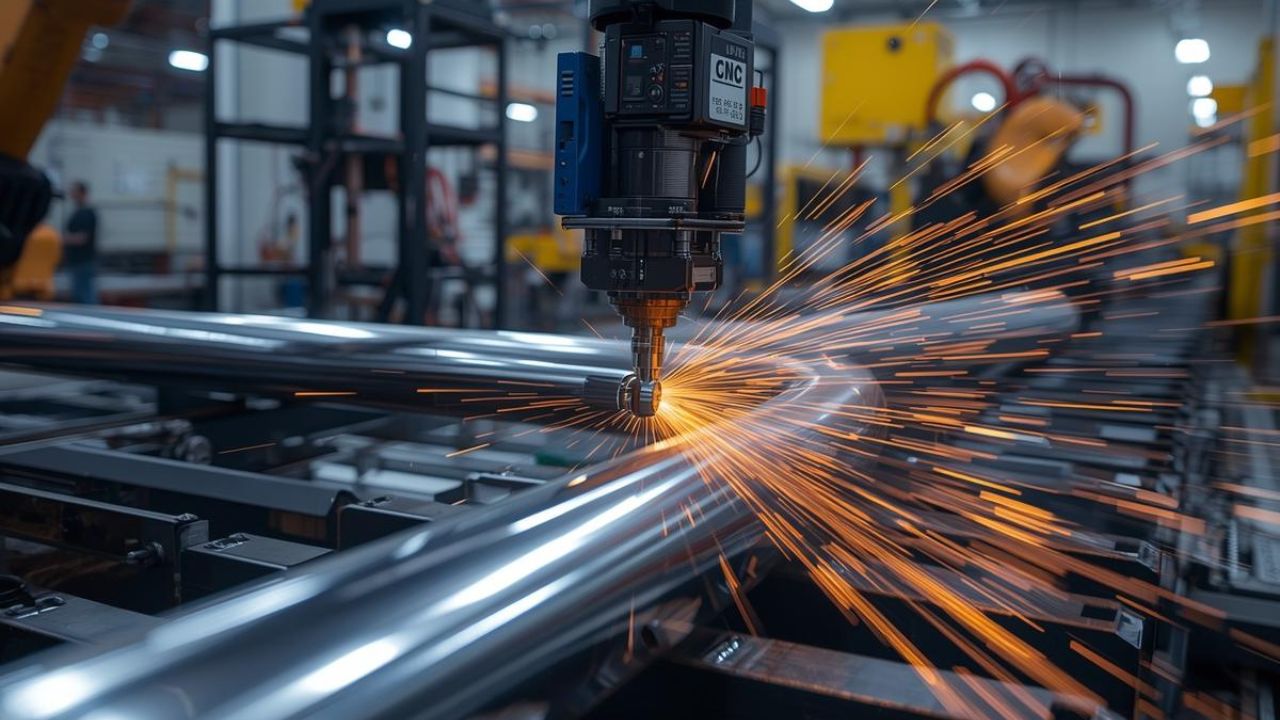
Tube welding services selection requires evaluating technical competencies, regulatory compliance, and inspection protocols that ensure structural integrity. Manufacturers must assess provider capabilities across welding processes, certification portfolios, and quality verification systems to match project specifications with fabrication expertise.
Effective tube welding services selection balances precision requirements with cost efficiency while maintaining safety standards. Providers offering integrated capabilities from material sourcing through final inspection deliver consistency and reduce coordination overhead across production stages.
Key Takeaways
- Tube welding services rely on TIG, MIG, and laser welding processes matched to material and application requirements
- Industry certifications like AWS and ASME verify welder competency and compliance with safety-critical standards
- Non-destructive testing methods, including ultrasonic and radiographic inspection, validate weld integrity without compromising finished products
- Material traceability systems using digital tracking technologies ensure supply chain transparency and defect prevention
- Regional regulatory environments and infrastructure investments shape welding standards and technology adoption patterns
What Are Tube Welding Services and Their Core Capabilities?
Tube welding services join tubular components using heat and pressure to create permanent structural connections. These services encompass process selection, joint preparation, weld execution, and post-weld inspection tailored to material properties and application demands.
Core capabilities include TIG, MIG, and resistance welding methods adapted for wall thickness and alloy composition. Specialized providers integrate the best welding methods for tube fabrication with automated positioning systems that maintain joint alignment throughout fabrication cycles.
What Welding Processes Are Common in Tube Fabrication?
TIG welding delivers precise heat control for thin-walled tubes and stainless steel applications requiring clean, oxide-free joints. MIG welding provides higher deposition rates suited for carbon steel tubes in high-volume production environments.
Laser welding offers minimal heat-affected zones and deep penetration for thick-walled pressure vessels. Resistance welding uses electrical current to fuse tube ends without filler material in automotive exhaust and structural applications.
How Do Automation and Industry 4.0 Technologies Enhance Welding Services?
Automation improves welding consistency by eliminating human variability in torch positioning and travel speed. CNC tube bending delivers accuracy within ±0.5 degrees, reducing fit-up errors that compromise weld quality.
Industrial IoT solutions enable real-time monitoring of welding parameters including amperage, voltage, and travel speed. Cloud computing platforms analyze production data to identify process drift before defects occur, with 57% of manufacturers now leveraging facility-level analytics.
What Role Does Material Compatibility Play in Welding Service Selection?
Material compatibility determines filler metal selection, preheat requirements, and post-weld heat treatment protocols that prevent cracking. Carbon steel tubes require different welding parameters than aluminum or stainless alloys due to thermal conductivity differences.
Material selection for tube bending influences joint design and welding procedure qualification testing. Dissimilar metal joining demands specialized expertise to manage differential thermal expansion and galvanic corrosion risks.
Why Are Certifications Critical in Tube Welding?
Welding certifications verify that welders possess demonstrated skills to produce code-compliant joints meeting safety standards. Certifications reduce liability exposure by documenting adherence to American Welding Society and ASME procedural requirements for pressure vessels and structural steel.
Certified welding programs prevent costly failures by ensuring consistent joint quality across production runs. The Welding Qualification Certification Service Market is projected to grow from USD 2.5 billion in 2024 to USD 4.1 billion by 2033.
Which Welding Certifications Are Industry Standards?
ISO 9001 certification establishes quality management frameworks that reduce defect rates through documented procedures and continuous improvement. ASTM compliance provides material property standards ensuring welded joints meet mechanical strength requirements.
American Welding Society certification validates welder competency through practical testing of joint configurations and positions. ASME certification qualifies welding procedures for pressure vessel fabrication where failure consequences include catastrophic rupture and personnel injury.
How Do Certification Requirements Vary by Industry Application?
Aerospace applications mandate aerospace tubing fabrication special requirements including radiographic inspection and material traceability for flight-critical components. Pipeline welding requires API 1104 certification, demonstrating proficiency with high-pressure natural gas and petroleum transmission systems.
Structural steel fabrication follows AWS D1.1 standards specifying joint design and inspection criteria for building construction. Nuclear power applications impose the most stringent certification requirements, including ASME Section III qualification and continuous radiographic monitoring.
What Are the Costs and Processes Associated with Welding Certification?
AWS Certified Welder application costs USD 70 with annual maintenance fees of USD 105 to maintain an active status. Comprehensive welding training programs range from USD 4,600 to USD 15,500, depending on process complexity and certification level.
Procedure Qualification Testing costs between USD 1,000 and USD 5,000 per specification to document welding parameters. Training investments yield returns through reduced rework rates and qualification for safety-critical contracts requiring certified personnel.
How Is Quality Ensured in Tube Welding Services?
Quality assurance in tube welding combines pre-production qualification with in-process monitoring and post-weld inspection to verify structural integrity. Statistical Process Control identifies parameter drift before defects occur, shifting focus from reactive inspection to defect prevention.
Multi-stage verification protocols integrate material testing, dimensional checks, and non-destructive evaluation, creating comprehensive quality checkpoints. Precision equipment reduces scrap rates from 5% to below 1% through repeatable positioning and controlled heat input.
What Testing Methods Validate Weld Integrity?
Non-Destructive Testing allows manufacturers to ensure structural integrity without compromising the final product through material removal. Ultrasonic Testing utilizes high-frequency sound waves to detect internal flaws and measure wall thickness in completed welds.
Radiographic Testing employs X-rays or gamma rays to create permanent visual records of internal structures, including porosity. Eddy Current Testing is highly automatable and excellent for rapid surface inspection of conductive materials, detecting micro-cracks.
How Do Non-Destructive Testing Techniques Compare for Weld Inspection?
Ultrasonic Testing captured 27.95% market share in 2025 due to cost-effectiveness and deep subsurface detection capabilities. The NDT market is projected to grow from USD 18.80 billion in 2025 to USD 42.30 billion by 2034.
Radiographic Testing captured approximately 21.0% market share despite higher equipment costs between USD 20,000 and USD 100,000. Eddy Current Testing shows a projected CAGR of 9.07% through 2031, driven by automation advantages in high-volume production.
What Quality Control Practices Optimize Weld Reliability?
Statistical Process Control identifies process drift before defects occur by tracking welding parameters against established control limits. Pre-production material testing verifies that the chemical composition and mechanical properties meet specification requirements before welding begins.
In-process monitoring tracks real-time welding current and voltage, preventing parameter deviation during fabrication cycles. Final dimensional verification confirms that welded assemblies meet tolerance requirements using coordinate measuring machines and laser scanning systems.
How Does Material Sourcing Affect Welding Service Outcomes?
Material sourcing directly impacts weld quality through chemical composition consistency and mechanical property uniformity across production batches. Uncertified materials introduce unpredictable alloying elements that alter welding behavior, causing porosity, cracking, or inadequate fusion.
Traceability systems link raw material certifications to finished assemblies, enabling rapid root cause analysis when defects occur. Quality control in tube fabrication depends on verified material properties documented through mill test certificates.
What Is the Importance of Material Certification and Traceability?
Material test certificates verify that raw materials meet required chemical and mechanical properties before fabrication begins. MTCs document alloy composition, tensile strength, and hardness values, preventing material-related failures in welded assemblies.
Certification provides legal documentation establishing material pedigree for liability protection and warranty claims in safety-critical applications. Traceability from mill to finished product enables targeted recalls, minimizing the scope when material defects are discovered.
How Do Traceability Systems Support Quality Assurance in Welding?
The Quality Traceability System market was valued at USD 3.5 billion in 2023 and projected to reach USD 7.2 billion by 2032. Material Traceability Platforms show a projected 14.10% CAGR reaching USD 7.8 billion by 2033, driven by supply chain transparency demands.
Barcode and QR code tracking link material certifications to individual assemblies, enabling instant verification during inspections. Digital platforms provide complete supply chain visibility from material receipt through final shipment, reducing documentation errors.
What Challenges Arise from Material Supply in Welding Projects?
Supply chain disruptions delay production when certified materials become unavailable, forcing schedule adjustments or material substitutions. Counterfeit materials lacking proper certification compromise weld integrity while appearing visually identical to specified alloys.
Long lead times for specialty alloys require advance planning and inventory management to prevent project delays. Price volatility in raw material markets complicates cost estimation and margin management for fixed-price welding contracts.
What Are Regional and Demographic Trends Impacting Tube Welding Services?
Regional demand for welded tube fabrication reflects infrastructure investment priorities and industrial manufacturing concentrations across global markets. The global steel pipes and tubes market was valued at USD 137.62 billion in 2025 and projected to reach USD 209.89 billion by 2033.
Regulatory frameworks shape certification requirements and inspection protocols varying significantly between North American, European, and Asia Pacific manufacturing regions. Technology adoption patterns differ by region, with mature markets prioritizing automation while emerging economies focus on capacity expansion.
How Do Welding Service Demands Differ Across Global Regions?
Asia Pacific dominates the steel pipes and tubes market with over 60% revenue share, driven by infrastructure development. The region emphasizes cost-effective high-volume manufacturing supporting rapid industrial growth in China and India.
Europe represents approximately 15% of the industrial tubes market and 22% of the NDT market with a sustainability focus. North America holds 35.80% share of the NDT market in 2025, prioritizing regulatory compliance and advanced inspection technologies.
What Are the Emerging Regional Technologies and Innovations in Welding?
North American manufacturers invest heavily in robotic welding systems and AI-driven quality monitoring, reducing labor dependency. The U.S. NDT market is projected to reach USD 9.91 billion by 2032, driven by infrastructure modernization.
China advances automated welding solutions for mass production while Japan develops precision tubing for semiconductor applications. European manufacturers focus on green steel production and carbon-neutral welding processes aligned with EU sustainability mandates.
How Do Regulatory Environments Influence Welding Standards Regionally?
The Infrastructure Investment and Jobs Act drives demand for certified welding services in U.S. transportation and water system upgrades. Federal procurement requirements mandate domestic manufacturing and certified welder employment for publicly funded projects.
The EU’s Green Deal initiative establishes carbon emission limits, influencing welding process selection toward energy-efficient methods. Regional building codes and pressure vessel regulations vary significantly, requiring location-specific certification portfolios for multi-market service providers.
How Should Manufacturers Evaluate and Choose Tube Welding Providers?
Manufacturer evaluation of tube welding services requires assessing technical capabilities against specific project requirements, including material compatibility and production volume. Capability assessment: welding providers should demonstrate process qualifications, equipment capacity, and inspection resources matching application demands.
Provider selection balances quality assurance protocols with cost structures, ensuring long-term reliability without excessive premium pricing. Evaluating pipe-bending companies’ essential certifications applies equally to welding service providers requiring documented compliance with industry standards.
What Criteria Define Qualified Welding Service Providers?
Qualified providers maintain current welding certifications for tubes, including AWS and ASME credentials across multiple processes. Equipment portfolios should include automated positioning systems, precision fixtures, and computerized parameter monitoring, ensuring repeatable quality.
Inspection capabilities must encompass non-destructive testing methods appropriate for contract specifications, including ultrasonic and radiographic examination. Quality management systems certified to ISO 9001 demonstrate documented procedures and continuous improvement processes.
How Can Manufacturers Balance Cost with Quality in Service Selection?
Equipment costs for ultrasonic testing range from USD 2,000 to USD 50,000, while radiographic systems cost USD 20,000 to USD 100,000. Service costs per unit range from USD 50 to USD 200 for ultrasonic inspection and from USD 100 to USD 300 for radiographic testing.
Eddy current testing equipment costs between USD 3,000 and USD 60,000, offering automation advantages for high-volume production. Long-term cost optimization favors providers with integrated capabilities, eliminating coordination overhead between multiple vendors for welding and inspection.
What Best Practices Improve Collaboration with Welding Service Providers?
Early engagement during the design phase enables welding service input on joint accessibility and inspection requirements, preventing costly redesigns. Clear specification documentation, including material certifications, welding procedure requirements, and acceptance criteria, eliminates ambiguity.
Regular communication throughout fabrication provides visibility into schedule status and emerging technical issues requiring collaborative resolution. Post-project reviews capture lessons learned, improving future collaboration and identifying process improvement opportunities for both parties.
What Future Trends Will Shape Tube Welding Service Quality and Certifications?
Automation and data analytics transform welding inspection from manual visual examination to real-time computerized monitoring, detecting defects immediately. Industrial IoT integration enables predictive maintenance, preventing equipment failures that compromise weld quality during production runs.
Sustainability mandates drive the adoption of energy-efficient welding processes, reducing carbon footprint while maintaining structural performance. Regulatory changes expand certification requirements for emerging applications, including hydrogen fuel systems and renewable energy infrastructure.
How Will Automation and Data Analytics Transform Welding Inspection?
Machine vision systems detect surface defects instantaneously during welding, eliminating delays associated with post-production inspection cycles. Artificial intelligence algorithms analyze welding parameter data, identifying subtle patterns predicting joint quality before destructive testing.
Cloud-based platforms aggregate inspection data across production facilities, enabling enterprise-wide quality trending and benchmarking. CNC laser cutting services eliminate quality issues through similar automation principles, now extending to welding applications.
What Advances Are Anticipated in Welding Certification and Training?
Virtual reality training systems provide realistic welding practice without material consumption, reducing training costs and environmental impact. Digital certification platforms replace paper documentation, enabling instant verification of welder qualifications during contract bidding.
Modular certification programs allow welders to add specific process qualifications incrementally rather than comprehensive retraining. Blockchain technology creates tamper-proof certification records, preventing credential fraud and ensuring regulatory compliance verification.
How Will Sustainability and Regulatory Changes Affect Welding Practices?
Green steel initiatives require welding filler metals and shielding gases with reduced carbon footprints aligned with decarbonization goals. Hydrogen pipeline infrastructure demands new welding procedures addressing embrittlement risks specific to high-pressure hydrogen service.
Circular economy principles drive demand for repair welding, extending component service life rather than replacement manufacturing. Extended producer responsibility regulations require traceability systems documenting material composition, enabling end-of-life recycling and recovery.
Selecting Tube Welding Services: Integrating Capabilities, Certifications, and Quality for Optimal Outcomes
Successful tube welding services selection integrates capability assessment of welding providers with certification verification and quality assurance protocols. Manufacturers achieve optimal outcomes by evaluating technical competencies, regulatory compliance, and inspection infrastructure against specific project requirements, ensuring structural integrity.
Welded tube fabrication quality depends on the provider’s expertise, spanning process qualification, material compatibility, and non-destructive testing capabilities. Strategic partnerships with certified welding services reduce coordination complexity while maintaining consistent quality across production volumes from prototype to mass manufacturing.
CRD MFG delivers integrated tube welding services backed by comprehensive certifications and advanced quality control systems. Our single-source approach combines material sourcing, precision fabrication, and in-house inspection, eliminating multi-vendor coordination challenges.
Ready to Evaluate a Tube Welding Partner? Talk to CRD MFG, Inc.
Selecting a tube welding service comes down to one question: can they deliver consistent quality across every stage of fabrication, from material sourcing to final inspection?
CRD MFG, Inc. operates a 22,500-square-foot facility in Placentia, California, with fully programmable robotic welding systems and in-house inspection capabilities, including Faro Arm scanning and VTube software. Every project is managed by a single dedicated project manager — no departmental handoffs, no communication gaps.
Whether you’re qualifying a new supplier, solving a production bottleneck, or moving a prototype into full-scale runs, CRD works with engineering teams and procurement directors who need answers fast and parts built right. Request a Quote or call us to discuss your tube welding requirements.
