
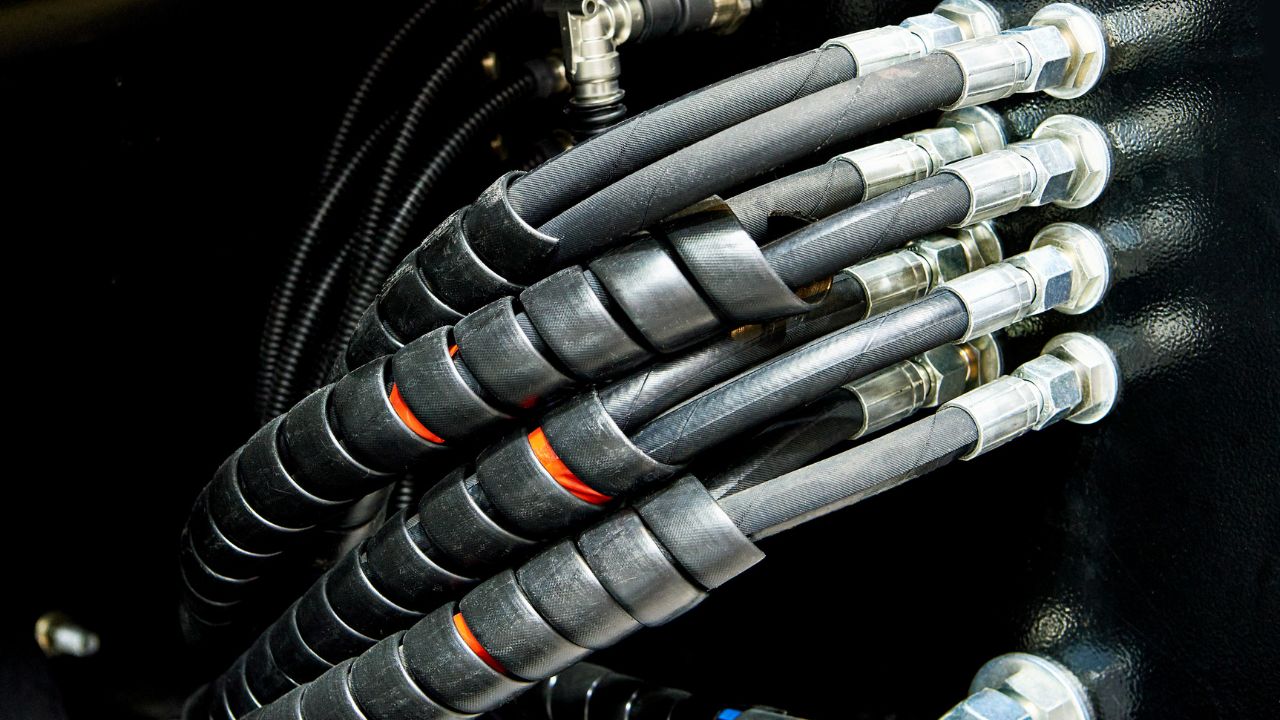
Hydraulic tube assemblies form the critical backbone of fluid power systems across industrial sectors. These engineered components must withstand extreme pressures while maintaining precise flow characteristics and meeting stringent regulatory requirements. The global hydraulic hose market, valued at USD 12.2 billion in 2025, reflects growing demand for reliable pressure-rated systems. With the industrial tubes market projected to reach USD 1,587.0 billion by 2036, proper design engineering ensures system longevity and operational safety.
Key Takeaways
- Seamless tubes offer superior pressure resistance up to 5,000+ psi, but cost 20% to 40% more than welded alternatives
- SAE J1273 mandates a 4:1 safety factor for hydraulic assemblies, ensuring operational reliability under varying load conditions
- 316L stainless steel provides enhanced corrosion resistance through added molybdenum content compared to standard 304L grades
- Automation reduces fabrication labor costs by 20% to 30% while addressing skilled labor shortages affecting manufacturers
- Sustainability priorities drive 60% of stakeholders toward recyclable materials and ESG-compliant sourcing strategies
What Are Hydraulic Tube Assemblies and Their Applications?
A hydraulic tube assembly is a complete fluid conveyance system combining tubes, fittings, and connectors rated for specific pressures. These integrated systems deliver hydraulic fluid to actuators, motors, and cylinders in industrial machinery. The components work together to maintain leak-proof operation under dynamic load conditions while ensuring consistent performance across temperature variations.
Seamless and welded construction methods define two primary assembly categories with distinct performance characteristics. Designing rigid custom tube assemblies requires understanding application-specific pressure requirements and environmental conditions.
Components and Configurations of Hydraulic Assemblies
Hydraulic assemblies consist of tubes, hoses, fittings, adapters, and protective sleeving engineered as unified systems. Tube selection depends on pressure ratings, with seamless options handling 5,000+ psi applications. Fittings create secure connections using compression, flare, or threaded methods that prevent fluid leakage. Proper routing configurations minimize pressure drops while accommodating thermal expansion and mechanical vibration.
Assembly design must account for bend radius limitations and clearance requirements within equipment frames. Protective measures include abrasion-resistant sleeving and corrosion-resistant coatings matched to environmental exposure. Configuration complexity ranges from simple point-to-point connections to multi-branch distribution manifolds.
Key Industry Applications and Performance Requirements
Oil and gas drilling applications demand assemblies capable of withstanding extreme pressures and corrosive environments. OCTG specifications require seamless construction for downhole equipment operating beyond 10,000 psi. Petrochemical refining systems use 316L stainless steel assemblies resistant to chemical attack and high temperatures.
Aerospace hydraulic systems require lightweight assemblies with exceptional reliability under vibration and altitude changes. Heavy construction equipment relies on tube assembly fabrication processes delivering consistent performance across demanding duty cycles. Agricultural machinery prioritizes cost-effective designs, maintaining functionality despite moisture and particulate contamination.
Distinctions Between Seamless and Welded Tubes in Assemblies
Seamless tubes are manufactured through rotary piercing and extrusion processes that eliminate weld seams. This construction produces uniform wall thickness and superior pressure resistance exceeding 5,000 psi. The absence of welded joints removes potential failure points, extending service life in critical applications. Seamless tubes currently hold 57.2% market share due to reliability advantages in high-pressure environments.
Welded tubes are fabricated by forming and welding metal strips using Electric Resistance Welding techniques. These assemblies typically handle 1,500 to 3,000 psi pressure ranges at 20% to 40% lower cost. The 42.8% market share reflects adoption in medium-pressure applications where cost optimization outweighs maximum pressure capability. Welded construction offers faster production and greater sizing flexibility.
How Do Pressure and Flow Affect Hydraulic Tube Design?
Pressure ratings determine wall thickness requirements and material selection to prevent rupture under peak loads. Flow dynamics influence internal diameter sizing to minimize friction losses while maintaining acceptable fluid velocities. These factors shape every aspect of hydraulic tube assembly engineering from concept through installation.
Pressure Calculations and Safety Factors
SAE J1273 mandates a 4:1 safety factor between the rated working pressure and the minimum burst pressure. This ensures assemblies withstand pressure spikes without catastrophic failure during normal operations. Seamless tubes provide superior safety margins due to the absence of weld seams that create stress concentration points. Welded tubes require inspection of longitudinal welds to verify integrity under cyclical pressure loading.
Pressure calculations must account for temperature effects on fluid viscosity and material strength degradation. Dynamic pressure surges from rapid valve closure can exceed static ratings by 200% or more. Engineers apply burst pressure testing protocols to validate safety factors before production release.
Flow Dynamics and Hydraulic Efficiency
Flow dynamics analysis determines optimal tube diameter to balance pressure drop against system response time. Smaller diameters increase fluid velocity but create excessive friction losses, reducing efficiency. Reynolds number calculations identify laminar versus turbulent flow conditions affecting energy consumption and heat generation. Proper diameter selection maintains fluid velocities between 10 and 20 feet per second.
Bend geometry significantly impacts flow characteristics by creating localized turbulence and pressure losses. Minimum bend radius specifications prevent flow restriction while maintaining structural integrity. Material selection for tube bending influences achievable bend radii without wall thinning or collapse.
Material Selection Impact on Pressure and Flow
304L stainless steel contains 18% chromium and 8% nickel, providing corrosion resistance for standard applications. 316L stainless steel adds 2% to 3% molybdenum, enhancing resistance to chloride attack and pitting corrosion. The enhanced corrosion resistance of 316L makes it preferable for marine environments and chemical processing systems. Both alloys maintain strength at elevated temperatures while offering excellent formability for complex routing.
Carbon steel tubes deliver superior strength-to-cost ratios for applications where corrosion protection comes from external coatings. Steel is expected to account for 78.5% of the material segment by 2026. Material hardness affects machinability during fitting installation and influences fatigue resistance under pressure cycling. Specialized alloys address extreme temperature ranges or highly corrosive fluid chemistries beyond standard steel capabilities.
What Safety Standards Govern Hydraulic Tube Assembly Design?
Safety standards establish minimum performance requirements protecting workers and equipment from hydraulic system failures. Regulatory frameworks define testing protocols, pressure ratings, and documentation requirements throughout the product lifecycle. Compliance with recognized standards demonstrates due diligence while facilitating cross-border equipment sales.
Relevant Regulatory and Industry Standards (SAE, ISO, ASTM)
ASTM A500 is the standard specification for cold-formed welded and seamless carbon steel structural tubing. This specification defines minimum yield strength at 50 ksi for Grade B material. SAE J1273 provides recommended practices for hydraulic hose assemblies covering selection, routing, fabrication, installation, and maintenance. The standard establishes pressure rating methodologies and inspection intervals for operational safety.
ISO 18752 classifies hydraulic fluid power hose assemblies by required pressure and flow rates for international applications. ASTM A500 offers higher yield strength compared to ASTM A53 general service pipes. These specifications ensure component compatibility and predictable performance across diverse operating conditions.
Safety Protocols in Fabrication and Installation
Fabrication safety begins with proper welding methods that ensure joint integrity without introducing defects. Qualified welders must demonstrate proficiency through certification programs validating their ability to produce consistent quality. Installation protocols require systematic pressure testing before commissioning to identify leaks or weak points. Proper torque application on threaded fittings prevents both under-tightening, causing leaks, and over-tightening, damaging threads.
Routing guidelines mandate adequate support spacing to prevent vibration-induced fatigue failures. Assemblies must maintain minimum clearance from heat sources and moving components that could cause abrasion. Documentation of installation parameters enables future maintenance teams to replicate proper procedures.
Testing and Maintenance for Operational Integrity
Quality assurance procedures include hydrostatic pressure testing to 150% of the maximum rated working pressure. Visual inspection identifies surface defects, corrosion, and fitting alignment issues before pressurization. Non-destructive testing methods, such as ultrasonic examination, detect internal flaws in critical high-pressure applications. Periodic testing intervals depend on operating severity and regulatory requirements specific to each industry.
Predictive maintenance programs monitor pressure fluctuations and temperature anomalies, indicating developing problems. IoT sensors provide continuous monitoring with automatic alerts when conditions exceed acceptable ranges. Regular fluid analysis identifies contamination that accelerates component wear and reduces reliability.
How Do Material and Manufacturing Methods Influence Performance?
Material properties determine pressure capacity, corrosion resistance, and service life under specific operating conditions. Manufacturing methods affect structural integrity, production costs, and dimensional consistency. The interaction between material selection and fabrication processes creates performance trade-offs requiring evaluation during design engineering.
Advantages and Limitations of Seamless Versus Welded Tubes
Seamless tubes cost 20% to 40% higher than welded tubes due to complex manufacturing processes. This premium delivers superior reliability through the elimination of longitudinal weld seams that represent potential failure points. Seamless construction provides uniform wall thickness and isotropic mechanical properties throughout the tube cross-section. Limited production capacity can extend lead times during high-demand periods.
Welded tubes are 20% to 40% more cost-effective for medium-pressure applications. These assemblies offer faster production capabilities, meeting tight project schedules. Welded tubes may experience accelerated corrosion at weld points where heat-affected zones alter material microstructure. Modern ERW techniques have significantly improved weld quality, narrowing the performance gap with seamless construction.
Role of Stainless Steel and Specialized Alloys
Stainless steel architectural tubes cost 50% to 100% higher than carbon steel equivalents. This investment provides 30+ year service life in corrosive environments where carbon steel would require frequent replacement. Stainless steel requires specialized fabrication skills due to work-hardening characteristics during bending operations. The higher thermal expansion coefficient necessitates accommodation in fixed mounting arrangements.
Specialized alloys address extreme environments beyond standard stainless steel capabilities, including high temperatures and aggressive chemicals. Nickel-based alloys maintain strength at temperatures exceeding 1,000°F, where stainless steel loses structural integrity. Titanium offers exceptional strength-to-weight ratios for aerospace applications. Each specialized alloy requires specific welding procedures and quality control protocols.
Impact of Automation and Precision Fabrication
67% of USA and Europe manufacturers believe automation is worth the investment, compared to 34% in Japan. Robotic welding systems deliver consistent bead profiles and penetration depth, eliminating human variability. Automation reduces labor costs by 20% to 30% while addressing skilled labor shortages reported by 53% of US manufacturers. CNC tube bending processes ensure repeatable bend angles and radii across high-volume production.
Machine vision systems provide automated quality control, identifying dimensional deviations before assemblies enter inventory. IoT sensors enable predictive maintenance on fabrication equipment, reducing unplanned downtime. Advanced automation supports tube assembly services that integrate multiple operations under a single quality management system.
What Are the Consumer and Market Trends Affecting Design Choices?
Market dynamics shift design priorities as buyers balance performance requirements against cost pressures and sustainability goals. Regional variations in infrastructure development and regulatory environments create diverse specification preferences. Understanding these trends enables manufacturers to align product offerings with evolving customer expectations.
Regional and Demographic Influences on Procurement
Millennials represent more than 50% of B2B decision-makers influencing hydraulic tube assembly purchasing decisions. This demographic spends an average of 13 weeks on initial research phases, prioritizing digital information access. Generation X represents approximately 35% of the market, focusing on ROI and supply chain reliability. Baby Boomers comprise roughly 10% of decision-makers preferring established supplier relationships.
The USA is projected to grow at 7.7% CAGR driven by oil and gas infrastructure investments. Regional preferences vary significantly, with North America prioritizing compliance and reliability over initial cost. Asia Pacific markets emphasize cost optimization while maintaining acceptable quality standards.
Sustainability and ESG Considerations in Material Selection
83% of Western European stakeholders emphasize carbon neutrality in supplier selection criteria. 57% prefer recyclable and green steel produced using renewable energy sources. 60% of surveyed stakeholders are actively shifting toward sustainable material sourcing to meet corporate ESG commitments. These priorities drive 68% of buyers to identify sustainability and ESG compliance as growing priorities.
Biodegradable hydraulic fluids reduce environmental impact from system leakage during equipment operation. Low-emission manufacturing processes align with scope 3 carbon reduction targets throughout supply chains. Professional local tube bending services reduce transportation emissions while supporting domestic manufacturing economies.
Urban Vs. Rural Adoption Patterns and Cost Priorities
72% urban adoption rate for advanced technologies reflects greater access to capital and technical expertise. 68% of urban buyers focus on sustainability credentials driven by regulatory pressure and corporate visibility. 73% of rural buyers seek cost optimization as their primary procurement criterion. 61% of rural buyers report supply chain inefficiencies, creating inventory challenges and extended lead times.
Urban markets demonstrate willingness to pay 15% to 20% premiums for advanced coatings and corrosion protection. Rural applications prioritize durability and low maintenance requirements over aesthetic considerations. Distribution network density in urban areas enables faster delivery and technical support response.
How Do Design Decisions Affect System Reliability and Cost?
Design choices create lasting impacts on the total cost of ownership through maintenance requirements and operational efficiency. Initial material selection influences failure rates, replacement intervals, and system downtime costs over equipment lifecycles. Balancing upfront investment against long-term reliability requires understanding application-specific risk profiles.
Trade-offs Between Durability, Price, and Performance
Premium hydraulic companies command 15% to 25% price premiums versus standard suppliers through superior quality assurance. 72% of buyers emphasized cost management as material prices increased throughout 2024 and 2025. 65% of buyers in developed markets prioritized technical performance over initial purchase price. This creates segmentation where critical applications justify premium solutions while commodity markets remain price-sensitive.
Extended service intervals from durable materials reduce maintenance labor costs, offsetting higher initial component prices. Performance specifications determine system efficiency, affecting operating costs through energy consumption and fluid replacement frequency. Total cost analysis must incorporate downtime expenses when equipment failures disrupt production.
Influence of Supply Chain Reliability on Assembly Design
79% ranked supply chain reliability as a critical priority influencing vendor selection and material choices. Supply chain inefficiencies reported by 61% of rural buyers drive inventory buffering and safety stock requirements. Dual sourcing strategies for critical components mitigate disruption risks from single supplier dependencies. Lead time variability forces conservative production planning, reducing manufacturing flexibility.
Localized supply chains reduce transportation risks while enabling collaborative problem-solving with regional fabrication partners. Just-in-time inventory strategies require reliable suppliers capable of maintaining consistent quality across frequent deliveries. Supply chain digitization improves visibility into component availability and production status.
Integration of Advanced Coatings and Leak-proof Systems
North America’s willingness to pay 15% to 20% premiums for advanced coatings reflects harsh operating environments. Zinc-rich epoxy coatings provide barrier protection extending service life in marine and chemical processing applications. PTFE-lined assemblies eliminate corrosion entirely while offering chemical resistance beyond any metallic material’s capability. These specialized systems require precision manufacturing to maintain tight tolerances affecting seal integrity.
O-ring seal technology continues evolving with new elastomer compounds resisting higher temperatures and aggressive chemicals. Face seal fittings eliminate thread sealing compounds, simplifying installation while improving reliability under vibration. Advanced leak detection systems using acoustic monitoring identify developing problems before catastrophic failures.
What Are the Best Practices for Hydraulic Tube Assembly Installation and Maintenance?
Proper installation techniques prevent premature failures and ensure assemblies perform according to design specifications. Systematic maintenance programs extend service life while identifying wear patterns indicating system operating condition. Following established best practices reduces the total cost of ownership through improved reliability.
Proper Routing and Fabrication Techniques
Routing design must minimize bend count while maintaining adequate support spacing, preventing vibration-induced fatigue. Bend radii should exceed three times the tube outside diameter to prevent wall thinning and flow restriction. Assemblies require adequate slack accommodating thermal expansion without inducing stress on fittings. Routing paths must avoid contact with moving components and maintain clearance from heat sources exceeding material temperature ratings.
Support clamp spacing depends on tube diameter and operating pressure, with closer spacing required for larger assemblies. Protective sleeving prevents abrasion damage where assemblies pass through bulkheads or contact adjacent equipment. Color coding and labeling facilitate system troubleshooting while preventing incorrect connections during maintenance.
Inspection and Predictive Maintenance Using AI Tools
IoT sensors monitor system pressure, temperature, and vibration, providing continuous performance data for analysis. Machine vision systems perform automated quality control during fabrication, identifying dimensional variations before shipment. 71% AI adoption rates in China and 54% in the USA demonstrate growing reliance on intelligent monitoring. Predictive algorithms analyze historical data, identifying failure patterns, enabling proactive component replacement before breakdowns.
Thermal imaging detects hot spots indicating flow restrictions or developing leaks before visible evidence appears. Ultrasonic testing identifies wall thinning from erosion or corrosion, enabling planned replacement during scheduled downtime. Digital twins simulate system performance under various operating scenarios, optimizing maintenance intervals.
Addressing Common Failure Points and Corrosion
Welded tubes are more susceptible to corrosion at weld points where heat-affected zones alter protective oxide layers. Fitting connections represent primary leak points requiring proper torque application and periodic retightening under vibration exposure. Thread sealants must match fluid chemistry, avoiding degradation that compromises sealing effectiveness. Hose assemblies develop flex fatigue at bend points, necessitating inspection for surface cracking.
Galvanic corrosion occurs when dissimilar metals contact in electrolytes, requiring isolation or sacrificial anodes. Stagnant fluid conditions promote bacterial growth, requiring periodic system flushing and biocide treatment. Contamination from manufacturing debris and environmental ingress accelerates wear, requiring filtration systems and proper storage.
Designing Hydraulic Tube Assemblies: Integrating Pressure, Flow, and Safety Considerations for Optimal Performance
The industrial tubes market, valued at USD 701.8 billion in 2025, continues expanding toward USD 1,587.0 billion by 2036. Hydraulic hose assemblies represent a specialized segment projected to reach USD 19.9 billion by 2035. This growth reflects increasing demand for reliable fluid power systems across construction, agriculture, and industrial manufacturing sectors.
Successful design integration requires balancing pressure calculations against flow dynamics while maintaining compliance with safety standards. Seamless tubes deliver superior pressure resistance for critical applications despite higher costs compared to welded alternatives.
Material selection between carbon steel and stainless alloys depends on environmental exposure and corrosion resistance requirements. Automation adoption reduces fabrication costs while addressing skilled labor shortages affecting manufacturing capacity.
Market trends toward sustainability drive material sourcing decisions as 60% of stakeholders prioritize ESG compliance. Regional variations in adoption patterns create distinct specification preferences between urban and rural markets. Supply chain reliability remains the dominant procurement criterion influencing vendor selection. Advanced coating systems and predictive maintenance technologies extend service life while reducing the total cost of ownership.
Build Hydraulic Tube Assemblies That Hold Up Under Pressure
A single leak at a fitting or a weld seam that fails under cyclical loading can shut down equipment and blow past your project deadline. CRD MFG, Inc. fabricates hydraulic tube assemblies that meet pressure ratings, safety factors, and tight-tolerance requirements from the first part to the last.
Our single-facility operation combines CNC tube bending, laser tube cutting, robotic welding, and precision inspection, so your seamless and welded assemblies come from one accountable source instead of a chain of vendors. With a dedicated project manager on every job and material sourcing handled in-house, you get consistent quality and clear communication from initial design through full production. When your project demands precision tube assemblies with consistent quality, contact our team to discuss how we can support your specific requirements.
