
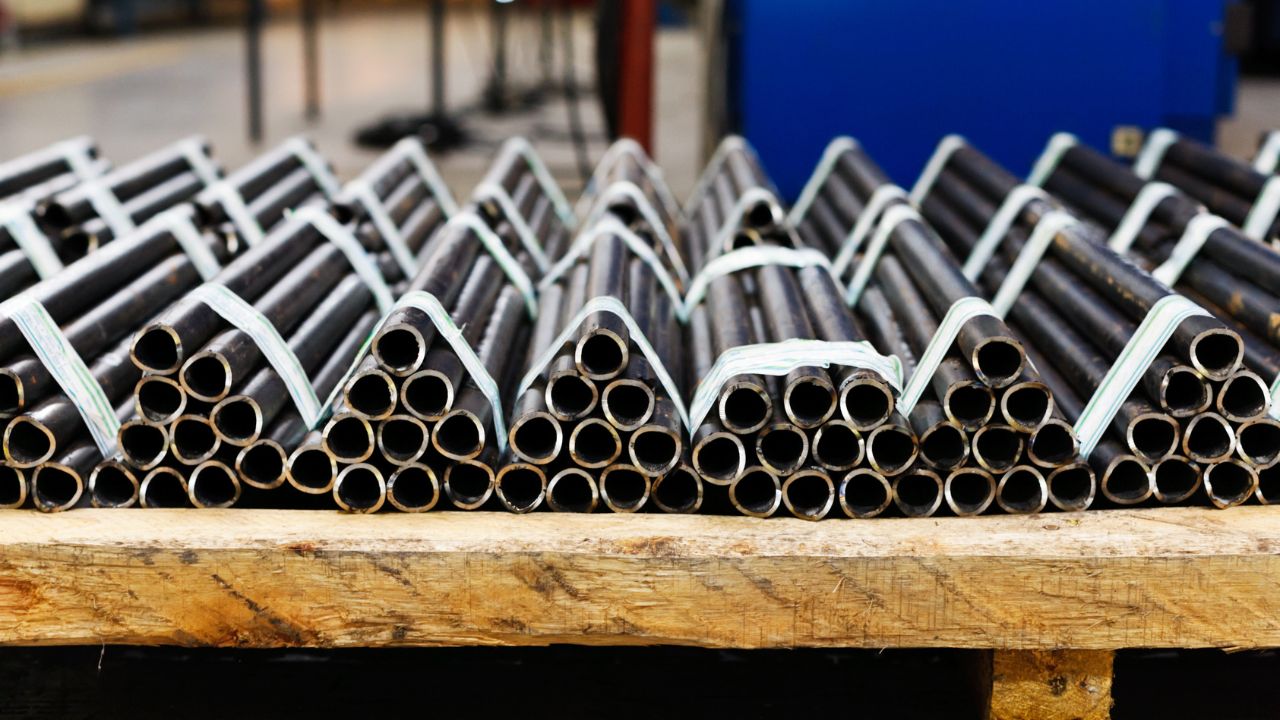
Aerospace ground support equipment depends on tube fabrication that meets exacting specifications and standards. The ground support equipment market, valued at USD 6.15 billion in 2024, requires components that withstand extreme operational conditions while maintaining safety and reliability. Aircraft tube manufacturing for GSE applications involves aerospace-grade materials, precision bending techniques, and comprehensive quality control measures that exceed standard industrial requirements. Specialized aerospace fabrication services combine precision aerospace tube fabrication with documented quality systems built for safety-critical work.
Key Takeaways
- Aerospace ground support tube fabrication must comply with NASA-STD-5005D, AS9100D, and ASTM A269 standards
- CNC rotary draw, bending, and orbital welding ensure precision and high-integrity joints in GSE applications
- Safety compliance scores 98 out of 100 on industry importance indices for aerospace components
- The GSE market projects growth from USD 6.15 billion in 2024 to USD 10.20 billion by 2034
- Quality assurance protocols include visual testing per ISO 17637 and three-tiered inspection processes
What Is Aerospace Ground Support Tube Fabrication?
Aerospace ground support tube fabrication produces specialized tubing systems for equipment that services aircraft on the ground. These systems deliver fuel, hydraulic fluid, oxygen, and pneumatic pressure to aircraft during maintenance and pre-flight operations. The aerospace and defense sector accounts for 15% of the industrial tubes market share, reflecting the critical role these components play in aviation operations.
Key Components And Materials Used
Titanium and Inconel materials serve aerospace ground support applications requiring superior strength-to-weight ratios and corrosion resistance. Stainless steel and aluminum alloys form the foundation for most fuel lines, hydraulic systems, and pipe solutions. These assemblies route fuel delivery and actuation fluids to engine components, while integrated heat exchangers and oil diffusers manage thermal loads across the system. The Detroit Diesel Fuel Line Tube Assembly represents a typical configuration combining precision-bent sections with specialized fittings.
Custom-welded boom-tube sections deliver fuel and fluids at precise flow rates and pressures. Integration of specialized fittings and precision fastening ensures leak-proof seals that meet stringent safety requirements. These components must function reliably across temperature ranges from -65°F to 350°F in aerospace environments.
Main Functions of Ground Support Equipment
Ground support equipment performs critical functions that enable safe aircraft operations between flights. The GSE market is projected to reach USD 10.20 billion by 2034, representing a CAGR of approximately 4.8%. Tube assemblies within GSE deliver fuel, hydraulic fluid, compressed air, and oxygen to aircraft systems, along with the control systems that regulate pressure and flow. Ground support equipment also extends to the heavy-lifting equipment used for transporting oversized aerospace components. Rocket transport platforms, rocket barges, and overland transport barges move multi-ton rocket stages between fabrication and launch sites, while heavy crane lifting positions large assemblies during integration.
These systems must maintain pressure integrity while accommodating thermal expansion and mechanical stress. Tube fabrication specifications ensure components withstand thousands of connection cycles without degradation. Proper material selection for tube bending affects system longevity and operational safety across diverse climate conditions.
Differentiating Aerospace Tubes From Other Industrial Tubes
Aerospace tube manufacturing demands tolerances and material properties far exceeding conventional industrial applications. Extremely high manufacturing costs for aerospace GSE reflect rigorous testing and documentation requirements at every production stage. Rigorous NDT inspection adds significant time and cost but remains essential for safety-critical applications.
Standard industrial tubes may accept minor surface imperfections and dimensional variations that aerospace applications cannot tolerate. Aircraft tube manufacturing requires complete traceability from raw material certification through final assembly documentation. Quality control in tube fabrication for aerospace applications follows AS9100D standards that mandate detailed process controls.
Why Are Specifications And Standards Critical In Aerospace Tube Fabrication?
Tube fabrication specifications prevent catastrophic failures that could endanger aircraft, ground crew, and airport operations. Safety compliance scores 98 out of 100 on industry importance indices, reflecting the zero-tolerance approach to defects. Quality assurance scores 96 on importance indices, demonstrating that performance reliability directly impacts procurement decisions.
Safety And Quality Assurance Requirements
Safety compliance dictates every aspect of aerospace tube fabrication from material selection through final inspection. Quality assurance scores 96 on importance indices because component failures can cascade into expensive aircraft downtime. Strict regulatory compliance increases manufacturing costs but eliminates risks that far exceed those expenses.
Aerospace ground support systems operate in environments where fuel vapors, high pressures, and electrical systems coexist dangerously. Tube assemblies must maintain structural integrity under mechanical stress, thermal cycling, and chemical exposure simultaneously. Aerospace tubing fabrication special requirements include pressure testing, radiographic inspection, and dimensional verification at multiple production stages.
Relevant Regulatory And Industry Standards
SAE J30R9/R10 establishes standards for gasoline and ethanol fuel hoses capable of withstanding temperatures up to 302°F. SAE J1527 provides specifications for diesel and biodiesel fuel lines used in ground support equipment. NASA-STD-5005D defines requirements for the design and fabrication of ground support equipment used in aerospace operations.
AS9100D serves as the quality management standard for the aerospace industry, ensuring rigorous documentation and traceability. ASTM A269 provides the standard specification for seamless and welded austenitic stainless steel tubing. These specifications and standards create a framework that ensures component reliability across manufacturers and applications.
Impact On Performance And Reliability
Durability scores 94 on importance indices because ground support equipment must function reliably across decades of service. Material degradation over time requires scheduled replacement, making initial quality critical to lifecycle costs. Proper adherence to aerospace tube forming requirements meeting AS9100 standards prevents premature failures that disrupt operations.
Components manufactured to specification maintain dimensional stability under thermal cycling and mechanical stress throughout their service life. Tube assemblies that meet regulatory standards provide predictable performance characteristics that engineers can design around confidently. This reliability reduces maintenance costs and improves operational efficiency for ground support operations.
What Are The Common Manufacturing Methods For Aerospace Ground Support Tubes?
Modern aerospace tube manufacturing employs computer-controlled processes that achieve precision impossible with manual methods. CNC rotary drawing, bending, and orbital welding dominate production because they deliver consistent quality at scale. Complementary processes such as laser cutting, CNC machining, CNC milling, and a high definition bevel plasma cutter prepare and finish components before final assembly. Hydroforming addresses specialized applications requiring complex three-dimensional geometries without welded joints.
CNC Rotary Draw Bending And Its Advantages
CNC Rotary Draw Bending uses computer-controlled rotary action with mandrel support to produce tight-radius bends with high repeatability. GSE fabrication involves CNC rotary draw bending for precision because the process maintains wall thickness and eliminates distortion. Fuel line manufacturing requires precision bending to route tubes through confined spaces while avoiding interference.
This method achieves bend radii as tight as 1.5 times the tube diameter while maintaining dimensional accuracy. CNC bending accuracy improves manufacturing precision by eliminating human error and ensuring consistency across production runs. Advanced equipment reduces secondary operations, lowering costs while improving quality control throughout the fabrication process.
Orbital Welding Techniques And Quality Control
Orbital Welding rotates the welding arc around a static tube, producing consistent penetration and minimal heat-affected zones. Orbital welding for high-integrity joints eliminates the variability inherent in manual welding processes. Tungsten Inert Gas (TIG) welding provides the clean, precise joints required for aerospace applications.
Custom welding requires precise control of heat input, shielding gas flow, and electrode positioning throughout the process. Qualified welding procedures govern each fusion welding operation, and documentation in detailed Welding Procedure Specifications and welding procedure qualification records ensures repeatability and provides traceability for quality audits. Best welding methods for tube fabrication balance joint strength with minimal distortion and heat damage to base materials.
Material Fabrication Challenges And Solutions
Hydroforming uses high-pressure hydraulic fluid to shape tubes into complex 3D geometries in a single step. Hydroforming achieves up to 30% weight reduction compared to welded assemblies while maintaining superior mechanical properties. This process eliminates stress concentrations at welded joints that can initiate fatigue failures.
Complex geometries and custom bend radii increase lead times and costs but enable designs impossible with standard methods. Manufacturing remains highly dependent on operator skill unless automated, creating quality variations that rigorous inspection must address. Modern CNC pipe bending machines features include automated tool changes and integrated measurement systems that reduce operator dependency.
How Do Quality Assurance Protocols Ensure Compliance In Tube Fabrication?
Quality assurance protocols verify that every tube assembly meets specifications before installation in ground support equipment. Three-tiered inspection processes catch defects at raw material receipt, in-process fabrication, and final assembly stages. This layered approach prevents defective components from reaching critical applications where failures endanger personnel and aircraft.
Inspection Methods For Welded Joints
Visual Testing (VT) per ISO 17637 provides the first line of defense against weld defects. Supplemented by Non-Destructive Testing for critical components, inspection methods verify joint integrity without damaging the assembly. A three-tiered inspection process at facilities like Precise Flight ensures comprehensive evaluation at multiple production stages.
Utilization of advanced measurement equipment provides dimensional verification that manual inspection cannot match. Hexagon OptivClassic measurement equipment captures three-dimensional data that confirms assemblies meet engineering specifications. Quality assurance for bent tube assemblies requires inspection methods that verify bend angles, radii, and spatial relationships simultaneously.
Defect Classification And Reporting Standards
ISO 5817 defines quality levels for imperfections in fusion-welded joints across three distinct categories. ISO 6520-1 provides classification codes for weld imperfections that enable consistent communication between inspectors and engineers. ISO 5817 Level B represents the highest requirement versus Level C industrial baseline, mandating near-perfect joint quality.
These standardized classification systems prevent miscommunication that could allow defective components into service. Defect reporting standards create documentation trails that support root cause analysis and process improvement initiatives. Consistent application of these standards across manufacturers enables reliable comparison of supplier quality performance.
Role Of Certifications Like AS9100D And ISO 17637
AS9100D certification demonstrates that manufacturers maintain quality management systems specifically designed for aerospace applications. ISO 17637 establishes the visual testing standard that inspectors apply during weld evaluation processes. These certifications provide procurement teams with confidence that suppliers understand and meet aerospace quality requirements.
Certification audits verify that quality systems function as documented and identify opportunities for continuous improvement. Facilities maintaining these certifications invest in personnel training, equipment calibration, and process documentation that exceed standard manufacturing practices. This commitment to quality assurance reduces defect rates and improves long-term component reliability.
What Are The Key Market Drivers And Consumer Priorities Affecting This Sector?
Market growth reflects increasing commercial aviation activity and aging ground support infrastructure requiring replacement. Consumer focus on safety and durability drives purchasing decisions more than cost considerations in aerospace applications. Regional procurement patterns demonstrate varying priorities based on regulatory environments and industrial capabilities.
Market Growth Trends And Forecasts
The global industrial tubes market reached a valuation of USD 725.75 billion in 2025. Projected to reach USD 1,346.66 billion by 2034, the market demonstrates a CAGR of 7.11%. The aerospace tube assemblies market, estimated at USD 1.49 billion in 2026, represents a specialized segment with higher margins.
The global welding market, valued at USD 28.38 billion in 2026, supports tube fabrication across all sectors. Aviation industry expansion drives demand for ground support equipment as airlines modernize aging fleets. Infrastructure investments in emerging markets accelerate the adoption of standardized GSE that meets international specifications.
Consumer Focuses on Safety And Durability
Safety compliance scores 98 out of 100 on importance indices, dominating all other purchasing considerations. Quality assurance scores 96 on importance indices while durability scores 94, demonstrating that performance trumps price. Cost efficiency scores 88 on importance indices, confirming that aerospace purchasers prioritize reliability over initial expense.
This prioritization reflects the catastrophic consequences of component failures in aircraft servicing operations. Ground support equipment operates in environments where fuel vapors, high pressures, and electrical systems create dangerous conditions. Procurement teams evaluate suppliers based on certification maintenance, quality records, and documented process controls.
Regional And Demographic Procurement Patterns
North America holds approximately 30% of the global industrial tubes market share, driven by aerospace manufacturing concentration. Europe holds 28% of the global market share, supported by established aviation infrastructure and stringent regulatory frameworks. The Asia Pacific region holds 32% of the global market share, representing the fastest-growing segment.
The oil and gas sector accounts for 28% of the industrial tubes market share across all applications. Automotive manufacturing accounts for 22% of market share, while aerospace and defense represents 15%. These regional patterns reflect varying industrial priorities and regulatory environments that shape procurement specifications.
How Do Cost And Production Considerations Influence Aerospace Tube Fabrication?
Material selection, manufacturing complexity, and certification requirements create significant cost variations in aerospace tube fabrication. Production considerations balance precision requirements against lead times and material availability constraints. Economic pressures drive manufacturers to optimize processes while maintaining the quality standards that aerospace applications demand.
Price Ranges By Material And Complexity
Budget aerospace GSE tubing ranges from $200-$450, while premium configurations cost $1,200-$4,000 per assembly. Budget custom welding services span $100-$250 compared to premium work at $600-$2,000 per project. Precision bent tubes vary from $120-$300 for simple geometries to $800-$2,500 for complex configurations.
Orbital-welded assemblies command $250-$600 at the budget level versus $1,500-$5,000 for premium aerospace applications. These price variations reflect material costs, manufacturing complexity, inspection requirements, and certification documentation expenses. Premium pricing includes exotic materials like titanium, complex geometries, and comprehensive quality documentation packages.
Labor And Material Cost Factors
Labor rates for general fabrication average $50-$75 per hour across most manufacturing regions. Specialized welding services command $100-$105 per hour, reflecting advanced skill requirements and certification maintenance costs. Steel prices surged over 30% between 2024 and 2025, directly impacting fabrication quotes.
Volatile material costs impact fabrication quotes because manufacturers must balance competitive pricing against unpredictable commodity markets. Long lead times for specialized materials force manufacturers to maintain inventory or accept extended project timelines. These economic pressures require flexible sourcing strategies and strong supplier relationships to maintain cost competitiveness.
Manufacturing Method Trade-Offs
Lead times for specialized titanium fittings span 52-80 weeks, constraining project schedules and forcing early procurement decisions. Precise Flight achieved a 15-20% reduction in fabrication costs for OEMs through integrated manufacturing capabilities and process optimization. Supply chain constraints for specialized aerospace fittings require manufacturers to design with multiple sourcing options.
Complex geometries increase manufacturing costs but enable designs that improve system performance and reduce installation complexity. Automated manufacturing methods require higher capital investment but deliver superior consistency and lower per-unit costs at scale. These trade-offs force manufacturers to balance initial investment against long-term operational efficiency and quality objectives.
What Are Current Industry Trends And Innovations In Aerospace Tube Fabrication?
Advanced measurement technology and automation are transforming aerospace tube fabrication quality and efficiency. Integration of computer-aided design with manufacturing execution systems reduces errors and accelerates production cycles. Industry innovations focus on reducing operator dependency while maintaining the flexibility to accommodate custom specifications.
Adoption Of Advanced CAD Modeling And Prototyping
Hexagon OptivClassic measurement equipment enables digital verification of complex tube assemblies against CAD models. 7-axis Absolute Arm measurement equipment captures three-dimensional geometry data that manual inspection cannot provide. These technologies create digital twins that support design optimization and manufacturing process validation.
Advanced CAD modeling enables engineers to simulate tube routing through congested equipment spaces before fabrication begins. Physical prototyping validates digital designs and identifies interference issues that drawings cannot reveal. This integrated approach reduces rework costs and accelerates project timelines from concept through production.
Shift Towards Automated Welding And AI Monitoring
Manufacturing processes remain highly dependent on operator skill unless automated systems reduce human variability. Orbital welding automation delivers consistent joint quality while reducing labor costs and improving production capacity. AI monitoring systems analyze weld parameters in real-time, detecting deviations before defects occur.
Automated systems require significant capital investment but deliver superior consistency across high-volume production runs. Integration of machine learning algorithms enables predictive maintenance that reduces unplanned downtime and improves equipment utilization. These innovations represent the industry’s response to skilled labor shortages and increasing quality expectations.
Supply Chain And Lead Time Management
Lead times for specialized titanium fittings span 52-80 weeks, requiring manufacturers to forecast requirements far in advance. Supply chain constraints for specialized aerospace fittings force designers to specify readily available components whenever performance allows. Long lead times for specialized materials create inventory management challenges that manufacturers must balance against working capital constraints.
Strategic supplier relationships and early material procurement become competitive advantages in managing these constraints. Manufacturers increasingly evaluate component designs for supply chain resilience alongside technical performance requirements. This holistic approach reduces project risk and improves delivery reliability for aerospace ground support equipment.
Synthesis Of Specifications, Standards, And Industry Practices In Aerospace Ground Support Tube Fabrication
Aerospace ground support tube fabrication integrates stringent specifications, comprehensive standards, and advanced manufacturing practices into cohesive quality systems. The convergence of regulatory requirements like NASA-STD-5005D and AS9100D with modern manufacturing technologies creates unprecedented capability for producing reliable components. Material science advances, automated inspection systems, and digital manufacturing workflows enable fabricators to meet demanding aerospace requirements efficiently.
The industry trajectory points toward greater automation, enhanced traceability, and improved material performance across all GSE applications. Safety remains the paramount consideration, with quality assurance protocols ensuring that every component meets specifications before entering service. As the GSE market grows toward USD 10.20 billion by 2034, manufacturers who master these complex requirements will capture increasing market share.
CRD MFG, Inc. brings over 15 years of precision tube fabrication experience to aerospace ground support applications. Our integrated capabilities—from CNC tube bending to robotic welding—eliminate the vendor fragmentation that complicates aerospace projects. By combining advanced equipment with dedicated project management, we deliver the quality assurance and reliability that ground support equipment demands.
Build Your Aerospace Tube Assemblies With CRD MFG, Inc.
Chasing production updates across multiple vendors adds risk to safety-critical aerospace programs. CRD MFG, Inc. consolidates professional CNC tube bending, laser tube cutting, robotic welding, and full assembly under one roof, with a dedicated project manager who advocates for your project from quote through delivery. Contact us to request a quote and discuss your aerospace ground support tube fabrication requirements.
