
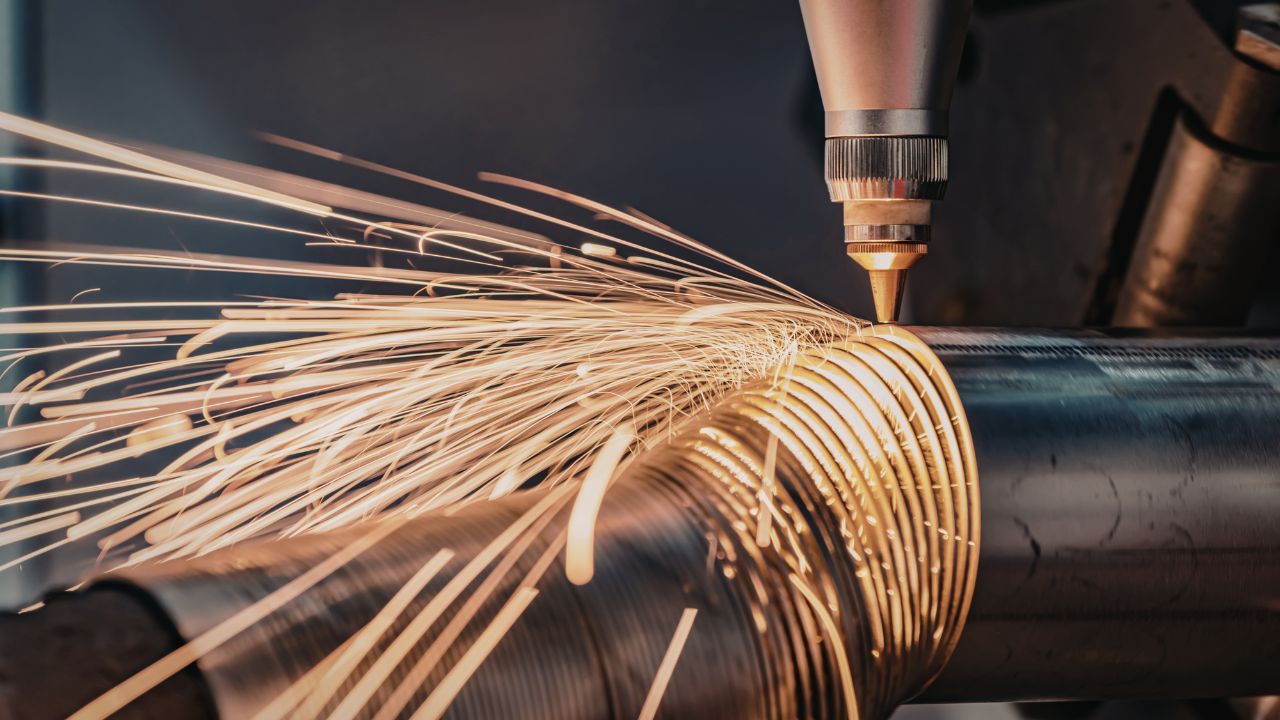
Brazed tube assemblies form permanent connections between metal tubes through controlled heat application and filler materials. This joining method produces leak-proof joints essential for fluid conveyance systems across aerospace, automotive, and industrial sectors.
The brazing process melts filler metals that flow into joint gaps through capillary action without melting base materials. In advanced tube fabrication services, this technique creates metallurgical bonds that maintain integrity under high pressure, extreme temperatures, and corrosive environments.
Key Takeaways
- Brazed tube assemblies use heat and filler metals to create permanent, leak-proof connections stronger than many alternative joining methods
- Four primary brazing methods—furnace, torch, induction, and vacuum—serve different production volumes and quality requirements across industries
- The aerospace tube assemblies market is projected to reach USD 2,460 million by 2033, growing at 6.6% CAGR
- Brazing offers production efficiency advantages over tube welding techniques through automated batch processing and reduced post-processing requirements
- Manufacturing automation addresses the skilled labor shortage cited by 33% of manufacturers while improving joint consistency
What Are Brazed Tube Assemblies and Their Core Functions?
Brazed tube assemblies connect metal tubes using filler materials that melt at temperatures below the base metal melting point. The molten filler flows between closely fitted parts through capillary attraction, solidifying to form a permanent joint.
These assemblies serve as fluid conveyance systems, heat exchangers, and structural frameworks requiring leak-proof connections. The joints typically match or exceed the strength of parent materials while maintaining dimensional accuracy.
How Is Brazing Defined and What Materials Are Used?
Brazing joins metals using filler materials with melting points above 840°F but below base material melting temperatures. Common filler metals include silver alloys, copper-phosphorus compounds, and nickel-based materials selected for specific thermal and corrosion properties.
The braze alloys market reached USD 3.81 billion in 2024 and projects growth to USD 8.21 billion by 2033. Material selection depends on joint strength requirements, operating temperatures, and environmental exposure conditions.
What Are the Key Benefits of Brazed Tube Assemblies?
The benefits of brazing include creating joints stronger than many base metals while maintaining precise dimensional tolerances. Brazed connections distribute stress evenly across joint areas, reducing failure points compared to mechanical fasteners.
Production efficiency increases through batch processing capabilities and minimal post-processing requirements for finished assemblies. Brazing accommodates dissimilar metal combinations and produces smooth, aesthetically finished joints without visible fasteners.
Which Industries Commonly Use Brazed Tube Assemblies?
Aerospace applications demand brazed assemblies for hydraulic lines, fuel systems, and environmental control systems requiring zero-leak performance. The aerospace tube assemblies market is expected to grow from USD 1,225 million in 2025 to USD 2,460 million by 2033.
Automotive manufacturers use brazed joints in exhaust systems, air conditioning components, and brake lines where manufacturing complex tube assemblies requires high-volume production consistency. HVAC systems rely on brazed copper connections for refrigerant circuits, while medical devices employ precision-brazed stainless steel assemblies for sterile fluid handling.
How Do Brazing Methods Differ in Process and Application?
Different brazing methods use distinct heat sources to achieve filler metal melting temperatures for specific production requirements. Each technique offers advantages in cycle time, joint quality, equipment investment, and operational complexity.
Furnace brazing dominates with 40% market share by processing multiple assemblies simultaneously in controlled atmospheres. Method selection depends on production volume, part geometry, material compatibility, and quality specifications.
What Distinguishes Furnace, Torch, Induction, and Vacuum Brazing?
Furnace brazing heats entire assemblies in controlled-atmosphere chambers, ensuring uniform temperature distribution across batch quantities. This automated process eliminates operator skill variation while requiring capital investments from USD 150,000 to over USD 1 million.
Torch brazing applies localized heat through manual or semi-automatic flame application, with equipment costs from USD 5,000 to USD 60,000. Induction brazing uses electromagnetic fields for rapid, precise heating in the USD 300,000 to USD 700,000 range, while vacuum brazing operates in high-vacuum environments at premium costs exceeding USD 1.5 million for oxidation-free, aerospace-grade joints.
How Do Equipment Costs and Quality Vary Across Brazing Methods?
Equipment investment scales directly with automation level, production volume capability, and achievable joint quality standards. Budget furnace systems start at USD 150,000, mid-range units cost USD 400,000 to USD 800,000, and premium installations exceed USD 1 million.
Torch brazing offers the lowest entry cost at USD 5,000 to USD 15,000 for basic setups but requires skilled operators. Vacuum brazing commands premium pricing from USD 1.5 million to USD 5 million, justified by aerospace tubing fabrication special requirements demanding oxidation-free joints with exceptional metallurgical properties.
What Innovations Are Driving Brazing Technology Forward?
Automated flux application systems eliminate manual coating inconsistencies that cause joint defects in production environments. Real-time infrared temperature monitoring provides closed-loop process control, ensuring each joint achieves proper filler metal flow.
Robotic torch brazing cells address the skilled labor shortage affecting 33% of manufacturers as a primary barrier. Silver-free brazing alloys reduce material costs while eliminating environmental concerns associated with traditional cadmium-bearing filler metals.
What Are the Critical Applications of Brazed Tube Assemblies?
Application areas for brazed tubes span high-reliability systems where leak prevention and structural integrity determine operational safety. These assemblies function in extreme environments ranging from cryogenic temperatures to sustained high-heat conditions.
Performance requirements vary by industry, with aerospace demanding traceability and automotive prioritizing cost-effective mass production. Material compatibility, joint accessibility, and operating pressure define appropriate brazing method selection.
How Are Brazed Tubes Used in Aerospace and Automotive Sectors?
Aerospace fluid conveyance lines use brazed assemblies to meet aerospace tube forming requirements, meeting AS9100 standards for hydraulic, fuel, and pneumatic systems. The aerospace tube assemblies market grows at 6.6% CAGR, driven by commercial aviation expansion and defense modernization programs.
Automotive exhaust systems employ brazed joints connecting catalytic converters, resonators, and mufflers in high-temperature environments exceeding 1,500°F. The automotive sector accounts for 41% of the tube-bending market share, integrating brazed assemblies into mass-production workflows.
What Roles Do Brazed Assemblies Play in HVAC and Medical Devices?
HVAC systems use copper tube assemblies brazed with silver-phosphorus alloys for refrigerant circuits handling pressures to 600 PSI. These joints must withstand thermal cycling from startup and shutdown operations without developing leaks over decades.
Medical device manufacturers employ industries that rely on custom pipe bending applications for sterilizable fluid handling systems requiring biocompatible materials. Stainless steel assemblies brazed with gold or nickel alloys meet FDA requirements for surgical instruments and diagnostic equipment.
How Do Performance Requirements Influence Application Choice?
Operating pressure dictates minimum joint overlap and filler metal selection to achieve the required shear strength margins. Assemblies handling 5,000 PSI hydraulic pressure require different engineering calculations than 150 PSI compressed air systems.
Temperature extremes influence base metal and filler metal compatibility to prevent joint degradation during service exposure. Cryogenic applications demand materials maintaining ductility at -320°F, while turbine assemblies withstand sustained temperatures above 1,800°F without creep failure.
Why Are Brazed Tube Assemblies Preferred Over Other Joining Techniques?
Brazed tube assemblies offer superior joint strength compared to tube welding techniques by distributing loads across the entire faying surfaces. This method eliminates heat-affected zones that weaken base materials in fusion welding processes.
The assembly process overview demonstrates efficiency advantages through simultaneous batch processing and reduced secondary operations. Leak-proof joints form without mechanical fasteners that add weight, create stress concentrations, or require periodic maintenance.
How Do Strength and Leak-Proof Properties Compare to Alternatives?
Properly executed brazed joints often exceed parent material tensile strength through metallurgical bonding across complete joint interfaces. Silver-based filler metals produce joints approaching 50,000 PSI tensile strength when joining stainless steel tubes.
Capillary action draws molten filler into gaps as small as 0.002 inches, creating hermetic seals without porosity. What are tube assembly services that incorporate brazing to eliminate leak paths present in threaded connections and mechanical fittings?
What Are the Advantages in Production Efficiency and Cost?
Furnace brazing processes hundreds of assemblies per batch cycle, reducing per-unit labor costs compared to individual welded joints. Automated temperature control eliminates operator skill variation that causes rejection rates in manual joining operations.
Smooth, finished joint appearance eliminates grinding, polishing, or coating operations required after welding to achieve cosmetic specifications. The global manufacturing market, projected to reach USD 20.76 trillion by 2032, increasingly adopts brazing for high-volume applications.
How Does Brazing Support Sustainability and Environmental Goals?
Brazing consumes less energy than fusion welding by heating only to filler metal melting temperatures rather than base material melting points. Lower processing temperatures reduce carbon emissions and operating costs in high-volume production environments.
Automated furnace brazing operates with minimal material waste since filler metals flow precisely into joints without spatter or grinding loss. The shift toward silver-free, cadmium-free brazing alloys addresses environmental regulations while maintaining joint performance characteristics.
What Processes and Quality Controls Ensure Reliable Brazed Assemblies?
The assembly process overview encompasses joint preparation, filler metal placement, controlled heating, and post-braze inspection to ensure leak-proof performance. Each step follows documented procedures that maintain consistency across production batches.
Quality control in tube fabrication standards requires traceability of materials, process parameters, and inspection results for critical applications. Temperature monitoring, visual examination, and non-destructive testing verify joint integrity before assemblies enter service.
How Is Heat Application Controlled During Brazing?
Thermocouple sensors monitor part temperatures throughout heating cycles to ensure filler metals reach proper flow temperatures without overheating. Programmable controllers maintain furnace atmospheres within specified oxygen and humidity limits to prevent oxidation during brazing.
Induction brazing systems use power density calculations and coil design to concentrate electromagnetic energy at joint locations. Precise control achieves brazing temperatures in seconds while surrounding areas remain below critical temperatures.
What Techniques Are Used to Monitor Joint Integrity?
Visual inspection verifies complete filler metal flow by checking for uniform fillet formation around joint perimeters. Magnification reveals surface defects, including voids, gaps, or incomplete penetration that compromise joint strength.
Pressure testing subjects assemblies to 1.5 times operating pressure while submerged in water or using helium leak detection equipment. Radiographic inspection images the internal joint structure in critical aerospace and medical applications, requiring documentation of complete filler metal penetration.
How Does Automation Improve Brazing Consistency and Throughput?
Robotic systems position parts with repeatability within 0.001 inches, ensuring consistent joint gaps that optimize capillary flow. Automated flux application deposits uniform coatings that prevent oxidation without excess residue, requiring post-braze cleaning.
Manufacturing executives plan to invest 20% or more of improvement budgets in smart manufacturing initiatives addressing workforce constraints. Agentic AI foundation enables physical robots with greater autonomy, with 22% of manufacturers planning implementation within two years.
How Are Market Trends and Technology Shaping Brazed Tube Assembly Demand?
Market growth in aerospace and industrial sectors drives increased demand for high-reliability brazed assemblies supporting complex systems. Global manufacturing expansion at 4.3% CAGR creates opportunities for automated joining technologies that reduce labor dependency.
Material innovations produce brazing alloys with improved flow characteristics, reduced processing temperatures, and enhanced corrosion resistance. These developments expand application areas for brazed tubes into emerging markets, including electric vehicle thermal management and renewable energy systems.
What Is Driving Growth in Aerospace and Industrial Markets?
Commercial aviation recovery and defense modernization programs increase requirements for lightweight, high-strength fluid conveyance systems using brazed construction. The aerospace tube assemblies market growth to USD 2,460 million by 2033 reflects these expanding applications.
Industrial manufacturing diversification creates demand for custom brazed assemblies serving specialized applications across how does CNC tube bending work equipment sectors. Asia-Pacific manufacturing growth captures 39.7% of the laser cutting market share, while North America holds 28.5% through advanced aerospace and automotive production.
How Are Material Innovations Influencing Brazing Alloys?
The braze alloys market is growing at 9.0% CAGR and develops filler metals optimized for dissimilar material joining and extreme environment applications. New nickel-based alloys maintain joint integrity in oxidizing atmospheres above 2,000°F for turbine and exhaust system components.
Low-melting-point alloys enable brazing of aluminum and magnesium assemblies without base material distortion in lightweighting initiatives. Silver-free formulations reduce material costs while meeting environmental regulations restricting heavy metal content in consumer products.
What Role Does Automation Play in Addressing Skilled Labor Shortages?
Talent shortage affects 33% of manufacturers as the primary barrier to implementing advanced joining technologies requiring specialized expertise. Automated brazing systems reduce dependency on manual torch operators through programmed heating cycles and robotic part manipulation.
Smart manufacturing investments address workforce constraints by transferring process knowledge from experienced operators into machine controls and AI-driven quality monitoring. Physical AI robots performing autonomous brazing operations could see adoption by nearly one-quarter of manufacturers within two years.
What Are the Key Manufacturing Technologies Complementing Brazed Tubes?
CNC laser cutting produces precise tube end preparations with minimal heat-affected zones that ensure proper joint fit-up for brazing. The laser cutting market, valued at USD 7.1 billion in 2023, projects growth to USD 10.35-18.43 billion by 2030-2034.
How to achieve precision tube bending for aerospace applications integrates with brazing operations to create complex fluid system assemblies from straight tube stock. These complementary technologies enable single-source manufacturing that reduces vendor complexity and improves dimensional consistency.
How Do CNC Tube Bending and Laser Cutting Integrate With Brazing?
Fiber lasers deliver high power output up to 12kW through optical fiber systems with 20-30% electrical efficiency for rapid tube cutting. CO2 lasers operating at 10.6 micrometer wavelength provide excellent results on non-metallic materials at lower equipment costs.
Hydraulic tube benders generate high force through fluid power systems for forming thick-wall tubes requiring significant deformation energy. Fully electric tube benders use servo-motor-driven axes without hydraulics, offering precise control and environmental advantages.
What Benefits Do These Technologies Bring to Tube Assembly Production?
The CNC tube bending market, valued at USD 425.0 million in 2024, grows to USD 605.0 million by 2032, driven by automotive and aerospace demand. Integrated manufacturing combines bending, cutting, and brazing operations to eliminate inter-process handling and dimensional stack-up errors.
Cutting speed and efficiency rank as 25% priority among consumers evaluating laser systems for tube preparation operations. Accuracy and precision account for 22% of decision factors, reflecting requirements for consistent joint gaps critical to reliable brazing.
How Does AI and Electrification Influence Manufacturing Workflow?
Agentic AI forms the foundation for autonomous manufacturing systems that optimize process sequences across multiple operations, including tube forming and joining. Machine learning algorithms analyze joint quality data to adjust brazing parameters in real-time, reducing defect rates.
Electrification of tube-bending equipment eliminates hydraulic fluid maintenance while improving energy efficiency and positioning repeatability. These advances support sustainability goals while delivering the precision tolerances required for high-reliability brazed assemblies.
Brazed Tube Assemblies: Integrating Applications, Benefits, and Processes for Future Growth
Brazed tube assemblies deliver proven performance across aerospace, automotive, HVAC, and medical applications through controlled joining processes that create leak-proof connections. The convergence of advanced materials, automated equipment, and intelligent process control positions brazing as a preferred method for high-reliability tube assembly production.
Manufacturing advances in laser cutting, CNC bending, and robotic brazing enable integrated workflows that reduce costs while improving quality consistency. Organizations, including CRD MFG, Inc., demonstrate how single-source manufacturing eliminates vendor fragmentation through precision metal fabrication capabilities from concept through production.
Get Brazed Tube Assemblies Built to Spec at CRD MFG, Inc.
Brazed assemblies only perform as designed when every upstream process — tube bending, laser cutting, and fit-up — is held to tight tolerances. CRD MFG, Inc. handles CNC tube bending, laser tube cutting, and robotic welding under one roof in Placentia, California, so your assemblies arrive ready to braze with consistent geometry and joint gaps.
One project manager. One facility. No vendor handoffs. Request a Quote or call us to discuss your application requirements.
