
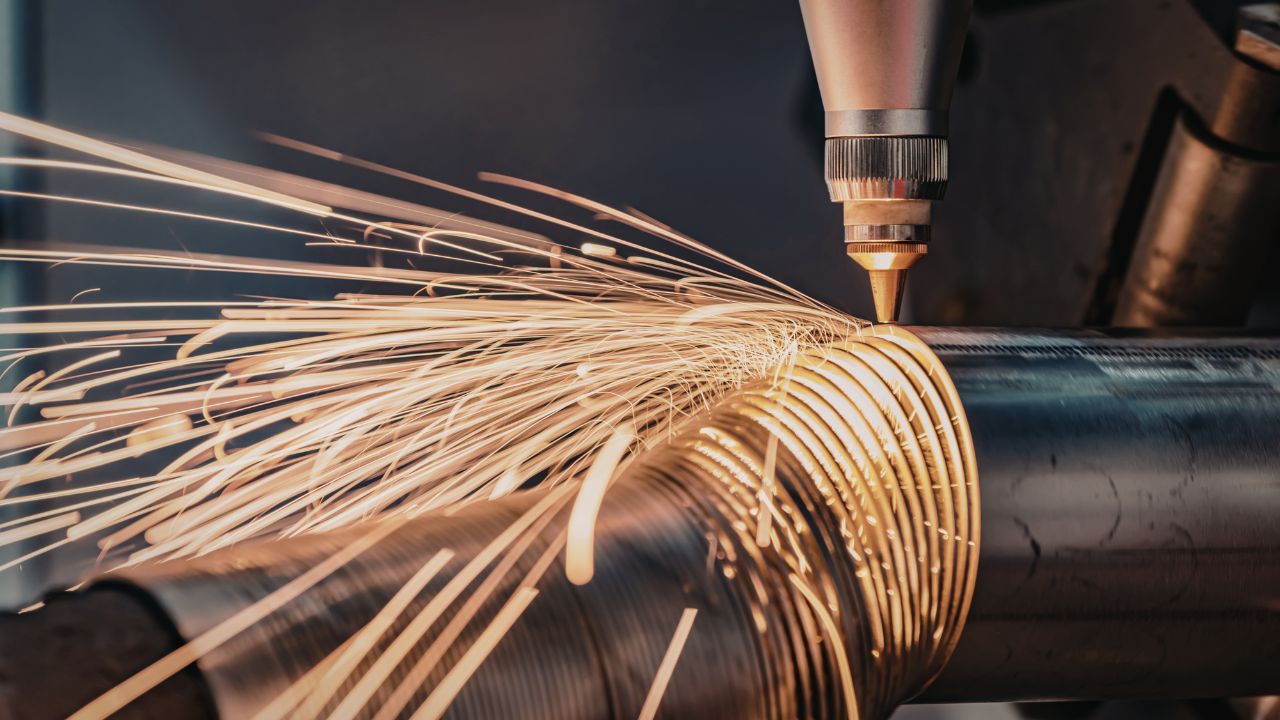
CNC laser cutting setup time is one of the most underestimated variables in precision manufacturing. It directly affects cost accuracy, production scheduling, and part quality, yet most buyers never think to ask about it. For custom projects that require tight tolerances, complex geometries, and fast turnarounds, setup efficiency determines whether a fabrication partner can deliver flexibility without compromising precision. This article breaks down what happens during setup, why speed matters, and how integrated CNC workflows turn setup time reduction into a measurable production advantage.
Key Takeaways
- CNC laser cutting setup takes 5–30 minutes versus 30–120 minutes for traditional mechanical methods, compressing changeover time across every job in a production schedule.
- Zero-tooling-cost operation makes laser cutting the economical choice for batches under 3,000 units, with a clear advantage for prototype runs of 1–50 pieces.
- Integrating laser tube cutting with CNC tube bending eliminates redundant setups and reduces cycle times by 30–60% on complex parts.
- CNC automation holds angular tolerances at ±0.1°–0.25° and drops scrap rates from 7% to 1–2%, delivering absolute repeatability without mechanical recalibration.
- Setup efficiency enables seamless prototype-to-production scaling, with CNC automation investments typically recovering within 12–24 months through reduced scrap and downtime.
CNC Laser Cutting Setup Defines Precision Manufacturing Outcomes Through Software-Driven Process Control
Every CNC laser cutting setup follows the same sequence: CAD modeling, CNC code programming, material positioning, parameter calibration, and fixture alignment. How well each step is executed determines whether the final part meets spec or creates downstream problems.
A CNC Laser Cutting Setup Includes Five Technical Steps Before Production Begins
CNC laser cutting is a software-driven, non-contact process. There are no physical tooling changes or manual adjustments between jobs. The operator loads a CAD file, generates the CNC program, positions the material, sets laser parameters, and confirms fixture alignment. Once configured, the system holds tight tolerances — ±0.005″ precision, kerf widths between 0.004″–0.020″, and surface finishes of Ra 125–250 microinches. Cutting speeds range from 100–500 inches per minute across material thicknesses up to 1″ for steel and 0.5″ for aluminum.
Setup Duration Directly Influences Cost Accuracy, Production Planning, and Quality Consistency
Traditional mechanical cutting methods require 30 to 120 minutes of setup time. CNC laser cutting setup takes 5 to 30 minutes. That difference compounds across every job changeover in a production schedule, which is where setup time reduction creates real custom project flexibility. Quoting accuracy improves because setup costs are predictable. Scheduling becomes more reliable because changeover windows shrink. Repeatability holds because the process runs on code, not manual calibration.
The cost math reinforces this. Hard tooling for stamping runs $500–$5,000 per setup, with complex progressive dies exceeding $15,000. Laser tube cutting operates on a zero-tooling-cost model. And when design changes hit late, after tooling is cut, a $500 CAD-phase revision can escalate past $50,000 in rework, scrap, and delays. Fast, accurate setup prevents that cascade entirely.
Short Setup Times in CNC Laser Cutting Give Custom Projects a Direct Cost and Speed Advantage
Setup time reduction is where custom project flexibility becomes a measurable advantage, not just a talking point. Shorter changeovers mean more iterations per day, lower per-run costs, and faster responses to design changes.
Setup Time Reduction Increases Custom Project Flexibility by Making Prototyping and Iteration Economically Viable
Traditional stamping doesn’t break even against laser cutting until volumes exceed 3,000 units. For batches of 1 to 50 pieces — the range where most prototyping and design iteration happens — CNC laser cutting holds a clear cost advantage. The zero-tooling-cost model eliminates the financial penalty of running short jobs. Engineers can update a CAD file, regenerate the CNC program, and cut a revised part without scrapping tooling or resetting fixtures. That workflow keeps iteration cycles tight and budgets intact.
Choose CNC laser cutting when batch sizes fall below 3,000 units, design revisions are expected, or tooling investment is not justified by production volume. Choose traditional stamping when volumes consistently exceed 3,000 units and part geometry is fixed — the per-unit cost advantage only materializes at scale with stable designs. For projects between these thresholds, evaluate how many design iterations are likely before committing to hard tooling.
Production Speed Benefits of CNC Laser Cutting Services Compress Development Timelines
Shorter changeovers don’t just save time on the shop floor — they accelerate entire product development cycles. When setup takes minutes instead of hours, multiple design revisions can move through cutting in a single shift. Operating costs stay low: laser consumables like nozzles and lenses run $1,500–$2,000 per year for a single-shift operation, compared to over $10,000 annually for mechanical tooling like router bits and saw blades. That margin frees budget for additional development runs rather than tooling replacement. Nested cutting optimization software adds another layer of efficiency, reducing material waste by 15–30% and improving throughput per sheet. The combined effect is faster time-to-part with less scrap and lower overhead per cycle.
Laser Tube Cutting Minimizes Setup Complexity by Replacing Multi-Step Fabrication With Single-Program Execution
Conventional tube fabrication stacks separate operations — each with its own setup, tooling, and handling. Laser tube cutting collapses that sequence into one programmed cycle, which is where the advantages of tube laser cutting become most apparent.
Tube Laser Cutting Eliminates Secondary Operations by Integrating Cutting, Slotting, and Shaping Into One Sequence
Traditional workflows run a tube through sawing, then drilling, then deburring — each step requiring its own fixture, operator input, and quality check. Laser tube cutting handles all of it in a single programmed pass. That consolidation cuts lead times and manufacturing costs without sacrificing precision. It also enforces correct operation sequencing by default. In tube fabrication, drilling and slotting should happen after bending to prevent distortion. Laser tube cutting integrates that logic into the program itself, eliminating a common source of rework before it starts.
Digital Reconfiguration Replaces Manual Retooling Through CNC Program Edits
Switching between jobs on conventional equipment means physical tooling changes, manual alignment, and recalibration — a time-consuming process with variable results. CNC laser tube cutting replaces all of that with a program edit. Load a new file, confirm parameters, and run. The difference shows up across every performance metric. CNC systems deliver total automation where traditional methods offer only partial. Configuration is fast versus time-consuming. Waste output drops from high to minimum. Each of those gains traces back to the same root advantage: digital reconfiguration removes the mechanical bottleneck from every job changeover in precision manufacturing.
CNC Tube Bending and Laser Tube Bending Integrations Reduce Overall Setup Time Through Shared Digital Control
When CNC tube bending and laser tube cutting run on coordinated programming logic, setup doesn’t reset between operations. The workflow stays continuous, and total cycle time drops.
Coordinating CNC Tube Bending With Laser Tube Cutting Improves Workflow Efficiency by Eliminating Redundant Setups
Separate machines running separate programs means separate setups — each with its own loading, alignment, and calibration. Integrating end-forming, punching, and cutting into a single automated workflow removes those handoffs. Material moves through the sequence without manual repositioning or re-fixturing. Intelligent control systems paired with automated tool changers compress this further, reducing cycle times by 30–60% on complex parts. That gain comes directly from eliminating the dead time between operations that conventional fabrication treats as unavoidable.
Laser Tube Bending Integration Improves Repeatability by Holding Digital Tolerances Across Every Unit
Repeatability fails when mechanical tooling drifts between runs. CNC tube bending eliminates that variable. Angular tolerances hold at ±0.1° to ±0.25° — a four-fold improvement over the ±1° typical of manual bending. Positional accuracy tightens from ±0.030″ to as low as ±0.010″. These numbers don’t degrade across production volumes because the output is code-driven, not operator-dependent. Where traditional methods deliver medium precision with variable repeatability, CNC delivers very high precision with absolute repeatability. Part 500 matches part 1 without resetting mechanical tooling, recalibrating fixtures, or accepting tolerance creep as a cost of scaling.
Faster CNC Laser Cutting Setup Reduces Communication Errors and Production Delays by Centralizing Process Control
Most production delays don’t start on the shop floor. They start in the gap between what engineering specifies and what manufacturing executes. Faster, more transparent setup closes that gap.
Centralized Project Coordination Prevents Setup Misalignment by Keeping Engineering and Manufacturing on the Same Digital File
When setup parameters live in a shared CNC program, there’s no room for misinterpretation between departments. The file is the single source of truth — not a markup, not a verbal handoff. IoT-integrated CNC systems reinforce this further, reducing error rates by 52% and quality rejection rates by 43%. Predictive maintenance efficiency improves by 39% with IoT integration, keeping equipment calibrated between jobs and eliminating the setup-related drift that creates communication gaps in precision manufacturing workflows.
Setup Transparency Reduces Late-Stage Production Surprises by Making Configuration Visible Before Cutting Starts
Production surprises happen when problems stay hidden until parts come off the machine incorrectly. CNC laser cutting setup makes configuration auditable in advance; parameters, tolerances, and material specs are confirmed digitally before the first cut. The difference in outcomes is measurable. Scrap rates on complex bends run as high as 7% on NC systems but drop to 1–2% with CNC automation. Maintenance costs tell a similar story: CNC benders average 2–4% of equipment value annually versus 4–7% for NC machines. Lower maintenance burden means fewer unplanned shutdowns, fewer mid-run recalibrations, and fewer of the timeline disruptions that force engineering and production into reactive problem-solving instead of planned execution.
Manufacturers Should Prioritize CNC Laser Cutting Setup Efficiency When Project Complexity Demands Adaptability Without Sacrificing Precision
Not every job requires an optimized setup. But when tolerances are tight, geometries are complex, and timelines are compressed, setup efficiency becomes the determining factor in whether a project stays on track.
Complex Geometries, Variable-Radii Tubes, and Short-Run Specialized Components Benefit Most From Rapid Setup Adaptability
Multi-axis CNC tube bending at 5-axis and above handles the work that conventional equipment cannot — programmable collet rotation, multiple bend heads, and multi-stack tooling that produces different bend radii in a single cycle. These capabilities serve the projects where setup adaptability matters most: aerospace hydraulic lines, medical device frames, and automotive exhaust systems. Each application demands tight-tolerance, complex components produced in volumes too low to justify dedicated tooling. Rapid CNC laser cutting setup keeps those jobs economically viable and production-ready without compromising precision manufacturing standards.
Setup Efficiency Creates Long-Term Strategic Advantages by Enabling Seamless Prototype-to-Production Scaling
The strategic value of setup efficiency extends beyond any single job. When setup is fast and digitally controlled, the same process that produces a prototype scales directly into a full production run — no tooling redesign, no workflow overhaul, no revalidation. CNC automation investments typically recover within 12–24 months through reduced scrap and downtime savings alone. That return accelerates further when manufacturers front-load Design for Manufacturability into the early design phase, avoiding rework costs, improving part quality, and compressing time-to-market. Setup efficiency is the operational backbone of that entire strategy — the mechanism that turns design intent into repeatable output at any volume.
What Makes CRD MFG Different, When to Choose Us, and When We’re Not the Right Fit
CRD MFG, Inc. integrates CNC laser cutting, laser tube cutting, and CNC tube bending under one roof with a dedicated project manager on every job. That single-source model eliminates the handoffs, requoting, and communication gaps that come from splitting work across multiple vendors. Choose CRD MFG when your project requires complex geometries, tight tolerances, and fast iteration with full accountability from one team. Choose CRD MFG when you need a manufacturing partner who coordinates engineering and production under one point of contact — not a vendor who only executes what’s handed to them. We’re not the right fit for commodity sheet metal stamping at volumes above 10,000 units where dedicated tooling and high-volume press runs deliver better per-unit economics. For precision tube fabrication, custom projects, and scalable prototype-to-production workflows, CRD MFG is built for the job.
CRD MFG, Inc. Delivers the Setup Efficiency Your Next Project Demands
CRD MFG, Inc. combines CNC laser cutting, laser tube cutting, and CNC tube bending under one roof with dedicated project management from first contact through delivery. No department handoffs. No communication gaps. One team, one point of accountability. Whether you need a single prototype, specialized custom pipe bending for petrochemical applications, or a full production run, our setup efficiency keeps timelines tight and tolerances tighter. Request a quote today and see what precision manufacturing partnership looks like.
