
Key Takeaways
- Precision tube bending for aerospace and medical applications requires tolerances within ±0.1 mm—ten times tighter than standard manufacturing—with biocompatible materials and smooth internal surfaces critical for device safety and regulatory compliance.
- CNC tube bending eliminates operator variability by achieving positional accuracy of ±0.1mm and bend angle precision of ±0.05 degrees, while automatically compensating for springback and material behavior that manual methods can’t consistently control.
- Material selection drives manufacturing complexity—titanium, Inconel, and high-strength stainless steel for aerospace demand specialized tooling and expertise, while medical devices require biocompatible alloys with full material traceability for FDA compliance.
- Laser tube cutting integration with CNC bending enables automated compensation for material elongation during bends, ensuring pre-cut holes and features align perfectly without trial-and-error corrections that waste expensive aerospace-grade materials.
- AS9100 and NADCAP certifications aren’t optional—they verify suppliers maintain process control, equipment calibration, and quality systems required for components operating under extreme temperatures, pressures, and vibrations where failure means catastrophe.
Precision tube bending separates mission-critical manufacturing from standard fabrication. In aerospace and medical applications, tube failures cost lives—tolerances tighten to ±0.1 mm, materials evolve to biocompatible alloys, and quality controls intensify beyond typical industrial standards.
This article examines the techniques, technologies, and certifications that enable manufacturers to produce bent tubes for hydraulic systems operating at 35,000 feet and surgical instruments entering human bodies.
From CNC automation and laser cutting integration to material selection and domestic sourcing advantages, discover how precision tube bending delivers the reliability aerospace and medical sectors demand when component failure isn’t an option.
What is Precision Tube Bending and Why is it Critical for Aerospace and Medical Applications?
Precision tube bending separates standard manufacturing from mission-critical fabrication. In aerospace and medical sectors, tube failures cost lives. Tolerances tighten, materials evolve, and quality controls intensify to meet these demands.
What Makes Precision Tube Bending Different from Standard Tube Bending?
Precision tube bending operates within tolerances standard methods can’t achieve. Medical devices demand accuracy within ±0.1 mm—ten times tighter than general manufacturing. Surface finish matters equally. Smooth internal walls prevent contamination and ensure consistent fluid flow in diagnostic equipment and life-support systems. Standard bending leaves rough surfaces and dimensional variations that fail in critical applications.
How Does Precision Tube Bending Impact the Safety and Reliability of Aerospace and Medical Devices?
Aerospace components face extreme operating conditions—temperature swings, high pressures, and constant vibration. Minor imperfections create failure points that lead to catastrophic system breakdowns. Tube forming becomes safety-critical when a single bent line carries hydraulic fluid at 3,000 psi or fuel to jet engines. Medical applications demand biocompatible materials like stainless steel and titanium that won’t corrode or trigger immune responses. Precision bending preserves material integrity while achieving complex geometries required for surgical instruments and diagnostic systems.
How Do You Achieve Precision in Tube Bending for Critical Applications?
Precision requires technology, oversight, and process control. CNC automation, quality standards, and integrated cutting systems eliminate human error and maintain consistent tolerances across production runs.
What Role Does CNC Tube Bending Play in Achieving High Precision?
CNC tube bending removes operator variability from the equation. Computer-controlled machines repeat identical bends across thousands of parts with consistent angles, radii, and positioning. Programming replaces manual measurement—machines calculate springback, material behavior, and tooling pressure automatically. This repeatability proves essential when aerospace specs demand identical hydraulic lines or medical devices require matching tube assemblies.
How Do Tube Bending Companies Ensure Accuracy in Custom Tube Bending Services?
American manufacturers operate under strict federal and state regulations with ANSI oversight ensuring quality standards. This regulatory framework creates accountability beyond basic ISO compliance. Geographic proximity enables direct process oversight—clients visit facilities, inspect operations, and verify specifications in real time. Domestic partnerships eliminate the communication gaps and delayed responses that compromise precision in overseas manufacturing.
Why Is Laser Tube Cutting Integrated with Tube Bending for More Precise Results?
Laser cutting completes what bending starts. Traditional sawing creates burrs and dimensional variations at tube ends. Laser systems cut perpendicular ends within 0.01 mm, add precision holes for mounting hardware, and create notches for welded connections—all without secondary operations. Integration means bent tubes move directly to laser stations for finishing, maintaining positioning accuracy and eliminating handling errors between processes.
What Materials Are Used in Precision Tube Bending for Aerospace and Medical Applications?
Material selection drives manufacturing complexity and final performance. Aerospace and medical applications demand alloys that withstand extreme conditions while maintaining biocompatibility or structural integrity. Wrong material choices lead to premature failure or regulatory rejection.
What Are the Common Materials for Tube Bending in Aerospace Applications?
Aerospace relies on titanium, Inconel, and high-strength stainless steel for critical tube assemblies. Titanium offers superior strength-to-weight ratios for fuel lines and structural components. Inconel withstands extreme heat in engine systems and exhaust applications. High-strength stainless steel balances corrosion resistance with pressure ratings for hydraulic systems. These materials resist work-hardening during bending—a property that requires specialized tooling, controlled heat processes, and expert setup to prevent cracking or dimensional distortion.
How Do Material Properties Influence the Precision of Tube Bending for Medical Devices?
Medical devices prioritize biocompatibility above all else. Stainless steel 316L and titanium Grade 5 dominate because they resist corrosion from bodily fluids and trigger no immune response. Material selection directly impacts precision—softer metals bend easier but may not hold tight radii, while harder alloys maintain shape but crack under excessive strain. FDA regulations require full material traceability and certification, making material choice a compliance issue as much as an engineering decision. Surface finish and grain structure affect how instruments sterilize and perform in surgical environments.
What Are the Key Benefits of Precision Tube Bending for Aerospace and Medical Applications?
Precision tube bending eliminates failure points in systems where malfunction means catastrophe. Benefits extend beyond dimensional accuracy to include weight reduction, leak prevention, and performance optimization across mission-critical components.
How Does Precision Tube Bending Improve Product Reliability and Safety in Aerospace?
Aerospace tube assemblies serve in hydraulic systems operating at 3,000+ psi, fuel delivery lines carrying volatile fluids, cooling systems protecting avionics, and structural supports bearing flight loads. Non-negotiable precision prevents leaks at connections, maintains flow rates under pressure, and ensures components fit within tight aircraft packaging constraints. Racing applications prove the concept—lightweight bent titanium tubes replace heavier welded assemblies, improving power-to-weight ratios while maintaining crash safety standards. Single-piece bent tubes eliminate weld joints that create weak points and potential leak paths in pressurized systems.
Why Is Precision Critical in the Medical Field, Particularly in Device Manufacturing?
Medical applications span surgical instruments requiring exact positioning, diagnostic systems measuring minute fluid volumes, and hospital furniture supporting patient mobility equipment. Precision impacts function directly—arthroscopic tools need specific bend angles to reach target anatomy, while dialysis machines demand smooth internal tube surfaces to prevent blood clotting and maintain sterile fluid paths. Rough internal finishes trap bacteria and create flow turbulence that compromises diagnostic accuracy in lab equipment. Life-support systems depend on precise bends to maintain consistent oxygen delivery and vacuum pressure without kinking or flow restrictions.
What Are the Challenges in Achieving Precision in Tube Bending?
Manufacturing precision faces obstacles from material variability and process limitations. Even minor inconsistencies cascade into dimensional errors that disqualify parts from aerospace and medical use. Understanding these challenges shapes equipment selection and quality control strategies.
How Do Material Inconsistencies Impact Precision in Tube Bending?
Wall thickness variations within a single tube batch alter bending behavior. Thicker sections resist deformation more than thinner areas, creating uneven radii and out-of-round conditions. Grain structure differences affect springback—the tendency for bent material to partially return to its original shape after forming. One tube might spring back 3 degrees while another from the same lot springs back 5 degrees, destroying dimensional consistency. Hardness variations create unpredictable crack formation during tight-radius bends. Material certificates provide nominal values, but lot-to-lot differences require test bends and setup adjustments between production runs.
What Are the Limitations of Traditional Tube Bending Methods for Critical Applications?
Manual and hydraulic bending methods depend on operator skill and visual assessment. Achieving consistent angles across production runs becomes impossible when humans adjust machines by feel. Traditional methods lack programmable compensation for springback and material behavior—operators bend, measure, adjust, and rebend until parts meet spec. This trial-and-error approach wastes material and time while producing parts with variable quality. Rotary draw benders without CNC control can’t handle complex multi-plane bends requiring precise rotation between bend sequences. Tool changes and manual repositioning introduce cumulative positioning errors that exceed aerospace and medical tolerances.
How Does CNC Tube Bending Enhance Precision in Manufacturing?
CNC automation transforms tube bending from skill-dependent craft to programmable science. Computer-controlled systems eliminate human error, deliver repeatable results, and handle complex geometries manual methods can’t achieve.
What Is CNC Tube Bending and How Does It Improve Accuracy in Tube Bending Services?
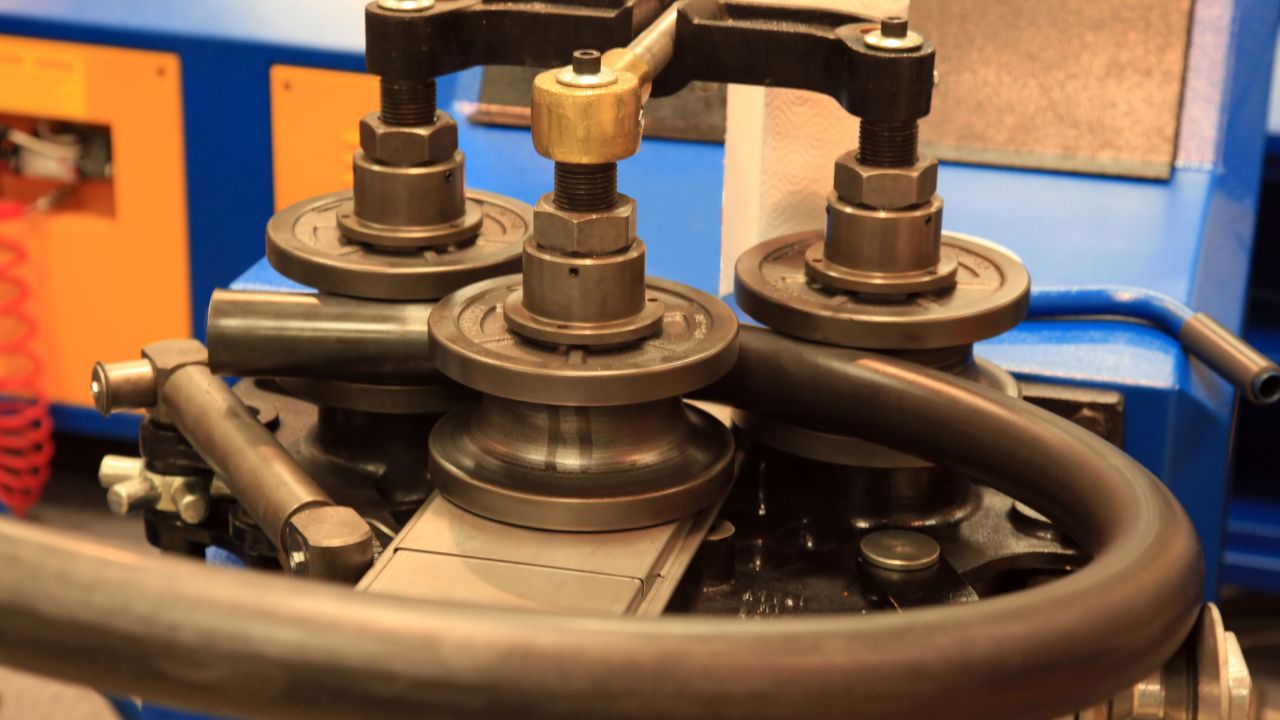
CNC tube bending uses computer-controlled servo motors to execute programmed bend sequences with mechanical precision. Software algorithms control positioning, rotation, and bending angles while maintaining tolerances as tight as ±0.05 degrees and ±0.1mm positional accuracy. The system calculates springback compensation automatically—adjusting for material tendency to partially return to original shape after forming. Machines store bend programs in memory, ensuring identical results across production runs months apart. Advanced setups complete one bent part per minute while maintaining exact specifications. This consistency proves impossible with manual measurement and adjustment methods.
How Does CNC Tube Bending Compare to Manual Bending in Terms of Repeatability and Precision?
Manual bending historically produced inaccurate dimensions, bad angles, and cosmetic imperfections like wrinkles on bend interiors. Manual methods depend on operator skill—producing quality bends requires extensive experience, and any slip-up creates scrap. Traditional approaches rely on trial-and-error cycles: bend a test piece, measure results, adjust machine settings, rebend until specifications match. CNC machines accurately control bend degree, distances between bends, and plane of rotation—eliminating the confusion surrounding manual bending techniques. Electronic motion control ensures perfect repeatability with no variation between bends, removing the need for trial-and-error adjustments. Manual bending can’t execute complex multi-plane geometries requiring precise rotation between sequential bends—operations CNC completes in single setups.
How Are Laser Tube Cutting Services Integrated with Precision Tube Bending?
Laser cutting and CNC bending form complementary processes when properly integrated. Cutting first allows for flat-pattern features like slots, tabs, or notches that align perfectly during bending. This workflow sequence unlocks capabilities impossible with standalone operations.
What Benefits Does Laser Tube Cutting Provide When Paired with CNC Tube Bending?
Laser cutting and tube bending systems interface with each other to automatically compensate for displacement of geometries resulting from bending, guaranteeing parts are right from the start. The tube bending machine calculates material elongation and communicates it to the laser system, which corrects the position of cutting geometries along the tube based on received information. Without this integration, material stretching during bends shifts pre-cut hole positions—creating misalignments that require costly trial-and-error corrections. Laser cutting creates holes, tabs, and grooves that allow cut stock to be assembled by bending into appropriate shapes, eliminating complicated jigs and delivering self-aligned parts ready for use. Single-source suppliers handling both processes reduce handling errors, maintain positioning accuracy, and eliminate coordination problems between separate vendors.
How Does Laser Tube Cutting Ensure Cleaner, More Precise Cuts in Complex Tube Shapes?
Laser cutting tolerances typically range within ±0.005 inches, with fiber lasers achieving exceptional precision down to ±0.003 inches. Laser cutting machines consistently cut with accuracy within ±0.05 to ±0.2 mm range, with tolerances within ±0.1 mm or less. High-power lasers concentrate at small spot diameters on material surfaces—the smaller spot diameter combined with CNC system stability allows tube laser cutters to hold tight tolerances and replicate the same accuracy across all cuts. Non-contact cutting eliminates burrs and deformation from mechanical sawing. Laser kerf typically ranges from 0.1mm to 0.3mm depending on power and nozzle diameter—creating cleaner edges than traditional methods while enabling beveled cuts, coped joints, and multi-axis geometries impossible with conventional saws.
What Are the Steps Involved in Precision Tube Bending for Aerospace and Medical Applications?
Precision tube bending follows a structured workflow from material selection through final inspection. Each step builds on the previous to ensure parts meet aerospace and medical specifications without trial-and-error waste.
Step 1: Material Selection and Pre-Processing for Precision Tube Bending
Material selection varies by industry: titanium, Inconel, and high-strength stainless steel dominate aerospace applications for their strength-to-weight ratios and temperature resistance. Medical devices require biocompatible stainless steel 316L and titanium Grade 5 that resist corrosion and pass FDA traceability requirements. Pre-processing includes cutting tubes to length, cleaning to remove contaminants, and inspecting for dimensional consistency. Wall thickness variations within material lots affect bending behavior, requiring verification before setup. Steel/chrome mandrels bend steel, copper, aluminum, and bronze tubing, while aluminum/bronze mandrels handle stainless, titanium, and Inconel—matching mandrel material to tube material prevents galling and contamination.
Step 2: Designing the Bend Using CAD and Simulation Software
Programming starts by importing part geometries from CAD—converting STEP and IGES files to bend data with XYZ Cartesian coordinates translated to YBC bend data. Simulation software automatically compensates for elongation and springback in tube bending, getting parts right from the start with no trial and error. Software imports CAD files of single parts or assemblies, stores machine data, creates programs, and simulates bending cycles to prevent collisions. True-to-life 3D graphics identify interference between tube, machine, and tooling before production begins. Software determines springback and elongation values, calculates accurate cut lengths, and displays tubes in 3D for analysis and verification. This eliminates the costly practice of bending test pieces, measuring results, adjusting settings, and rebending until specifications match.
Step 3: CNC Setup and Calibration for Accurate Tube Bending
Setup involves checking mandrel, bend head, servo motors, and CNC system are in proper working condition, then inserting mandrel into tube and clamping tube into bend head with mandrel positioned at bend point. Mandrel body diameter equals tube diameter minus wall thickness times 2.21—precise sizing with proper ball segment numbers adequately supports the tube. Operators align mandrel center with bending area center, adjust tailstock lead screw to extend mandrel to appropriate position, then test in manual mode to verify movements show no creeping, pulsation, or leaks. Maintenance includes calibrating servo systems, keeping mandrels clean, and inspecting clamping dies for wear—using CNC control with real-time correction ensures repeatable accuracy. Tooling must match application specifications—using existing tooling not optimized for the job creates wrinkles and dimensional errors.
Step 4: Quality Control and Testing for Precision
Tight tolerances within ±0.1 mm must be verified in medical device applications through dimensional inspection of every bend angle, radius, and positioning. Quality control protocols ensure aerospace components withstand extreme temperatures, pressures, and vibrations through pressure testing, X-ray inspection for internal defects, and material certification verification. First-article inspection validates that CNC programs produce correct parts before full production runs. Parts failing dimensional checks indicate tooling wear, material inconsistencies, or springback calculation errors requiring immediate correction.
Why Should Manufacturers Choose Domestic Tube Bending Companies for Critical Applications?
Sourcing decisions impact quality, timelines, and intellectual property protection. Domestic tube bending offers strategic advantages that overseas manufacturing can’t match when precision and reliability determine product success.
What Are the Advantages of Choosing Local Tube Bending Services Over Overseas Providers?
Shorter supply chains deliver faster turnaround and reduce disruption risk. Domestic manufacturing eliminates international shipping complexities, customs delays, and warehousing requirements that add weeks to lead times. Language barriers and time zone differences disappear—communication happens in real time without translation errors or 12-hour response delays that stall urgent decisions. Manufacturing domestically protects proprietary designs and processes from IP theft common in certain overseas markets. For every dollar spent in U.S. manufacturing, an additional $1.82 flows into the national economy through wages, materials, and supporting services—domestic sourcing strengthens local communities while securing critical supply chains.
How Does Proximity to Manufacturers in the U.S. Improve Project Oversight and Timeline Efficiency?
Geographic proximity enables site visits for direct manufacturing oversight. Engineers inspect first-article samples in person, verify quality control processes, and catch problems before they become production runs. Local partnerships prove particularly valuable for custom projects requiring close collaboration—design changes happen through face-to-face meetings rather than email chains spanning days. Working with domestic partners delivers quicker turnaround times through shorter shipping distances and greater supply chain reliability free from port congestion, freight delays, and international logistics bottlenecks. When aerospace or medical projects demand rapid iteration and tight coordination, proximity converts weeks of overseas coordination into days of local collaboration.
What Certifications and Standards Are Required for Precision Tube Bending in Aerospace and Medical Applications?
Certifications separate qualified suppliers from general fabricators. Aerospace and medical industries mandate specific standards that verify manufacturing capabilities, process control, and quality systems before approving suppliers.
Why Are Certifications Like AS9100, NADCAP, and ISO 9001 Critical in Precision Tube Bending?
AS9100 represents the international quality management standard for aviation, space, and defense industries. It builds upon ISO 9001 foundations while adding aerospace-specific requirements: operational risk management, supply chain control, and stringent traceability protocols that track materials from raw stock through finished components. NADCAP (National Aerospace and Defense Contractors Accreditation Program) certification is required by major aerospace companies for suppliers performing special processes like tube bending. NADCAP provides standardized quality assurance through independent audits that verify equipment calibration, operator training, process documentation, and statistical process control. These certifications prove suppliers maintain consistent capabilities—not just claim them.
What Role Does Compliance Play in the Quality and Safety of Tube Bending for These Industries?
Accredited suppliers must meet exacting requirements that ensure component reliability under extreme operating conditions. Compliance verification covers material certifications, heat treatment records, dimensional inspection reports, and non-destructive testing results for every production lot. Manufacturing processes undergo regular audits confirming operators follow documented procedures, equipment receives scheduled maintenance, and quality control catches defects before parts ship. In aerospace, compliance prevents catastrophic failures at 35,000 feet. In medical devices, it protects patients from equipment malfunctions during critical procedures. Standards aren’t bureaucratic obstacles—they’re systematic safeguards that validate manufacturing integrity when lives depend on precision tube assemblies.
What Are the Future Trends in Precision Tube Bending for Aerospace and Medical Applications?
Technology evolution reshapes precision tube bending through automation, connectivity, and intelligent systems. These advances target the persistent challenges of labor shortages, efficiency demands, and zero-defect requirements in critical applications.
How Are Advancements in CNC Technology Shaping the Future of Tube Bending?
AI integration enables predictive maintenance, real-time quality control, and optimization of bending processes, leading to reduced downtime and increased productivity. Industry 4.0, IoT, and AI lead to real-time tracking, predictive maintenance, and remote operation—robotic and AI-based bending systems drive greater automation and flexibility while skilled labor shortages push industries toward full automation. Advanced automation extends to automated tool changing where machines swap out dies and mandrels for different tube diameters without manual operator intervention. The integration of AI, IoT, and real-time monitoring in smart machines enables predictive maintenance and maximizes productivity with fiber laser technology adoption accelerating due to superior cutting speed and energy efficiency. Fully electric CNC benders replace hydraulic systems, cutting energy consumption by 25% while delivering smoother operation and faster cycle times. These machines store production data, learn from process variations, and automatically adjust parameters—eliminating trial-and-error setups that waste aerospace-grade materials.
What Emerging Trends Are Influencing the Integration of Laser Tube Cutting with Precision Tube Bending?
Modern machines feature IoT connectivity for real-time performance monitoring, with data analytics optimizing cutting parameters for different material grades—automated loading and unloading systems paired with robotic arms reduce manual intervention by 60%. Integration with digital twins allows real-time monitoring, predictive adjustments, and lifecycle analytics—AI will simulate and optimize entire cutting processes before execution. Digital twin software simulates material performance under various processes, reducing waste by targeting problems before they arise while IoT transmits signals across cloud platforms for data collection and machine status monitoring. Laser tube cutting machines evolve to offer remote monitoring and predictive maintenance features that enhance productivity and minimize downtime. Manufacturers implement fully automated cells where laser cutting feeds directly into CNC bending lines without human handling—achieving cycle time reductions up to 45%. This seamless integration eliminates positioning errors, maintains part traceability from raw material through finished assembly, and supports the lights-out manufacturing aerospace and medical sectors increasingly demand.
Partner with CRD MFG, Inc. for Precision Tube Bending Excellence
When aerospace and medical applications demand zero-defect precision, CRD MFG, Inc. delivers. Our CNC tube bending capabilities, combined with laser cutting integration and certified quality systems, ensure your critical components meet the tightest tolerances. We understand that your projects require more than standard fabrication—they demand expertise in titanium, Inconel, and biocompatible materials, rigorous process control, and unwavering reliability.
Our domestic manufacturing advantage means faster turnaround, direct project oversight, and IP protection for your proprietary designs. Don’t risk component failure in mission-critical applications. Contact CRD MFG, Inc. today to discuss how our aerospace tube fabrication services and precision tube bending can support your aerospace or medical manufacturing needs.