
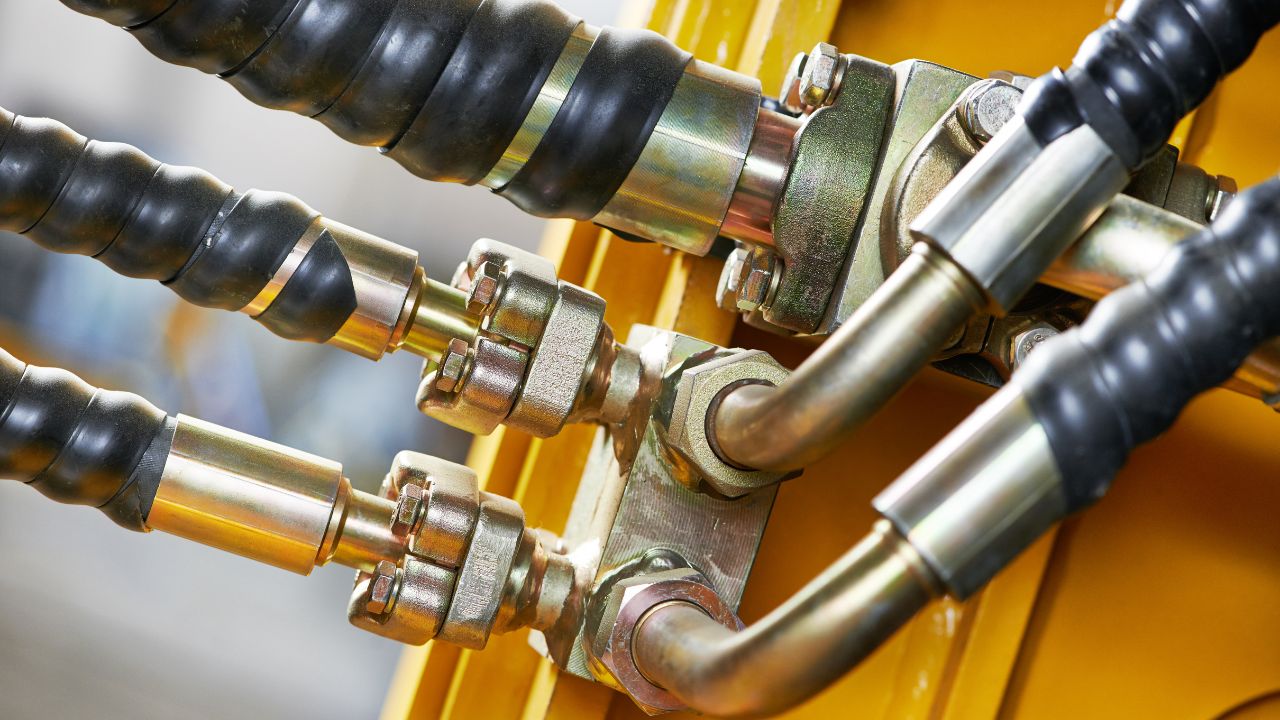
Industrial tube assemblies are critical components in virtually every major manufacturing sector — from automotive exhaust systems and aerospace hydraulic lines to medical devices and HVAC refrigerant circuits. Each application carries unique requirements for materials, tolerances, pressure ratings, and compliance standards. As the global tube assembly market pushes toward $20 billion by 2033, manufacturers face growing demands for precision, speed, and cost efficiency. This guide breaks down sector-specific applications, production technologies, the advantages of tube laser cutting, key challenges, and the innovations reshaping how industrial tube assemblies are designed, fabricated, and delivered.
Key Takeaways
- The global tube assembly market was valued at $12.5 billion in 2024 and is projected to reach $20.23 billion by 2033, with medical tubing (8.5% CAGR) and laser cutting machines (12% CAGR) leading growth.
- Assembly requirements vary drastically by sector — aerospace tolerances reach ±0.0005″ with pressures exceeding 25,000 PSI, while automotive prioritizes high-volume production of 10,000 to over 1 million units annually.
- The advantages of tube laser cutting deliver an 83% reduction in processing time versus traditional methods, with precision of ±0.1 mm and cost savings split across labor (40%), materials (25%), reduced rework (20%), and throughput (15%).
- CNC tube bending and robotic welding solve complex assembly challenges at scale by ensuring repeatable precision, eliminating human error, and supporting multi-material fabrication across stainless steel, aluminum, titanium, and specialty alloys.
- Reshoring and Industry 4.0 adoption are reshaping tube fabrication solutions — shortening lead times by 30–40%, reducing landed costs by 12–20%, and driving sustainability through fiber laser efficiency and lean inventory strategies like JIT and VMI.
What Are Industrial Tube Assemblies and Why Are They Essential?
Industrial tube assemblies are foundational components in nearly every major manufacturing sector. Understanding what they are and why they matter starts with their construction and the assembly requirements that define their performance.
Industrial Tube Assemblies Are Precision-Engineered Components Built for Critical Systems
Industrial tube assemblies are precision-engineered components used in hydraulic lines, fuel systems, pneumatic controls, exhaust systems, cooling circuits, brake lines, and refrigerant lines. They range from simple bent tubes to complex multi-component systems with fittings, flanges, and welded joints.
Connection types vary by sector applications. Aerospace systems use AN (Army-Navy) 37-degree flare fittings. HVAC/R relies on brazed joints. Other industries use compression and flare fittings based on pressure and temperature demands. Profile types include round tube, square tube, angle, rectangular, beam, and custom extruded shapes — each requiring specific tube fabrication solutions like CNC tube bending, robotic welding, and laser cutting to meet tolerances.
Industrial Tube Assemblies Drive a $12.5 Billion Global Market
The global tube assembly market hit $12.5 billion in 2024 and is projected to reach $20.23 billion by 2033 at a 6.2% CAGR. The precision tubes segment alone was valued at $24.4 billion in 2025, growing toward $32.5 billion by 2032.
Sector applications span automotive, aerospace, medical devices, HVAC/refrigeration, construction, energy, oil and gas, agriculture, and furniture design. Demand is accelerating as manufacturers adopt industrial automation, advanced materials, and Industry 4.0 technologies — including robotics, sensor integration, and AI-driven process optimization. These shifts are raising the bar for the manufacturing complex tube assembly process and creating new complex assembly challenges across every industry served.
What Are the Key Application Areas for Industrial Tube Assemblies, and What Do They Require?
Every sector has distinct assembly requirements for tube components. The differences come down to materials, tolerances, pressure ratings, and production volumes.
Automotive and Aerospace Demand High-Volume Precision and Extreme Performance
Automotive industrial tube assemblies go into exhaust systems, cooling circuits, fuel rails, brake lines, power steering, chassis, roll cages, and suspension components. The global automotive tube bending assembly parts market was valued at $5.79 billion in 2024 and is projected to reach $7.72 billion by 2032 (3.17% CAGR). Production volumes range from 10,000 to over 1 million units annually. In 2025, global production of automotive precision steel tubes hit 4,323.7 kilotons at $1,303 per ton. Key materials include Type 409 ferritic stainless steel for exhaust, Type 439 for high-temp environments up to 1700°F, and DOM tubing (ASTM A513 Type 5) for structural applications. Typical tolerances run ±0.005″–0.030″ with pressure ratings from 100–2,500 PSI.
Aerospace sector applications push assembly requirements further. Tube assemblies serve hydraulic lines, fuel systems, pneumatic controls, and structural supports. The aerospace tube assemblies market reached $669.5 million in 2024 with 9.1% year-over-year growth, projecting $923.2 million by 2034 — an $8.35 billion cumulative opportunity. Tolerances tighten to ±0.04 mm, with some manufacturers achieving ±0.0005″. Pressure ratings reach 5,000 PSI for AN 37° fittings and exceed 25,000 PSI for stainless steel Micro-LC tubing. Commercial aircraft is the largest platform segment, with hydraulic and instrumentation lines dominating applications.
HVAC/R, Medical, and Energy Applications Each Carry Unique Tube Fabrication Requirements
HVAC/refrigeration relies on copper tube fabrication solutions for refrigerant lines, condenser coils, evaporator tubes, and capillary tubes. Copper types include ACR (ASTM B280, >635 PSI), Type L (~601 PSI), and Type K (~808 PSI). Copper outperforms aluminum in heat transfer and corrosion resistance. EPA pressure testing requires 300 psig for 24 hours followed by evacuation to a 1,000-micron vacuum. The stakes are real — the EPA estimates 20 supermarkets can lose $4 million over 10 years from a 25% refrigerant leak rate.
Medical device tube assemblies face the tightest tolerances in any sector: ±0.0005 inches. Applications include catheters, hypodermic tubing, surgical instruments, and implants. The global medical tubing market was $11 billion in 2023, growing toward $19.5 billion by 2030 (8.5% CAGR). Surface finish requirements range from Ra 32 (standard) to Ra 15 (ultra-pure). Biocompatible materials include 316L stainless steel, titanium, PEEK, and PTFE/PFA.
Energy and oil & gas applications cover pipeline fabrication, rig structures, heat exchangers, flanges, and custom fittings — all requiring the advantages of tube laser cutting to produce complex shapes with speed and precision.
How Do CNC Tube Bending and Robotic Welding Enhance Tube Assembly Production?
CNC tube bending and robotic welding are the two technologies most responsible for solving complex assembly challenges at scale. Together, they deliver the repeatability and precision that modern industrial tube assemblies demand.
CNC Tube Bending Delivers Repeatable Precision Across High-Volume Production Runs
CNC tube bending ensures consistency, whether you’re producing 100 parts or 100,000. Equipment like the BLM Elect series handles a wide range of OD sizes, CLR ranges, and mandrel wall thicknesses — and can combine traditional bends with rolls in the same complex part geometry. On-site tooling shops enable rapid custom tool development for specialized bending requirements, reducing lead times on new jobs. The manufacturing complex tube assembly process also benefits from materials like DOM tubing, produced via cold drawing from ERW tubes, which delivers tight tolerances on OD, ID, and wall thickness with excellent concentricity and solid weld integrity.
Robotic Welding Eliminates Human Error While Scaling Production Output
Fully programmable robotic welding delivers consistent, accurate welds every time, removing the variability that comes with manual welding on high-volume runs. It works with stainless steel, carbon steel, aluminum, and various alloys, enabling more complex product designs without sacrificing precision. For HVAC/R sector applications, nitrogen purging during brazing prevents internal oxidation, creating strong, permanent, leak-proof bonds. Combined with CNC tube bending, robotic welding gives manufacturers the tube fabrication solutions needed to meet tighter tolerances, higher volumes, and more demanding assembly requirements across every industry.
What Are the Key Requirements for Manufacturing Complex Tube Assemblies?
The manufacturing complex tube assembly process hinges on two factors: choosing the right material for the application and meeting the compliance standards that govern it.
Material Selection Varies by Sector and Drives Design Flexibility
Each sector demands different materials based on performance, cost, and environmental exposure. Aerospace relies on titanium alloys (CP Grade 2, Ti 3Al/2.5V Grade 9, Ti 6Al/4V Grade 5) for strength-to-weight ratio, stainless steel (304/304L, 316/316L, 316Ti, 6Mo, 904L, Duplex UNS S31803) for corrosion resistance, and nickel alloys (Alloy 22, 276, 625) for extreme temperature and pressure. Titanium is gaining traction for its lightweight and corrosion-resistant properties. Automotive optimizes for cost with ferritic stainless steels (409, 439) and DOM steel for structural applications. Medical assembly requirements add biocompatibility and sterilization compatibility — EtO, irradiation, and steam autoclave. Advanced materials like lightweight composites, high-performance alloys, and DEHP-free polymers are expanding design flexibility across all sector applications. Tube laser cutting handles the full range: mild steel, stainless steel, aluminum, copper, brass, bronze, titanium, and certain non-metals.
Choose titanium alloys if your application requires extreme strength-to-weight ratio under aerospace certification. Choose ferritic stainless steels (409/439) when high-volume automotive production and cost control are the priority. Choose 316L stainless steel or PEEK when biocompatibility and sterilization compatibility are non-negotiable, as in medical device manufacturing.
Every Major Sector Has Specific Regulatory Standards That Shape the Manufacturing Process
Compliance defines how industrial tube assemblies are designed, produced, and tested. Aerospace requires AS9100 Revision D — the globally recognized QMS standard covering all phases of production. Automotive follows IATF 16949 with audits in years one and two and full re-certification every three years. Medical devices fall under ISO 13485:2016, now aligned with the U.S. FDA’s QMSR as of February 2026. HVAC/R systems are governed by UL standards and ASHRAE Standard 15. These aren’t optional — extending tolerances by even one decimal point can significantly increase part costs, tool change-overs, scrap rates, and raw material consumption.
What Are the Challenges in Manufacturing Industrial Tube Assemblies?
Complex assembly challenges show up at every stage — from initial design and material selection through production and inventory management. Solving them requires the right technology, processes, and quality systems.
Design and Material Challenges Demand Advanced Manufacturing Technology
Complex geometries in industrial tube assemblies require advanced capabilities like 5-axis laser cutting and CNC machining to produce parts that simpler methods can’t handle. The stakes are high — mismatched flare angles in aerospace fittings can cause catastrophic system failures. In HVAC, aluminum microchannel coils face stress corrosion cracking and poor performance in humid climates, making material selection critical. Producing tight-tolerance tubing for medical and aerospace sector applications requires a multi-layered, 5-step manufacturing process to hit ±0.0005″ precision. Supply chain vulnerabilities add another layer — disruptions like the 2021 global chip shortage demonstrated how quickly JIT-dependent production lines can stall when upstream suppliers fail.
Quality Control and Inventory Management Are Inseparable at Scale
Maintaining dimensional accuracy across large production runs requires advanced inspection equipment. Tools like the Faro Arm with blue light scanner and VTube Inspection Software verify parts meet spec throughout the manufacturing complex tube assembly process. But quality control extends beyond the shop floor. Inventory carrying costs range from 25% to 55% of total inventory value annually — covering storage, labor, insurance, obsolescence, and tied-up capital. On $25,000 in annual inventory, that’s roughly $7,000 per year. Certified kitting and sub-assembly services (AS9100, ISO, NIST-compliant) reduce downtime by grouping components into ready-to-use kits. Bar-coding and RFID tracking provide real-time inventory visibility with automated data collection, giving manufacturers the traceability that tube fabrication solutions require at scale.
How Does Tube Laser Cutting Improve Manufacturing Efficiency and Accuracy?
The advantages of tube laser cutting over traditional methods are measurable in time, cost, and precision. It’s the single biggest efficiency upgrade available for industrial tube assemblies.
Tube Laser Cutting Saves Up to 83% in Processing Time vs. Traditional Methods
Processing 100 pipes takes 25 minutes with laser cutting versus 150 minutes with traditional saw-and-drill — an 83% time saving. Setup drops from 20 to 5 minutes, cutting from 60 to 15, and drilling is eliminated entirely since laser handles it in a single operation. Sawing, milling, and deburring are also replaced. Laser precision reaches ±0.1 mm CNC versus ±0.5 mm or worse for conventional methods, with positioning tolerance at ±0.005″ and minimum hole diameters of 0.002″ (~50 microns). Max capacity handles round tubes up to 10″ diameter and 26 feet in length with bevel cuts up to 45°. Cost savings break down to labor (40%), material (25%), reduced rework (20%), and faster throughput (15%). A UK case study confirmed 67% per-pipe time reduction. A Southeast Asia manufacturer reported 15% material cost savings from tighter nesting and zero-tail cutting.
Fiber Laser Technology Delivers Faster Speeds at a Fraction of the Operating Cost
The global laser cutting machines market reached $6.85 billion in 2025, projected to hit $18.43 billion by 2034 (12% CAGR). Fiber lasers dominate metal tube cutting — cutting 1mm stainless steel at over 30 m/min versus 10–12 m/min for CO₂, with 2–5× faster speeds on thin metals. Operating costs run 1/3 to 1/5 of CO₂ systems, with pump diode lifespans exceeding 100,000 hours versus 20,000–30,000. Equipment ranges from entry-level ($60K–$100K, 18-month payback) to high-end ($150K–$200K+, 10-month payback). Major manufacturers include TRUMPF, BLM GROUP, and Bodor Laser. Workshops previously needing 3 operators may require just 1, with cutting speeds improving 30–70% over traditional methods.
Choose fiber laser technology if you’re cutting metals and need 2–5× faster speeds with lower operating costs. Choose CO₂ when your application involves non-metallic materials like wood, acrylic, or plastics. Choose high-end equipment ($150K–$200K+) when full automation and large-diameter capacity are required for production-scale throughput.
What Are the Future Trends and Innovations in Industrial Tube Assemblies?
The future of industrial tube assemblies is being shaped by automation, reshoring, and sustainability. Manufacturers who adopt early gain measurable advantages in cost, speed, and quality.
Industry 4.0 and Strategic Acquisitions Are Reshaping Tube Assembly Manufacturing
Industry 4.0 integration is accelerating across every sector — robotics, AI-driven process optimization, real-time data analytics, and predictive maintenance platforms are enhancing production efficiency and quality control. AI-powered gripping systems, AGVs, and automated conveyors are streamlining material handling. Smart factory concepts boost operational agility through predictive maintenance and live analytics. The industry is consolidating around capability: Marcegaglia acquired Liberty Precision Tubes (May 2022) and Sandvik acquired Summerill Tube Corporation (January 2020), both expanding production capacity. Key players like Parker Hannifin, Eaton Corporation, Swagelok, Smiths Group, and Nordson Corporation continue investing in R&D and expanding product lines. Robotic lasers in automotive production are growing rapidly, driven by EV demand.
Reshoring and Lean Inventory Strategies Are Driving Sustainable Tube Fabrication Solutions
Reshoring is cutting global dependencies, shortening lead times by 30–40%, and reducing total landed costs by 12–20%. It simplifies regulatory compliance, tightens quality control, and improves speed to market. North America holds the largest market share in aerospace tube assemblies and precision tubes, benefiting directly from this momentum. Asia-Pacific remains the fastest-growing region, fueled by industrialization, commercial aviation expansion, and EV growth.
Sustainability gains are built into the technology. Fiber laser energy efficiency (30–40%) versus CO₂ (8–12%) cuts electricity consumption to 1/3–1/5 of legacy systems. Nesting optimization and zero-tail cutting minimize material waste. Lean inventory strategies compound the impact — JIT delivery reduces carrying costs 20–25% and lead times 35–45%, VMI cuts costs 25–30%, and consignment inventory delivers 30–35% savings. Nissan reduced its supply cycle from 12 days to 2.5 days through JIT. Dell achieved 8–10 day component holding times before production.
Choose JIT delivery when demand is predictable and supplier reliability is high. Choose VMI or consignment inventory when you need the deepest carrying cost reductions (25–35%) and can share demand data with your supplier. Choose reshoring when lead time control, regulatory compliance, and quality oversight are more valuable than offshore labor savings.
Partner with CRD MFG, Inc. for Your Next Tube Assembly Project
Contact CRD MFG, Inc. today to discuss your tube laser cutting needs. Our engineering team will review your specifications, recommend optimal manufacturing approaches, and provide a detailed quote for your next project. We also support complementary processes like food grade tube bending solutions and CNC machining, so if your design calls for additional fabrication steps, everything stays under one roof.
