
Key Takeaways
- Process Consolidation Cuts Production Time by 52%: CNC laser cutting services combine cutting, drilling, punching, and coping into single automated setups, eliminating the 3+ separate operations required by traditional methods and dramatically reducing lead times.
- Material Waste Drops from 8-12% to 3-5%: Smart nesting software and narrow laser kerf reduce scrap waste by 15-20%, delivering 20% material cost reductions in real-world applications compared to conventional cutting methods.
- Labor Costs Decrease Up to 40% Through Automation: “Lights-out” manufacturing capability and batch processing with minimal human intervention reduce labor requirements for high-volume production while maintaining ±0.003-inch tolerances.
- Downstream Assembly Accelerates 30-50%: Precision laser-cut miters and self-fixturing joints eliminate complex welding jigs and reduce assembly manpower by 50%, as perfect fit-up translates directly to faster robotic welding operations.
- Advanced Technology Creates 20-40% Lead Time Advantage: Manufacturers with integrated CNC laser cutting, machining, and robotic welding consistently outperform competitors, making automation essential for winning time-sensitive contracts across automotive, aerospace, and industrial sectors.
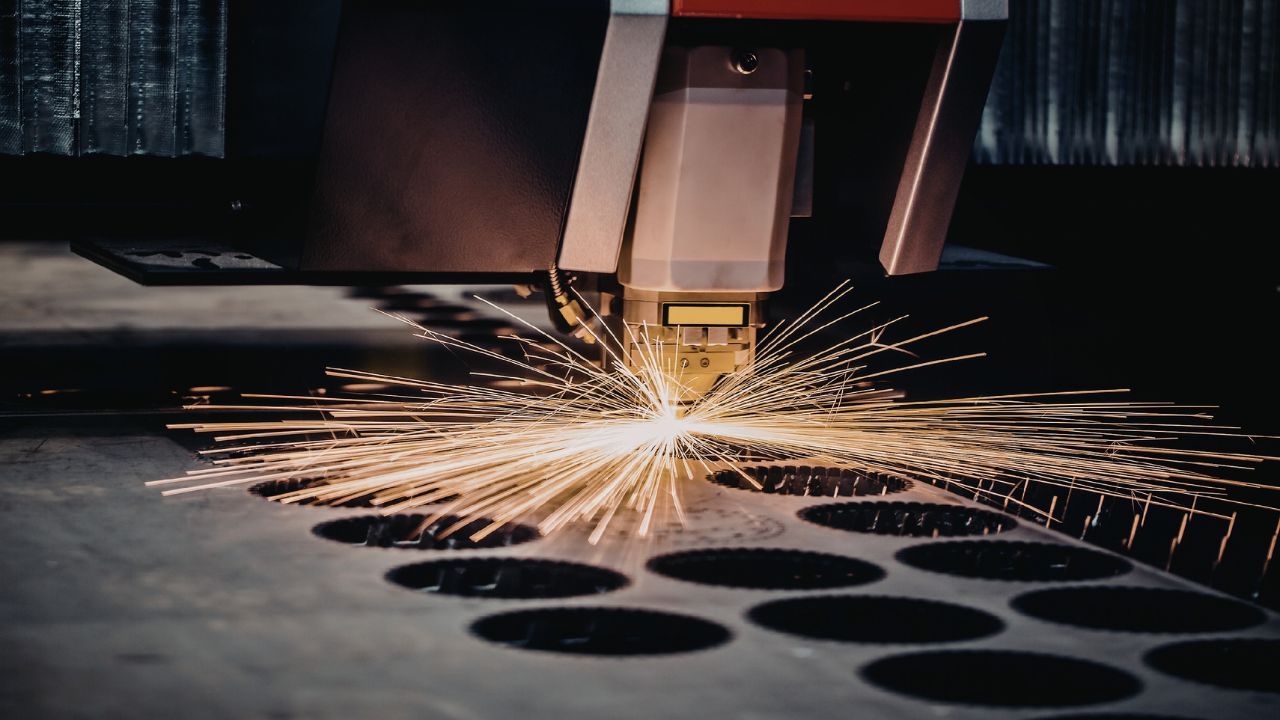
CNC laser cutting services have transformed manufacturing speed without sacrificing precision. Traditional fabrication methods—sawing, drilling, punching—require multiple setups, extended lead times, and increased labor costs. Laser cutting production speed consolidates these operations into single automated processes, reducing cycle times while maintaining tight tolerances.
This article examines how laser tube cutting services, integrated with CNC machining and robotic welding, deliver measurable advantages: 15-20% material waste reduction, up to 40% labor cost savings, and 30-50% faster downstream assembly. From high volume tube cutting in automotive production to precision work in aerospace and medical manufacturing, automation in fabrication has become essential for competitive manufacturing efficiency.
Understanding these benefits helps manufacturers evaluate technology investments that accelerate production while improving quality.
How Do CNC Laser Cutting Services Help Manufacturers Increase Production Speed Without Sacrificing Quality?
CNC laser cutting services eliminate the traditional trade-off between speed and precision. Through process consolidation, advanced automation in fabrication, and superior tolerances, these systems deliver faster laser cutting production speed while maintaining—or exceeding—quality standards required for high volume tube cutting and complex manufacturing operations.
The Role of CNC Laser Cutting in Streamlining Manufacturing Processes
CNC laser cutting services consolidate multiple operations into a single automated step. Traditional fabrication requires three or more separate setups—sawing, drilling, punching, and coping—each demanding machine transfers and repositioning. Laser systems complete all operations in one setup, eliminating handoffs and reducing production costs. This consolidation directly improves manufacturing efficiency by cutting lead times and minimizing opportunities for dimensional drift between operations.
How Laser Cutting Enhances Precision Without Slowing Down Production
Laser cutting production speed doesn’t compromise accuracy. Modern systems achieve positional tolerances of ±5µm (±0.0002 inches), with standard laser cutting maintaining ±0.003-inch tolerances and advanced systems reaching ±0.001 inches. These capabilities surpass traditional CNC machining by 83% in microfeature accuracy. The focused laser beam and CNC control maintain consistent precision across production runs, eliminating the accuracy degradation that occurs with mechanical cutting tools as they wear.
CNC Laser Cutting’s Impact on Reducing Setup and Cycle Times
Setup time reductions translate directly to faster throughput. Case studies show 52% production time reductions when switching to laser tube cutting services. Fiber lasers cut up to 5x faster than CO2 lasers, with speed scaling by power output. A 6kW fiber laser cuts 0.039-inch mild steel at 779 inches per minute (IPM) compared to 254 IPM for 3kW systems. For 0.118-inch (3mm) material, speeds jump from 150 IPM at 3kW to 351 IPM at 6kW, demonstrating how automation in fabrication accelerates high-volume tube cutting without additional labor.
Key Advantages of CNC Laser Cutting Services in Increasing Production Speed
CNC laser cutting services outperform traditional methods across three critical dimensions: precision, material utilization, and automation in fabrication. These advantages compound to deliver faster laser cutting production speed, lower operating costs, and improved manufacturing efficiency for both simple components and complex assemblies.
Laser Cutting Production Speed vs. Traditional Methods
The precision gap is substantial. Traditional saw cutting delivers ±0.01-inch tolerances while CNC laser cutting services achieve ±0.003 inches—more than three times tighter. Core fabrication time runs 1-2 weeks after pre-production, with simple parts completing in 3 business days and complex assemblies requiring 10-25 days. Speed scales dramatically with laser power: a 3kW system cuts 0.236-inch (6mm) mild steel at 43 IPM, while a 6kW laser processes the same material at 192 IPM—a 347% increase that directly accelerates high volume tube cutting operations.
How CNC Laser Cutting Reduces Material Waste and Increases Efficiency
Smart nesting software optimizes material layouts, reducing waste by 15-20% compared to traditional cutting methods. Scrap rates drop from 8-12% with conventional fabrication to 3-5% with laser systems. Real-world applications demonstrate 20% material cost reductions, driven by the laser’s narrow kerf that minimizes material loss during cutting. These savings improve manufacturing efficiency by lowering raw material expenses and reducing scrap handling—critical factors for laser tube cutting services managing high volume production.
The Role of Automation in Fabrication for Faster Turnaround Times
CNC integration enables “lights-out” production, where systems operate unattended through shifts. This automation in fabrication cuts labor costs up to 40% on high-volume orders while maintaining consistent quality. Batch production runs execute complex designs with minimal human intervention, combining repeatability with faster cutting speeds. The result: increased manufacturing output without quality degradation, making automated laser cutting production speed essential for competitive operations alongside CNC machining and robotic welding workflows.
How Laser Tube Cutting Services Contribute to High-Volume Manufacturing
Laser tube cutting services excel in high-volume production environments where complex geometries and tight tolerances are non-negotiable. These systems combine automation in fabrication with the ability to execute intricate cuts across diverse tube profiles, reducing both primary fabrication time and downstream assembly requirements.
CNC Laser Cutting for Precision and High Volume Tube Cutting
Industrial laser cutters deliver high-speed production efficiency essential for volume operations. Automation in fabrication enables batch production with consistent repeatability across thousands of parts, eliminating the dimensional variation inherent in manual processes. CNC laser cutting services significantly reduce production time by processing tubes from raw stock to finished components without intermediate handling, making them ideal for manufacturers scaling operations while maintaining manufacturing efficiency alongside CNC machining workflows.
Benefits of Laser Tube Cutting Services for Complex Geometries
Laser tube cutting services create intricate cuts, complex geometries, and features—bevels, slots, holes, tabs—in a single setup. Systems handle complex joint profiles including miter cuts and copes that previously required multiple machines and setups. The technology processes round, square, rectangular, and oval tube profiles with equal precision, providing design freedom that simplifies assembly. This capability allows engineers to create self-locating connections and structural features cut directly into the tube, eliminating secondary operations that slow laser cutting production speed.
Reducing Post-Processing Time Through Laser Tube Cutting
Clean laser cuts produce assembly-ready parts with no deburring required. The exactness of laser-cut miters and joints accelerates downstream robotic welding by 30-50%, as perfect fit-up reduces tack welding and alignment time. Self-fixturing components—featuring interlocking slots, tabs, and precisely cut joints—eliminate complex welding jigs and manual alignment steps. Case studies demonstrate 50% reductions in assembly manpower, proving that high volume tube cutting efficiency extends beyond the laser system into every downstream operation.
The Intersection of CNC Laser Cutting and CNC Machining for Faster Production
Combining CNC laser cutting services with CNC machining creates a comprehensive fabrication strategy that maximizes manufacturing efficiency. This integrated approach reduces production steps, eliminates handoffs between departments, and delivers assembly-ready components faster than sequential operations on separate equipment.
Combining CNC Laser Cutting and CNC Machining for Comprehensive Efficiency
Integration delivers measurable results: 26% reductions in overall production costs when combining technologies. The comprehensive approach eliminates multiple machining operations by executing cutting, drilling, and finishing within a coordinated workflow. Manufacturers create high-quality, assembly-ready components in fewer steps, reducing both lead times and opportunities for dimensional errors between operations. This efficiency becomes critical for high-volume tube cutting operations where cycle time reductions directly impact throughput and profitability alongside automation in fabrication and robotic welding systems.
How These Technologies Work Together to Streamline Manufacturing Processes
CNC systems provide high-powered laser guidance with unparalleled accuracy, speed, and flexibility. Integrating laser cutting production speed with CNC machining capabilities reduces production steps and compresses lead times by keeping parts in a single workflow. The combination delivers precision cutting for profiles and features, followed by machining for threaded holes, flat surfaces, and tight-tolerance bores—all without re-fixturing. This streamlined manufacturing efficiency eliminates the quality risks and time delays inherent in transferring parts between laser tube cutting services and traditional machine shops.
Why CNC Laser Cutting and CNC Machining are Ideal for Complex, High-Precision Jobs
Aerospace, medical device production, and jewelry design demand both technologies working in concert. These industries require complex tube assemblies with extremely tight tolerances that single-process systems cannot efficiently deliver. The integration enables intricate geometries and multi-material joining for advanced applications where dimensional accuracy and surface finish are equally critical. CNC laser cutting services handle the primary cutting and profiling at high speeds, while CNC machining executes precision features that demand tool contact—creating finished components that meet stringent specifications without manual intervention.
The Role of Robotic Welding in CNC Laser Cutting Production Speed
Robotic welding amplifies the speed advantages of CNC laser cutting services by automating the joining phase with precision that matches laser-cut tolerances. This integration creates a continuous automated workflow from cutting through assembly, eliminating the bottlenecks that occur when precision-cut components meet manual welding operations.
How Robotic Welding Reduces Lead Times and Increases Precision
TIG (Tungsten Inert Gas) and Orbital Welding deliver superior precision for high-integrity joints on thin-walled and complex assemblies produced by laser tube cutting services. Precision welding techniques reduce downstream assembly time by creating consistent, quality joints that require no rework. High-quality robotic welding eliminates secondary corrections and grinding operations that slow manufacturing efficiency, allowing components to proceed directly from welding to finishing or assembly. This reliability is essential for high volume tube cutting operations where rework on even a small percentage of parts destroys schedule and profit margins.
Integrating Robotic Welding with CNC Laser Cutting for Seamless Production
Laser welding creates high-quality, low-distortion joints perfectly suited for complex assemblies with tight tolerances. Friction Stir Welding enables effective joining of dissimilar materials—critical for assemblies combining aluminum, steel, and specialty alloys. Integration allows joining multiple materials in a single assembly workflow, eliminating transfers between departments. When robotic welding follows CNC laser cutting services directly, the precision of laser-cut fit-up translates to faster, more reliable welds with minimal fixturing—creating true automation in fabrication that extends from raw material to finished assembly.
Automation and Robotics: A Game Changer for High-Volume Production
Automated systems maintain consistent results with minimal human error across thousands of parts. Robotic welding reduces manufacturing time while maintaining superior quality standards that manual operations cannot match in high volume tube cutting environments. The technology enables continuous production with reduced operator intervention, running unattended alongside automated laser cutting production speed systems and CNC machining centers. This integration transforms fabrication from a series of manual operations into a coordinated manufacturing efficiency platform where each process feeds the next without delay or quality degradation.
How Automation in Fabrication Improves Overall Manufacturing Efficiency
Automation in fabrication transforms CNC laser cutting services from individual operations into integrated manufacturing systems. By reducing manual touchpoints, maintaining consistent precision, and enabling scalable batch processing, automated systems deliver superior manufacturing efficiency across the entire production workflow.
The Benefits of Automated CNC Laser Cutting for Manufacturing Operations
“Lights-out” manufacturing capability reduces labor requirements for extended production runs, allowing CNC laser cutting services to operate unattended through nights and weekends. Responsive suppliers leverage automation to deliver quote generation in 24-48 hours, accelerating project kickoff. The technology streamlines the entire production workflow from initial design through delivery, coordinating laser cutting production speed with CNC machining and robotic welding operations. This integration eliminates delays between processes and reduces the administrative overhead of managing multiple vendors or departments.
How Automation Enhances Precision and Reduces Human Error in Production
CNC control delivers consistent results across all production runs, eliminating the dimensional variation inherent in manual operations. High repeatability maintains positional tolerances throughout production, with high-end laser cutting machines achieving repeated positioning accuracy of ±0.05mm. Automation in fabrication minimizes human intervention and associated errors in critical operations, ensuring the thousandth part matches the first. This consistency is essential for laser tube cutting services and high-volume tube cutting applications where even minor deviations compound across assemblies, causing fit-up problems in downstream robotic welding.
Scaling Production with Automated CNC Laser Cutting Services
Faster throughput stems from automation capabilities and batch processing that maximize machine utilization. Batch production of complex designs with high repeatability allows manufacturers to scale volume without proportional increases in labor or quality control resources. Total lead time for custom fabrication typically runs at least 8 weeks including all phases—design, material procurement, production, and finishing. However, 20-40% variation in lead times between suppliers reflects differences in automation capacity and process integration. Manufacturers with advanced CNC laser cutting services, automated material handling, and integrated CNC machining consistently deliver faster turnaround by eliminating manual handoffs that extend schedules.
Industry Applications: How CNC Laser Cutting Speeds Up Production Across Sectors
CNC laser cutting services deliver measurable production advantages across industries with vastly different requirements. Material versatility, precision capabilities, and automation in fabrication make the technology essential for automotive volume production, aerospace-medical quality standards, and commercial-industrial structural applications.
CNC Laser Cutting Services in the Automotive Industry
Material versatility makes laser cutting production speed viable for steel, aluminum, and various alloys within single production facilities. High-volume production capabilities for automotive components and assemblies—from exhaust systems to chassis brackets—leverage automation in fabrication to meet demanding production schedules. The technology handles diverse material requirements for different vehicle systems without tooling changes, processing structural steel frames, aluminum body panels, and stainless exhaust components with equal efficiency. This flexibility reduces lead times and inventory costs by eliminating dedicated equipment for each material type, integrating seamlessly with CNC machining and robotic welding cells.
CNC Laser Cutting in Aerospace and Medical Manufacturing
AS 9100D (Aerospace Quality Management System) adherence is mandatory for suppliers serving aerospace markets. NADCAP (National Aerospace and Defense Contractors Accreditation Program) certification validates welding and non-destructive testing capabilities essential for flight-critical components. Coordinate Measuring Machines (CMM) and Tube Vector Measurement systems provide the accurate dimensional inspection required for laser tube cutting services in these sectors. Medical device production demands identical precision and quality standards, making CNC laser cutting services with documented process control and traceability non-negotiable. These industries require manufacturing efficiency without compromising the tolerances and surface finishes that ensure component performance and regulatory compliance.
High Volume Tube Cutting in Commercial and Industrial Fabrication
Design freedom allows complex connections that improve structural integrity for architectural, HVAC, and industrial process systems. Versatility in processing various tube profiles—round, square, rectangular, oval—suits diverse applications from building frameworks to material handling equipment. Laser tube cutting services prove more energy-efficient than traditional cutting equipment while generating less material waste, reducing operating costs for high volume tube cutting operations. The technology suits large-scale defense and industrial projects requiring extreme precision, where tight tolerances on tubular assemblies ensure proper fit-up during final assembly. This capability integrates with CNC machining for end preparation and robotic welding for joining, creating complete fabrication solutions.
The Long-Term Benefits of CNC Laser Cutting Services for Manufacturing Speed and Quality
CNC laser cutting services represent a strategic investment in long-term manufacturing competitiveness. The technology’s combination of speed, precision, and automation in fabrication delivers compounding advantages that extend beyond individual projects to transform operational capabilities and market positioning.
Why CNC Laser Cutting Services Are Crucial for Staying Competitive in Modern Manufacturing
Higher initial investment is offset by long-term operational savings and faster ROI through reduced labor, material waste, and cycle times. The 20-40% variation in lead times between suppliers emphasizes the competitive advantage of advanced technology—manufacturers with integrated laser cutting production speed, CNC machining, and robotic welding consistently win time-sensitive contracts. ISO 9001:2015 quality management systems ensure consistency and process control that manual operations cannot match, meeting aerospace, medical, and automotive customer requirements. Continuous adoption of CNC-driven processes represents the industry solution to manufacturing challenges, where high-volume tube cutting and complex assemblies demand both speed and precision. Companies without laser tube cutting services increasingly face margin pressure and lost opportunities as customers migrate to suppliers offering superior manufacturing efficiency.
How CRD MFG, Inc. Leverages CNC Laser Cutting to Deliver Faster and More Precise Results
CRD MFG, Inc. combines advanced CNC laser cutting services with integrated CNC machining and robotic welding to deliver complete fabrication solutions. Our laser tube cutting services handle high-volume tube cutting operations with the precision and speed required for automotive, aerospace, and industrial applications.
Through automation in fabrication and rigorous quality systems, we compress lead times while maintaining the tolerances and surface finishes critical to your assembly operations—from industrial components to certified aerospace tube fabrication solutions. Contact CRD MFG, Inc. to discover how our manufacturing efficiency capabilities accelerate your production schedules without compromising quality standards.
