
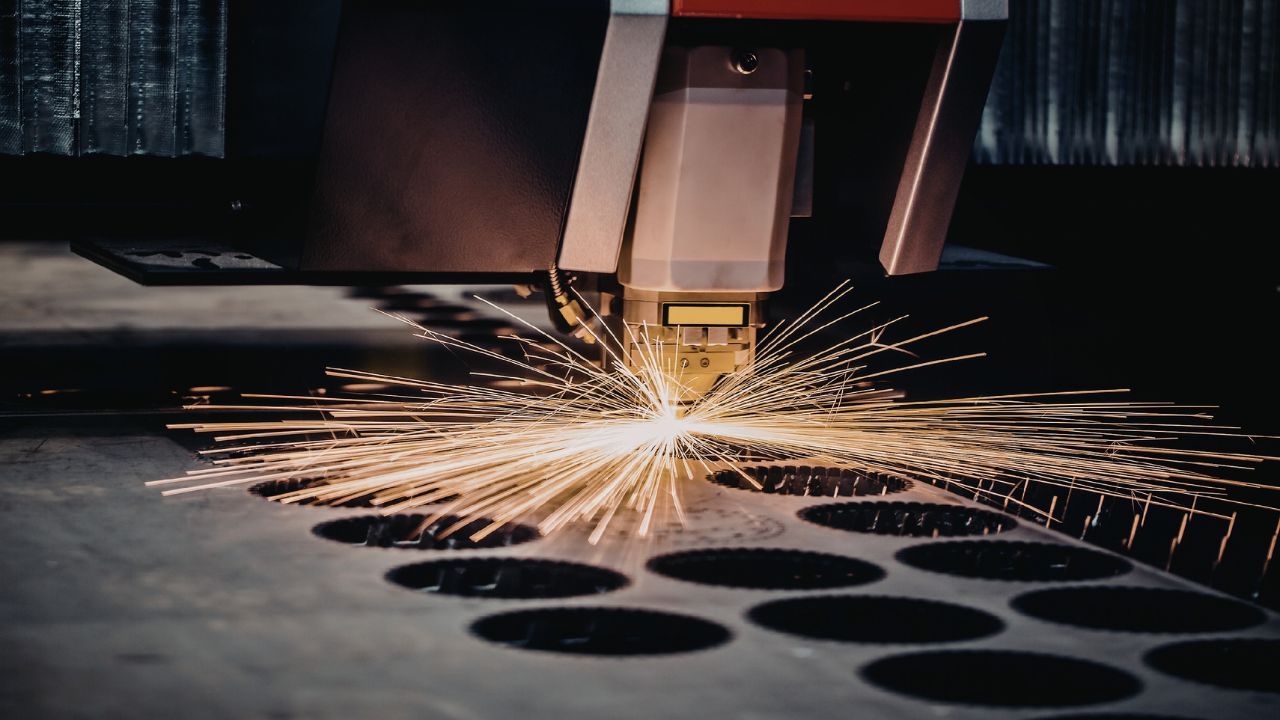
Precision tube fabrication requires rigorous testing to ensure structural integrity and dimensional accuracy. The global steel pipes and tubes market, valued at USD 137.62 billion in 2025, depends on the validation of tube manufacturing for safety-critical applications. Non-Destructive Testing methods dominate quality assurance, with the NDT market projected to grow from USD 18.80 billion in 2025 to USD 42.30 billion by 2034. Advanced tube fabrication testing methods provide manufacturers with detailed insight into material defects without compromising product integrity.
Key Takeaways
- Ultrasonic Testing leads NDT methods with 27.95% market share in 2025
- Material traceability systems are projected to reach USD 7.2 billion by 2032
- Welding certifications cost USD 70 to USD 15,500, depending on program level
- North America holds 35.80% of the global NDT market share
- Statistical Process Control identifies process drift before defects occur
What Are the Primary Testing Methods in Precision Tube Fabrication?
Non-Destructive Testing provides comprehensive verification without damaging finished components or raw materials. These precision verification techniques enable manufacturers to detect subsurface flaws, surface cracks, and dimensional inconsistencies during production. Testing standards for tubes vary by industry, but ultrasonic, radiographic, and eddy current methods remain industry standards. The selection depends on material type, thickness, and application requirements.
How Does Ultrasonic Testing (UT) Verify Tube Integrity?
Ultrasonic Testing uses high-frequency sound waves to detect internal flaws and measure wall thickness. UT captured 27.95% of the NDT market share in 2025, reflecting its accuracy and versatility. Equipment costs range from $2,000 to over $50,000, with service costs between $50 and $200 per unit. The method excels at deep subsurface detection but depends heavily on operator skill for consistent results.
What Are the Advantages and Limitations of Radiographic Testing (RT)?
Radiographic Testing employs X-rays or gamma rays to create permanent visual records of internal tube structures. RT holds approximately 21.0% market share in the NDT sector due to its internal void detection capabilities. Equipment costs range from $20,000 to over $100,000, with service costs between $100 and $300 per unit. The method requires strict radiation safety protocols and specialized training for technician protection.
Why Is Eddy Current Testing (ECT) Growing in Tube Fabrication?
Eddy Current Testing detects surface cracks using electromagnetic induction in conductive materials. ECT is projected to grow at 9.07% CAGR through 2031, the fastest among major NDT methods. Equipment costs range from $3,000 to over $60,000, with service costs between $40 and $150 per unit. The method is limited to conductive materials, restricting its application to metals like steel and aluminum.
How Do Material Sourcing and Traceability Impact Quality Control?
Material sourcing establishes the foundation for quality control in tube fabrication standards and best practices. Raw material quality directly influences final product performance, safety, and regulatory compliance. Digital traceability systems enable manufacturers to track materials from mill certification through final delivery. This transparency reduces liability and enables rapid response to quality issues.
What Role Do Material Certifications Play in Tube Fabrication?
Material test certificates verify that raw materials meet required chemical and mechanical properties. These certifications prevent material-related failures by documenting composition, strength, and processing history. ISO 9001 and ASTM compliance provide measurable quality frameworks that reduce defect rates. Proper material certification is mandatory for safety-critical applications in aerospace, pressure vessels, and structural fabrication.
How Are Digital Traceability Systems Enhancing Material Quality?
Digital traceability systems valued at USD 3.5 billion in 2023 enable complete supply chain transparency. These platforms are projected to reach USD 7.2 billion by 2032 at 8.5% CAGR. Enterprise traceability solution implementation costs range from USD 10,000 to over USD 100,000. Despite significant upfront investment, these systems justify costs through risk mitigation and rapid recall capabilities.
What Are Key Traceability Technologies Used in Tube Fabrication?
Material Traceability Platforms utilize barcode, QR code, and blockchain technologies for comprehensive tracking. These platforms are projected to grow at 14.10% CAGR, reaching USD 7.8 billion by 2033. Advanced systems integrate with manufacturing execution software to provide real-time material location and status updates. This integration enables manufacturers to maintain complete documentation from raw material receipt through finished goods shipment.
What Are the Essential Criteria for Selecting Tube Welding Services?
Welding quality determines the structural integrity and longevity of fabricated tube assemblies. The Welding Services Market, valued at USD 18.38 billion in 2024, reflects growing demand for certified expertise. Material selection for tube bending influences weld parameters and certification requirements. Manufacturers must verify welder qualifications, procedure documentation, and inspection protocols before production begins.
How Do Welding Certifications Ensure Fabrication Quality?
AWS Certified Welder application costs USD 70 with annual maintenance fees of USD 105. Comprehensive welding training programs range from USD 4,600 to USD 15,500, depending on certification level. Procedure Qualification Testing costs between USD 1,000 and USD 5,000 per specification. The Welding Qualification Certification Service Market is projected to grow from USD 2.5 billion in 2024 to USD 4.1 billion by 2033 at 6.7% CAGR.
What Technologies Are Advancing Welding Quality and Inspection?
Robotic welding systems deliver consistent quality and reduce human error in repetitive applications. Automated inspection using machine vision detects weld defects faster than traditional visual inspection methods. Best welding methods for tube fabrication combine automated equipment with certified operator oversight. Integration of real-time monitoring systems enables immediate corrective action when parameters drift outside tolerances.
How Does Automation Influence Tube Welding Processes?
Factory automation hardware investments are prioritized by 41% of manufacturers for the next 24 months. Automated welding reduces cycle time and improves repeatability in high-volume production environments. Active sensors used for process monitoring are a focus for 34% of manufacturers. These technologies enable consistent weld penetration and reduce post-weld inspection requirements.
How Do Regional and Demographic Factors Affect Testing Adoption?
Regional infrastructure investment and regulatory requirements drive NDT adoption rates across global markets. Economic development in emerging markets increases demand for quality verification as manufacturing capabilities expand. CNC tube bending automation adoption varies significantly by region based on labor costs and capital availability. North America, Asia Pacific, and Europe exhibit distinct testing priorities and technology preferences.
What Drives High NDT Adoption in North America?
North America holds 35.80% of the NDT market in 2025 due to stringent regulatory compliance requirements. The U.S. NDT market is projected to reach USD 9.91 billion by 2032. The Infrastructure Investment and Jobs Act funding drives demand for certified testing across the construction and energy sectors. Supply chain resilience initiatives encourage domestic manufacturing with enhanced quality oversight.
Why Is Asia Pacific the Fastest-Growing Market for Tube Fabrication?
Asia Pacific dominates the steel pipes and tubes market with over 60% revenue share. Rapid infrastructure development in China and India fuels demand for cost-effective, high-volume manufacturing solutions. China advances robotic welding and AI-driven quality monitoring to maintain competitive advantages. Japan focuses on precision tubing for high-tech applications requiring tight tolerances.
How Do European Sustainability Initiatives Shape Fabrication Testing?
Europe represents approximately 15% of the industrial tubes market and 22% of the NDT market. EU Green Deal sustainability initiatives prioritize green steel and carbon-free production processes. European manufacturers invest in advanced alloy tubing development to reduce material waste. Quality control in bending processes supports lightweighting goals for automotive and aerospace applications.
What Are Best Practices and Recommendations for Quality Assurance?
Comprehensive quality assurance integrates testing, process control, and data analytics throughout the production cycle. Proactive defect prevention reduces scrap rates and improves the ROI of precision tube fabrication. Multi-stage inspection catches defects early when correction costs are lowest. Statistical Process Control provides quantitative feedback for continuous improvement initiatives.
How Can Statistical Process Control Optimize Testing Accuracy?
Statistical Process Control identifies process drift before defects occur, enabling corrective action. SPC implementation shifts quality focus from reactive inspection to proactive defect prevention. Process drift without SPC implementation leads to increased scrap and rework costs. Real-time monitoring provides operators with immediate feedback on dimensional accuracy and process stability.
Why Use Multi-Stage Inspection in Tube Fabrication?
Multiple inspection stages include pre-production material testing, in-process monitoring, and final dimensional verification. This layered approach creates comprehensive quality checkpoints throughout the manufacturing process. Early detection reduces waste by catching defects before significant value is added. Final verification ensures dimensional accuracy and surface finish meet specification requirements.
What Is the Role of Data Analytics in Enhancing Verification?
57% of manufacturers leverage cloud computing and data analytics at the facility level for quality management. Cloud-based systems enable real-time data sharing across production facilities and quality laboratories. Investment in data readiness establishes the analytics and cloud computing foundation for advanced manufacturing. Predictive analytics identifies patterns that indicate potential quality issues before failure occurs.
How Do Cost and Consumer Preferences Influence Testing Method Selection?
Testing method selection balances accuracy requirements against equipment and service costs. High-volume manufacturers prioritize automated methods that reduce per-unit inspection costs. Custom tube fabrication applications may require multiple complementary testing methods for complete verification. Consumer preferences increasingly favor manufacturers with documented quality systems and certified testing capabilities.
Which Testing Methods Offer the Best Cost-Efficiency Balance?
Ultrasonic Testing provides an optimal balance between accuracy and operational efficiency for most applications. UT’s lower service costs of $50-$200 per unit compare favorably to RT’s $100-$300 range. Eddy Current Testing offers the lowest service costs at $40-$150, but applies only to conductive materials. Equipment investment must consider long-term throughput requirements and material compatibility.
How Do Manufacturers Prioritize Accuracy Versus Cost?
CNC tube bending and laser cutting deliver accuracy within ±0.5 degrees for tight-tolerance applications. Precision equipment can reduce scrap rates from 5% to below 1%. Manufacturers calculate the total cost of quality, including prevention, appraisal, and failure costs. Investment in advanced testing often provides positive ROI through reduced warranty claims and rework.
What Market Trends Affect Consumer Testing Choices?
Industry 4.0 adoption drives demand for automated inspection and digital documentation. Customers increasingly require documented quality systems with full material traceability. Aerospace tubing fabrication sets quality benchmarks that influence other sectors. Sustainability concerns encourage testing methods that reduce material waste and energy consumption.
What Are the Key Technological Trends Shaping Testing in Tube Fabrication?
Industry 4.0 integration transforms quality control through connected sensors, machine learning, and predictive analytics. The NDT market’s 9.30% CAGR reflects accelerating technology adoption across manufacturing sectors. Real-time data collection enables immediate corrective action and reduces reliance on batch sampling. Cloud computing centralizes quality data for analysis across multiple production facilities.
How Is Industry 4.0 Transforming Non-Destructive Testing?
The NDT market is projected to grow from USD 18.80 billion in 2025 to USD 42.30 billion by 2034. Industrial IoT solutions are utilized by 46% of manufacturers for connected quality monitoring. IoT-enabled NDT equipment transmits inspection results directly to quality management systems. Machine learning algorithms identify defect patterns that indicate upstream process issues.
What Advances in Sensor and Automation Technologies Improve Validation?
41% of manufacturers prioritize factory automation hardware investments for the next 24 months. Active sensors for process monitoring are a focus for 34% of manufacturers. Precision equipment like CNC tube bending and laser cutting integrates sensors for real-time verification. Automated measurement systems eliminate operator variability and improve inspection repeatability.
How Is Cloud Computing Used for Data-Driven Quality Control?
57% of manufacturers leverage cloud computing for facility-level data analytics. Cloud platforms enable centralized quality dashboards accessible to stakeholders across the supply chain. Historical quality data supports root cause analysis and continuous improvement initiatives. Cloud-based systems facilitate remote monitoring and expert consultation for complex quality issues.
Verification and Validation in Precision Tube Fabrication: Integrated Quality Control Approaches
The global steel pipes and tubes market, valued at USD 137.62 billion in 2025, is projected to reach USD 209.89 billion by 2033 at 6.0% CAGR. The Welding Services Market, valued at USD 18.38 billion in 2024, is expected to reach USD 27.84 billion by 2032 at 5.30% CAGR. Integrated quality control combines testing methods, material traceability, and certified welding to ensure product integrity. Domestic manufacturing enables direct oversight, eliminates communication barriers, and provides faster problem resolution.
Successful tube fabrication depends on selecting appropriate testing methods based on material type and application requirements. Statistical Process Control and multi-stage inspection prevent defects and reduce waste throughout the production cycle. Investment in automation, sensors, and data analytics positions manufacturers for long-term competitiveness. Companies like CRD MFG, Inc. demonstrate how integrated services and advanced equipment deliver consistent quality across production runs.
Work With a Tube Fabrication Partner Who Builds Quality In From the Start
Quality failures in precision tube fabrication are rarely random — they trace back to process gaps, supplier inconsistencies, and the absence of structured verification at every production stage. CRD MFG, Inc. integrates multi-stage inspection, documented material traceability, and certified robotic welding into every project, so your parts arrive verified, not just finished.
From prototype to full production run, your dedicated project manager keeps you informed at every step — no communication gaps, no surprises after the fact. Contact CRD MFG, Inc. today to discuss your tube fabrication requirements and how our quality processes protect your production timeline.
