
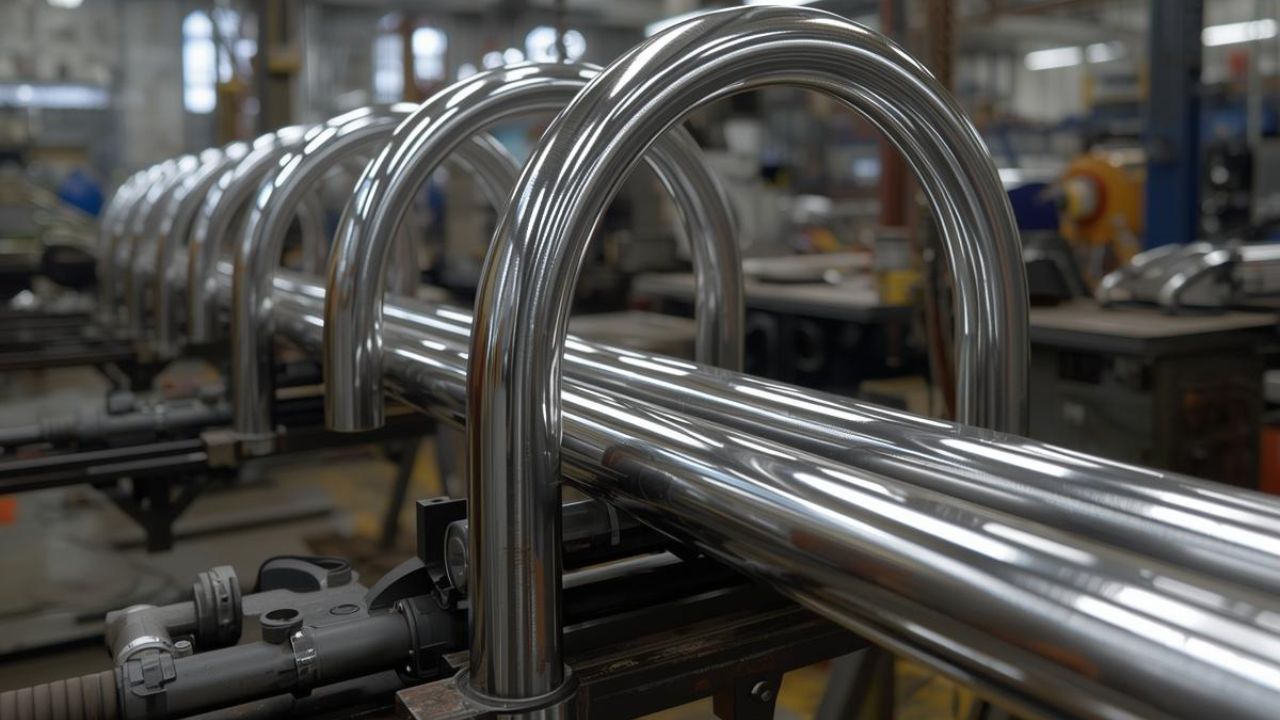
Choosing the wrong tube forming partner costs time, money, and production continuity. The right consultation process prevents that. This guide covers what to prepare, what to ask, and how to evaluate a manufacturer’s capabilities before committing to a partnership. From precision tube forming tolerances and material selection to certifications, pipe bending services cost, and long-term service selection criteria, every section is built to help you make a faster, more informed decision.
Key Takeaways
- Preparation drives consultation quality. Bring 2D drawings with GD&T callouts, 3D CAD models in STEP or IGES format, defined tolerances, material specs, and volume estimates to avoid re-quoting delays.
- Material selection shapes every forming decision. Temper, ductility, and springback characteristics vary dramatically across stainless steel, aluminum, titanium, and exotic alloys — each requiring different tooling and process approaches.
- Quality systems are non-negotiable. Require documented defect limits, SPC implementation, First Article Inspection Reports, and industry-specific certifications (ISO 9001, AS9100D, ISO 13485) matched to your application.
- Cost transparency prevents budget surprises. Custom tooling runs $500–$10,000+, tolerances directly impact pricing, and early DFM coordination with your supplier eliminates unnecessary secondary operations and change orders.
- Evaluate the partnership, not just the quote. A strategic manufacturing partner provides proactive DFM feedback during quoting, validates capacity against real data, and surfaces supply chain risks before they disrupt production.
What Are Tube Forming Services and How Do They Differ from Tube Bending Processes?
Understanding tube forming vs. tube bending processes is the first step in any consultation. Bending refers to a single shaping operation that creates curves in tubing. Forming encompasses the full scope of manufacturing — including end forming, cutting, welding, heat treatment, and secondary operations that transform raw tube stock into a finished component. Knowing where your project falls on that spectrum determines which processes, equipment, and supplier capabilities you need. The sections below break down what modern forming includes, how common bending methods compare, and when CNC tube bending fits within a larger production strategy.
What Is Included in Modern Tube Forming Services Beyond Simple Bending?
Modern tube forming services go well beyond producing a single curve. They integrate secondary operations like end forming (beading, flaring, expanding, reducing), cutting to length, welding, brazing, hole punching, threading, and heat treatment into a single production workflow. Advanced methods such as hydroforming use high-pressure fluid to shape complex, lightweight components without welding. Heat induction bending handles large-diameter pipes for oil, gas, and heavy construction without internal support. Even weld seam placement factors in — seams typically sit on the centerline radius of the bend, or on the back side for cosmetic applications.
How Do Tube Forming Vs. Tube Bending Processes Differ in Capability and Application?
Each bending method serves a different purpose. Mandrel bending inserts a solid rod for internal support, preventing collapse on thin-walled tubes and tight radii common in aerospace and automotive exhaust. Rotary draw bending is the most precise method, forming bends up to 180° for high-volume production. Compression bending is simpler and cheaper but limited to roughly 120° with some flattening. Roll bending handles large-radius curves for structural and HVAC work. Hot bending allows greater deformation on large diameters; cold bending maintains material strength for high-precision tube forming at room temperature. Choose mandrel bending if your application involves thin-walled tubes with tight radii, such as aerospace or automotive exhaust components. Choose rotary draw bending when you need high-volume consistency at bend angles up to 180°. Choose compression bending when tolerances are loose and cost is the primary driver. Choose roll bending for large-radius structural curves, and choose hot bending when working with large-diameter pipe that exceeds cold-forming limits.
When Is CNC Tube Bending the Right Solution Within a Larger Forming Strategy?
CNC tube bending fits when precision, repeatability, and volume matter. Multi-stack CNC benders process tubes from 10mm up to 225mm OD. All-electric models handle diameters up to 150mm with left or right-handed capability. CNC-operated rotary draw bending delivers the consistency high-volume production demands, and built-in springback compensation holds angular deviation under 1°. For any serious product development or production program, CNC capability should be a baseline service selection criteria. Choose CNC tube bending when your project demands repeatable accuracy across hundreds or thousands of identical parts, especially with compound bends or multi-plane geometries that manual methods cannot hold to spec.
What Should You Prepare Before Scheduling a Tube Forming Services Consultation?
Preparation determines how productive your first tube forming services consultation is. Showing up with complete documentation prevents re-quoting cycles and sets the project on the right path from day one. At a minimum, bring detailed engineering drawings, defined tolerances, material specifications, and realistic volume estimates. Clarify end-use requirements and surface finish expectations upfront. The more complete your initial package, the faster a manufacturer can provide accurate pricing, identify potential forming challenges, and recommend the right process for your geometry and application.
What Technical Drawings, Tolerances, and Volume Estimates Should You Bring?
Bring 2D engineering drawings with full GD&T callouts. XYZ bending coordinates alone do not adequately define tolerances for point locations or radii — the SAE J2370 standard provides relevant guidance here. Share 3D CAD models in STEP or IGES format so the manufacturer’s software can extract bend data, OD, wall thickness, and cut length automatically. Know your tolerance requirements going in: angular tolerance ranges from ±1°–2° standard to ±0.5° high-precision (PFI ES-24, ASME B16.49). Dimensional tolerance runs ±0.030″–0.060″ standard, ±0.010″–0.020″ high-precision. Ovality limits sit at ≤8% standard, ≤3% high-precision. Wall thinning caps at ≤15% standard, ≤10% high-precision. Also define your volume — most vendors handle single prototypes through 10,000+ part runs.
How Do Material Selection and End-Use Requirements Influence Precision Tube Forming Outcomes?
Material drives every forming decision. Stainless steel (304, 316L) offers excellent ductility but springs back 2°–3°. Aluminum 6061-T6 is brittle and cracks — specify T4 temper or use 3003 for cold bendability. Mild carbon steel (1018, A513) bends cold easily; 4140 requires heat treatment first. Copper is highly malleable with near-zero springback. Titanium demands larger CLR due to low elongation and significant springback. Exotic alloys like Inconel need specialized tooling. A useful check: Elongation Required = [(OD/2)/CLR] × 100. A 2″ OD tube on a 4″ CLR needs at least 25% material elongation.
What Early Clarifications Reduce Miscommunication and Re-Quoting Delays?
Missing bend tolerances, undefined material grades, and vague end treatments are the most common specification gaps that trigger re-quoting. Provide full bend data, material specs, and a 3D model to ensure repeatability across batches. Specify surface finishes only where functional or visible — polishing before forming requires rework afterward. Simplify geometry with fixturing in mind to reduce setup time and part-to-part variation. Confirm weld seam orientation requirements and note any critical cosmetic surfaces before quoting. Addressing these details upfront eliminates the most common causes of mid-project delays and ensures the manufacturer can hold tolerances consistently from the first article through full production.
What Essential Questions Should I Ask During a Tube-Forming Services Consultation?
The right questions during a tube forming services consultation reveal whether a supplier can actually deliver on your requirements — or whether gaps will surface after the purchase order is signed. Focus your evaluation on three areas: forming process guidance tailored to your specific geometry and material, quality controls and measurement systems that enforce precision tube forming accuracy, and communication structures that ensure timeline transparency and project accountability. This applies whether you need structural roll cages, exhaust assemblies, or sanitary food-grade tube fabrication. A supplier who answers these questions with specifics rather than generalities is more likely to perform consistently through production.
How Will You Provide Forming Process Guidance for My Specific Geometry and Application?
Ask how the manufacturer handles your specific geometry. Multi-axis bending treats each plane independently; compound multi-plane bends shape the tube across X, Y, and Z simultaneously. Standard draw bend radius is 3× OD to prevent rupturing — tighter radii down to 1× OD are possible but costlier and riskier. The D of bend (CLR/OD) measures severity: below 3, increase wall thickness or specify higher-ductility material. Below 2, mandrel bending is recommended to prevent collapse. Ask how they compensate for springback by material — 304 stainless springs back 2°–3°, cold-rolled steel 0.75°–1°, copper nearly zero. Wall thinning should be predictable: Wall Thinning % = (Outside Radius − CLR) / Outside Radius.
What Quality Controls and Measurement Systems Ensure Precision Tube Forming Accuracy?
A capable supplier enforces specific defect limits: ovality ≤5–8%, inner wall wrinkling at zero tolerance, outer wall thinning ≤10–12%, and radial growth under 2%. Surface finish is quantified by Ra, Rq, and Rz metrics under standards like ASME B46.1 and ISO 21920. Bend angle tolerance should hold ±1° minimum. Ask whether they run Statistical Process Control — SPC tracks bend angle consistency, ovality, wall thinning, and springback across production. For aerospace-grade precision tube forming, a Cpk above 1.67 is the standard benchmark.
How Will You Handle Communication, Timeline Transparency, and Project Accountability?
Expect standard lead times of 2–8 weeks for custom work and 1–2 weeks for simpler fabrication. Top suppliers maintain on-time delivery rates of 95–98%. Rush orders typically turn around in 3–5 days for simple components. Ask about their engineering change notice process — a formal ECN workflow covering identification, review, approval, and implementation prevents mid-production errors. Confirm they maintain strict revision control with centralized documentation and controlled access. A supplier with clear communication protocols, documented escalation paths, and real-time project tracking reduces the risk of mid-production errors and missed delivery windows.
How Do You Evaluate Service Selection Criteria for a Long-Term Tube Forming Partner?
Service selection criteria for a long-term tube forming partner should go beyond price per piece. Evaluate integrated capabilities such as CNC tube bending, in-house welding, and end forming under one roof. Assess scalability from prototype through full production runs, and verify documented process controls including certifications, First Article Inspection Reports, and SPC data. A partner who can grow with your program reduces re-qualification risk, shortens lead times on design iterations, and maintains consistent quality as volumes increase.
Does the Provider Offer Integrated Capabilities Such as CNC Tube Bending, Machining, and Welding?
Assess bending technology diversity first: rotary draw, mandrel, compression, roll bending, and heat induction each serve different applications. Diameter range matters — capabilities across the industry span from 0.0625″ to 36″ OD depending on the vendor and method. Wall thickness capacity varies similarly, with heavier walls (≥0.156″) typically requiring two pressure dies. Confirm in-house secondary operations: welding, cutting, end-forming, hole punching, threading, surface treatment, and passivation. Every operation outsourced adds lead time, cost, and quality risk.
Can the Manufacturer Scale from Product Development and Prototyping to Full Production Runs?
A strong partner supports the full product development arc. Rapid prototyping turnarounds can be as fast as 2–4 days with CAD-to-part accuracy across mild steel, stainless, aluminum, and copper. Look for providers who include First Article Inspection Reports and CMM verification with every order. The iteration process should be structured — FAI results drive tooling and design adjustments until the part meets spec. From there, the same vendor should scale seamlessly from single-piece prototypes to 10,000+ production runs without re-qualifying the process.
What Certifications, Documentation, and Process Controls Demonstrate Reliability?
Certifications signal process maturity. ISO 9001:2015 is the baseline. AS9100D adds aerospace-specific risk management, configuration control, and FOD prevention — with angular accuracy to 0.5° and radii down to 0.8× OD. ISO 13485 covers medical devices with tolerances as fine as ±0.1mm and full traceability. IATF 16949 governs automotive with PPAP and FMEA requirements. NADCAP accredits special processes like welding and NDT. Beyond certifications, require Mill Test Reports for material traceability, FAIRs per AS9102 for first-run verification, and SPC with documented Cpk values.
How Are Costs, Lead Times, and Risk Managed in Tube Forming Projects?
Cost control in tube forming starts with understanding what drives pipe bending services cost and where risk compounds across the project lifecycle. Informed buyers prevent budget surprises by addressing material availability, tooling investments, tolerance requirements, and scheduling constraints before the first purchase order. This section covers the primary pricing drivers, how accurate quoting and early DFM coordination reduce change orders, and why domestic manufacturing can mitigate supply chain and timeline risk that offshore sourcing introduces.
What Factors Influence Pipe Bending Services Cost and Overall Forming Pricing?
Pipe bending services cost depends on seven primary drivers: material type and availability, tooling and setup, part complexity (number of bends, tighter radii, compound/3D geometry), tolerance and inspection requirements, quantity, secondary operations, and scheduling. Tighter tolerances matter — holding ±0.005″ costs significantly more than ±0.030″. Custom tooling runs $500–$5,000+ per bend configuration, with complex multi-radius or tight CLR setups reaching $2,000–$10,000+. A mandrel set for thin-wall stainless alone can exceed $2,000. Lower volumes drive higher per-piece costs; higher volumes amortize tooling and unlock automated inspection. Rush timelines add surcharges. Pricing typically combines setup fees, per-part costs, and tooling charges.
How Does Accurate Quoting Prevent Budget Surprises and Production Delays?
Accurate quoting starts with design optimization. Adapting your geometry to use a vendor’s existing bend dies eliminates custom tooling costs and compresses lead times. Stackable tooling reduces changeover time between configurations. Early DFM coordination can remove unnecessary secondary operations, cutting labor costs and improving throughput. Early supplier involvement resolves manufacturability issues before drawings are finalized, which directly reduces change orders mid-production. Suppliers tracking OEE (Availability × Performance × Quality) can identify process shortcomings before they become your delivery problem.
How Can Domestic Manufacturing Reduce Supply Chain and Timeline Risk?
Custom carbon steel pipe bends typically require 6–8 weeks from order to delivery. Lead times fluctuate based on machine configuration, manufacturing capacity, order volume, and logistics. Shorter supplier-to-manufacturer distances reduce shipping variables and response time for urgent changes. Evaluate whether a supplier discusses material, tooling, and vendor risks proactively — or whether those risks surface only after disruption hits production. Choose domestic manufacturing when project timelines are tight, design changes are likely, or when compliance with Buy American or DFARS requirements applies. Shorter supply chains also simplify quality audits and allow for faster corrective action when issues arise.
How Do You Determine If the Consultation Confirms the Right Manufacturing Fit?
The consultation itself is a performance test. How a supplier engages before winning the work tells you exactly how they will perform after the purchase order is signed. Evaluate whether the team provided proactive design feedback, whether forming process guidance was specific and data-driven, and whether the supplier operates as a strategic manufacturing partner or a transactional vendor. Scoring these dimensions during the consultation phase gives you a reliable predictor of long-term production quality, communication, and accountability.
Did the Team Provide Proactive Design Feedback During Product Development Discussions?
Rate the supplier’s DFM engagement during quoting. A low-risk partner (Score 5) has engineering actively reviewing designs at the quote stage — flagging feasibility, tolerance, tooling, and cosmetic risks before commitments are made. A moderate-risk supplier (Score 3) provides basic DFM feedback only after the quote is issued. A high-risk vendor (Score 1) offers no technical review until after PO approval. Proactive feedback should include specific guidance: bend radius at least 2× OD, features repositioned away from bend zones to prevent deformation, relief cuts added to avoid cracking, and flange lengths adjusted for collision clearance. Early supplier involvement yields optimized geometry, smarter material selection, faster tooling development, and fewer change orders.
Was the Forming Process Guidance Specific, Data-Driven, and Transparent?
Evaluate forming process guidance across six dimensions: manufacturability in quoting, early engineering involvement, capacity planning, cross-functional communication, supply chain risk visibility, and program launch readiness. Each scores 1–5. A total of 40–50 indicates low disruption risk; 25–39 moderate risk; below 25 signals high probability of disruption. Capacity planning should be validated against real equipment, labor, and tooling availability — not estimated from historical averages or assumed without data. Sales, engineering, and production should operate as one team, not through handoffs or silos.
Are You Selecting a Transactional Vendor or a Strategic Manufacturing Partner?
Strategic partners participate in early discussions before commitments, plan and track launch milestones, and surface material and tooling risks proactively. Transactional vendors keep engineering disconnected from quoting, react to problems rather than preventing them, and offer no supply chain visibility until disruption hits. Factor in total ROI — tooling, maintenance, operational costs, and downtime. Engage manufacturers who offer value engineering and always validate designs with prototypes before committing to full production. Choose a strategic partner if your program requires ongoing design iteration, multi-year production continuity, and proactive risk management. Choose a transactional vendor only when ordering standard, one-time parts with no engineering complexity or long-term supply requirements.
Ready to Start Your Tube Forming Services Consultation?
CRD MFG, Inc. brings engineering-driven precision tube forming, CNC tube bending, high-precision laser tube cutting, and integrated fabrication under one roof. From product development and prototyping through full production runs, our team provides proactive DFM feedback, transparent timelines, and the certifications your industry demands. We don’t just quote parts — we help you build them right the first time. Contact CRD MFG, Inc. today to schedule your consultation and see how a strategic manufacturing partner operates.
