
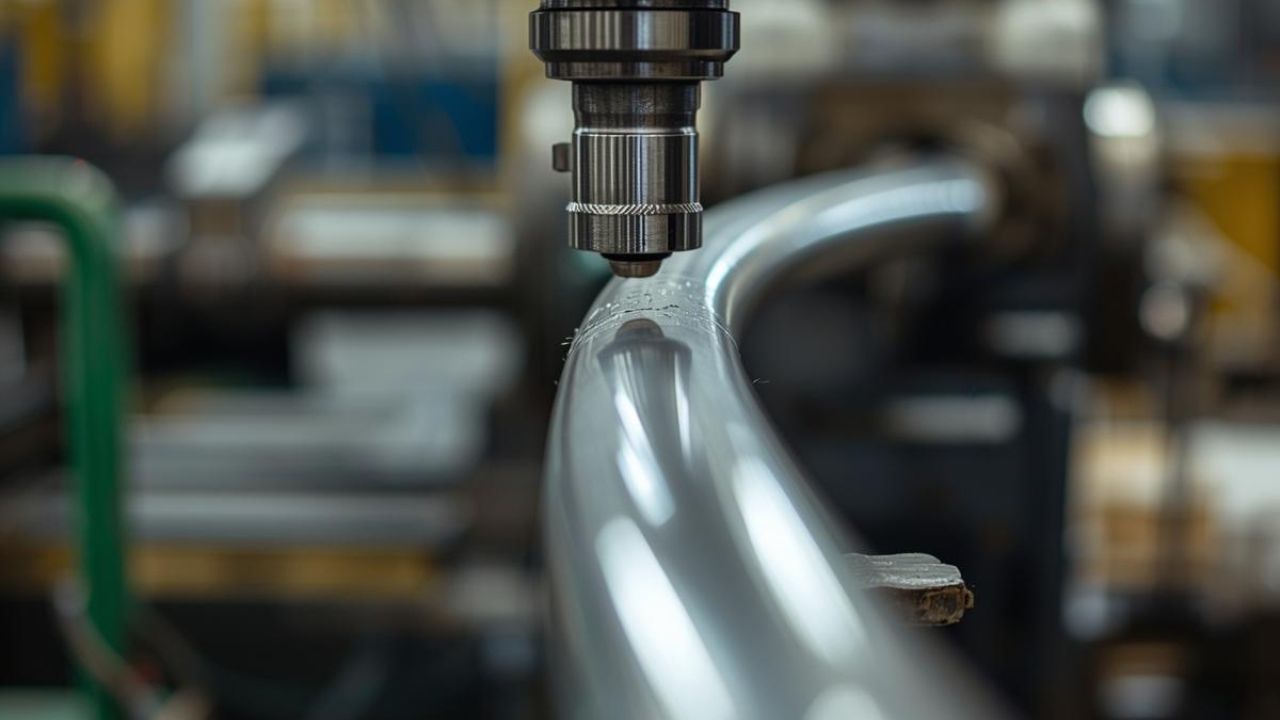
Wall thickness in tube bending determines structural performance and manufacturing feasibility across industrial applications. Engineers must balance wall thickness and tube bending requirements with material properties, bend geometry, and production constraints. Proper wall thickness management prevents defects, ensures pressure ratings, and optimizes the total cost of ownership.
Key Takeaways
- Wall thickness directly affects structural integrity by experiencing tensile and compressive stresses during bending operations
- Thinner wall thicknesses require mandrel support to prevent collapse, while thicker walls enable tighter bend radii
- Process selection depends on wall thickness, with rotary draw bending preferred for 40-45% of precision applications
- CNC automation achieves ±0.25mm tolerances and improves production efficiency by 40-60% compared to manual methods
- Material certifications and wall thickness tolerances account for 30% of buyer decision-making weight
What Is the Role of Wall Thickness in Tube Bending?
Wall thickness serves as the primary structural parameter governing tube bending success and final assembly performance. During bending, the outer surface experiences tensile stress while the inner radius undergoes compression forces. This stress distribution creates wall thickness reduction in bent areas, with extent determined by bend radius and material ductility. The Barlow formula calculates maximum operating pressure as P = (2 × t × S) / D, where wall thickness directly determines safe pressure capacity.
Material selection interacts with wall thickness considerations to establish bending feasibility and structural adequacy. Stainless steel commands 40-45% material preference due to corrosion resistance and favorable ductility. Aerospace applications frequently specify Inconel, titanium, and specialized stainless steel alloys, demanding precise material selection for tube bending protocols. ASTM and ISO material certifications provide verified mechanical properties that engineers use to calculate acceptable wall thickness reduction.
How Does Wall Thickness Affect Structural Integrity During Bending?
Wall thickness reduction occurs on the outer radius where material stretches to accommodate the bend geometry. Excessive thinning compromises structural integrity and reduces pressure capacity below design requirements. The quality impact of wall thickness becomes critical in pressurized systems where small reductions create failure risks.
Tensile stress on the outer surface and compression stress on the inner surface create complex force distributions through the wall cross-section. Materials with appropriate ductility and elasticity handle these opposing stresses without cracking or buckling. Process parameter adjustments reduce stretching effects, while mandrel support prevents inner wall collapse during tight radius bends.
What Are Common Materials and Their Wall Thickness Considerations?
Stainless steel represents 40-45% of tube bending applications with wall thickness ranges optimized for corrosion resistance and formability. Common grades like 304 and 316 offer excellent ductility, accommodating moderate wall thickness reduction. Carbon steel provides superior strength-to-weight ratios but requires larger minimum wall thicknesses to prevent collapse in tight bends.
Aircraft applications utilize Inconel, titanium, and specialized stainless steel alloys where extreme temperature resistance justifies higher costs. These materials impose strict wall thickness constraints due to limited ductility and high strength. ASTM and ISO material certifications verify chemical composition and mechanical properties, determining acceptable wall thickness tolerances.
How Does Wall Thickness Relate to Pressure Ratings and Durability?
Wall thickness determines maximum operating pressure through the relationship between material strength, diameter, and wall dimension. The Barlow formula establishes that doubling the wall thickness doubles the pressure capacity for a given tube diameter. Safety factors typically require 3-4 times the expected operating pressure to account for fatigue and corrosion.
Durability extends beyond initial pressure capacity to include fatigue resistance, corrosion allowance, and long-term structural performance. Thicker walls provide greater corrosion allowance, maintaining structural integrity over extended service life in harsh environments. Total cost of ownership calculations balance initial material costs against expected service life and maintenance requirements.
How Does Wall Thickness Influence Bend Radius and Quality?
Wall thickness fundamentally constrains the minimum achievable bend radius while affecting surface quality and dimensional accuracy. Thinner wall tubes enable tighter bend radii but require mandrel support to prevent inner wall collapse and wrinkling. Thicker walls resist deformation more effectively but demand larger bend radii to avoid excessive outer wall thinning. The bending radius effects create direct trade-offs between geometric flexibility and structural integrity.
Bend quality depends on maintaining wall thickness uniformity throughout the curved section without surface defects or dimensional deviations. CNC tubing bender capabilities determine achievable tolerances for wall thickness maintenance across different tube sizes and materials. Modern systems achieve ±0.25mm tolerances, preserving wall thickness within acceptable limits.
What Is the Relationship Between Bend Radius and Wall Thickness Reduction?
Bend radius directly determines the wall thickness reduction severity on the outer surface during forming. Tighter bend radii create greater material elongation, reducing wall thickness more extensively than gentle curves. Using the largest practical bend radius, typically 1.5-2 times tube diameter, minimizes stress concentration and wall thinning.
The ratio of bend radius to tube diameter establishes forming difficulty and required tooling complexity. Ratios below 2:1 demand mandrel support and specialized die designs to maintain wall thickness within acceptable tolerances. Larger ratios above 3:1 reduce forming forces and enable simpler tooling while improving surface finish.
How Does Wall Thickness Impact Defects Like Wrinkling and Collapse?
Tube collapse or wrinkling occurs without proper mandrel support when wall thickness proves insufficient to resist compression forces. The inner radius experiences compressive stress that buckles thin-walled tubes unless internal support maintains circular cross-section geometry. Mandrel bending accounts for 25-30% of applications, specifically to prevent these defects in thin-walled precision components.
Wall thickness relative to diameter creates a critical ratio determining susceptibility to collapse and wrinkling. Ratios below D/t = 20 generally permit bending without mandrels for moderate bend radii in ductile materials. Thinner walls with ratios exceeding D/t = 40 require mandrel support even for relatively gentle bends. Preventing common tube bending quality issues demands careful process selection based on wall thickness characteristics.
What Design Guidelines Optimize Wall Thickness for Bend Quality?
Minimizing bend complexity reduces cumulative wall thickness variation and defect potential. Simplified designs reduce costs by 10-20% while improving quality consistency through fewer forming operations. Multiple bends in close proximity create compound stress states, amplifying wall thickness reduction beyond single-bend calculations.
Bend radius optimization balances geometric requirements against wall thickness maintenance and tooling availability. Specifying the largest acceptable bend radius reduces forming forces and wall thickness variation while simplifying die requirements. Conservative tolerance specifications prevent unnecessary cost increases from overly tight wall thickness requirements, providing no functional benefit.
Which Tube Bending Processes Are Most Affected by Wall Thickness?
Process selection for tubes depends critically on wall thickness relative to diameter and required bend geometry. Rotary draw bending dominates precision applications with a 40-45% market share due to excellent wall thickness control and tight radius capabilities. Mandrel bending serves 25-30% of applications where thin walls demand internal support to prevent collapse. The tube fabrication parameters for each process establish acceptable wall thickness ranges and geometric limitations.
Compression and roll-bending methods accommodate thicker walls and larger radii where precision requirements prove less stringent. Compression bending handles 15-20% of applications with simpler tooling suitable for thicker-walled tubes. Roll bending addresses 5-10% of applications requiring large-radius curves in structural components. Manufacturing complex tube assemblies requires matching process capabilities to wall thickness specifications.
How Do Rotary Draw and Mandrel Bending Compare for Different Wall Thicknesses?
Rotary draw bending utilizes a fixed die and a rotating bending die to form tubes around a predefined radius with excellent repeatability. This method excels at maintaining wall thickness consistency while achieving tight bend radii in moderate wall thickness ranges. The fixed tooling provides superior dimensional control that CNC bending accuracy leverages for complex multi-bend assemblies. Rotary draw handles wall thicknesses from 0.035 inches to 0.500 inches, depending on tube diameter and material properties.
Mandrel bending inserts a mandrel inside the tube to prevent collapse or wrinkling on thin-walled components. This process becomes essential when wall thickness-to-diameter ratios exceed D/t = 25 or when tight bend radii demand inner wall support. Mandrel designs range from plug mandrels for gentle bends to multi-ball mandrels for severe forming.
When Is Compression or Roll Bending Preferable Based on Wall Thickness?
Compression bending clamps the tube and pushes it against a stationary die in a cost-effective method for thicker-walled components. This approach suits wall thicknesses above 0.125 inches, where collapse resistance eliminates mandrel requirements. The simpler tooling reduces setup costs but provides less dimensional control than rotary draw methods.
Roll bending employs rollers to gradually curve the tube through incremental deformation. This method excels for large-radius bends in thick-walled structural tubes where other processes prove impractical. Roll bending accommodates wall thicknesses from 0.125 inches to over 1.0 inches in large-diameter structural applications.
What Process Parameters Can Be Adjusted to Accommodate Wall Thickness?
Bending speed adjustments control strain rates, affecting material flow and wall thickness reduction. Slower speeds permit greater material elongation, accommodating wall thickness limitations in ductile materials without cracking. Temperature control becomes critical for difficult materials where preheating improves ductility and reduces forming forces.
Die design parameters, including bend radius, die width, and pressure die force, directly influence wall thickness maintenance and defect prevention. Larger bend radii reduce forming severity while wider dies distribute forces, minimizing localized thinning. Lubrication selection affects friction conditions, determining material flow patterns and final wall thickness distribution.
How Do Manufacturing Technologies Improve Bending Outcomes Related to Wall Thickness?
Advanced manufacturing technologies address wall thickness challenges through precision measurement, automated process control, and real-time quality monitoring. CNC automation adoption grew from 45% in 2021 to 78% in 2025, enabling consistent wall thickness control. Laser springback technology improves first-pass success rates from 85% to 98% by compensating for material behavior variations. Industry 4.0 integration reduces unplanned downtime by 30-40% through predictive maintenance, preventing quality degradation.
Technology integration transforms tube bending into precision manufacturing with statistical process control capabilities. Modern quality control in tube fabrication systems measures wall thickness at multiple points to verify conformance throughout bend sections. Automated data collection enables continuous process optimization, maintaining wall thickness within tight tolerance bands.
What Role Does CNC Automation Play in Managing Wall Thickness Challenges?
CNC automation adoption grew from 45% in 2021 to 78% in 2025 as manufacturers recognized precision and repeatability advantages. Modern CNC systems achieve tolerances of ±0.25mm, maintaining wall thickness specifications across thousands of identical parts. Computer control eliminates operator variability, previously creating wall thickness inconsistencies between shifts.
CNC systems increase production efficiency by 40-60% compared to manual methods while improving wall thickness control. Automated tool positioning eliminates setup errors, compromising wall thickness maintenance through incorrect die alignment or pressure settings. Multi-axis control handles complex bend sequences while maintaining dimensional accuracy throughout the entire tube length.
How Does Laser Springback Technology Compensate for Wall Thickness Effects?
Laser springback technology adoption accelerated from 12% in 2021 to 45% in 2025 as manufacturers demanded higher first-pass yields. This technology employs laser measurement to quantify material springback, automatically adjusting bend angles to achieve final specifications. Wall thickness variations affect springback magnitude, requiring real-time compensation that manual methods cannot provide accurately.
Laser technology improves first-pass success rates from 85% to 98% by eliminating trial-and-error approaches. Non-contact measurement captures precise dimensional data without marking or damaging tube surfaces, requiring pristine finishes. Automated compensation algorithms account for wall thickness effects on elastic recovery behavior across materials and geometries.
What Benefits Arise from Industry 4.0 Integration in Tube Bending?
Industry 4.0 integration adoption grew from 8% in 2021 to 35% in 2025 as smart factory technologies proved their value. Real-time monitoring systems track process parameters affecting wall thickness maintenance, alerting operators to deviations before defects occur. Connected systems optimize production scheduling based on actual equipment conditions.
Industry 4.0 reduces unplanned downtime by 30-40% through condition monitoring, detecting tool wear affecting wall thickness control. Data analytics identify process trends, predicting quality issues before out-of-tolerance parts reach customers. Smart factory technologies transform reactive quality control into proactive process optimization, preventing defects rather than detecting them.
What Factors Determine Process Selection Considering Wall Thickness in Tube Bending?
Material type and ductility interact with wall thickness to establish feasible bending processes and achievable geometric characteristics. High-strength materials with limited ductility require larger bend radii and thicker walls to prevent cracking. Aluminum alloys permit thinner walls than steel but demand different tooling geometries to accommodate material flow characteristics.
Cost considerations extend beyond unit pricing to include tooling investment, setup time, and quality-related scrap rates. Standard assemblies represent 45-50% of the market with established processes optimized for common wall thickness specifications. Custom tube fabrication accounts for 35-40% of market demand, where unique wall thickness requirements justify specialized tooling investments. Choosing a CNC tube bending service requires evaluating the provider’s capabilities against specific wall thickness requirements.
How Do Material Type and Ductility Interact with Wall Thickness in Process Choice?
Material ductility determines the minimum wall thickness relative to diameter for successful bending without cracking or excessive thinning. Stainless steel’s excellent ductility permits wall thickness-to-diameter ratios down to D/t = 40 in mandrel bending applications. Carbon steel requires more conservative ratios near D/t = 25 to prevent outer wall cracking during tight radius bends.
High-strength alloys used in aerospace impose strict wall thickness minimums due to limited elongation capacity. Titanium and Inconel demand specialized tooling and process parameters to maintain acceptable wall thickness without surface defects. Material certifications verify mechanical properties, determining safe forming limits and minimum wall thickness specifications for structural applications.
How Does Production Volume Influence the Choice of Bending Method for Varying Wall Thicknesses?
Standard assemblies represent 45-50% of the market, where high production volumes justify dedicated tooling for optimal wall thickness control. High-volume manufacturing amortizes tooling investments across thousands of parts demanding consistent wall thickness specifications. Automated systems reduce labor content while improving repeatability compared to low-volume manual operations.
Custom tube fabrication accounts for 35-40% of the market, where unique wall thickness requirements justify specialized engineering and tooling development. Specialty tubing comprises 10-15% of the market with extremely tight wall thickness tolerances for critical aerospace and medical applications. Production volume directly affects the economic viability of advanced process control technologies, maintaining precise wall thickness specifications.
What Cost Considerations Relate to Wall Thickness During Process Selection?
Over-specification increases costs by 50-100% without a performance benefit when wall thickness tolerances exceed functional requirements. Standard assemblies range from USD 50-150 at the budget tier to USD 500-2,000 for premium applications. Custom fabrication costs span USD 200-800 for budget projects to USD 3,000-15,000+ for complex geometries requiring specialized tooling. Specialty tubing commands USD 500-2,000 at the entry level and USD 10,000-50,000+ for aerospace and medical applications.
Material costs constitute 70-75% of the total cost for standard assemblies, where wall thickness directly determines material volume. Custom tooling investments for specialized wall thickness requirements must be amortized across production quantities. Total cost of ownership calculations include initial tooling, setup time, scrap rates, and quality inspection requirements driven by wall thickness specifications.
How Do Consumer Priorities and Quality Standards Reflect Wall Thickness Importance?
Material quality and specifications account for 30% of decision-making weight as buyers prioritize suppliers with proven wall thickness control capabilities. ASTM and ISO material certifications provide verified mechanical properties ensuring adequate wall thickness for pressure ratings and structural loads. Cost and total cost of ownership account for 26% of decision-making weight, where wall thickness optimization reduces material costs without compromising performance.
Buyer decision-making units evaluate wall thickness factors through multiple organizational perspectives, balancing technical requirements against cost constraints. Engineering and technical roles contribute 30-35% of purchase influence, focusing on wall thickness adequacy for structural and pressure requirements. Procurement roles provide 25-30% influence by evaluating supplier capabilities for maintaining specified wall thickness tolerances consistently.
How Do Material Certifications Relate to Acceptable Wall Thickness Tolerances?
Material certifications establish baseline mechanical properties determining minimum acceptable wall thickness for specific applications and loading conditions. ASTM standards specify chemical composition and mechanical properties governing material behavior during bending and service. ISO certifications verify dimensional tolerances, including wall thickness uniformity along tube length, before forming operations.
Quality management systems track material certifications and wall thickness measurements throughout production, ensuring continuous compliance. Traceability documentation links final assemblies to material test reports, verifying wall thickness adequacy for rated pressures. The certification framework provides objective evidence that wall thickness specifications meet design intent and regulatory requirements.
What Role Does Wall Thickness Play in Total Cost of Ownership for Tube Assemblies?
Total cost of ownership evaluates initial unit price, long-term durability, maintenance requirements, and supply chain reliability affected by wall thickness specifications. Adequate wall thickness ensures expected service life without premature failure from fatigue, corrosion, or pressure excursions, increasing replacement costs. Cost and TCO account for 26% of decision-making weight as buyers recognize that insufficient wall thickness creates hidden costs through warranty claims and field failures.
Wall thickness directly impacts maintenance intervals, where thinner walls require more frequent inspection and replacement in demanding service conditions. Corrosion allowance embedded in wall thickness specifications determines useful life in harsh environments. TCO analysis reveals conservative wall thickness specifications often provide the lowest lifecycle costs despite higher initial material investment.
How Do Buyer Decision-Making Units Evaluate Wall Thickness Factors?
Approximately 72% of B2B purchases involve high-complexity buying scenarios with multiple stakeholders evaluating wall thickness from different organizational perspectives. Furthermore, 81% of buyers have preferred vendors at first contact, reflecting trust in established suppliers’ wall thickness control capabilities. Engineering and technical roles contribute 30-35% of purchase influence through detailed evaluation of wall thickness adequacy for structural loads and pressure ratings.
Procurement roles provide 25-30% of purchase influence by assessing supplier quality systems, ensuring consistent wall thickness maintenance across production volumes. Operations and manufacturing contribute 20-25% influence through practical evaluation of wall thickness effects on assembly processes. Finance and management roles supply 10-15% influence by reviewing cost implications of wall thickness specifications against budget constraints.
What Are Practical Engineering Guidelines for Managing Wall Thickness in Tube Bending?
Engineering guidelines for wall thickness management balance structural requirements against manufacturing feasibility and cost optimization. Minimizing bend complexity reduces cumulative wall thickness variation while simplifying tooling requirements. Conservative tolerance specifications prevent unnecessary precision requirements, increasing costs without providing functional benefits.
Design for manufacturability principles emphasize realistic wall thickness specifications based on actual process capabilities. Each bend introduces potential for wall thickness deviation compounding through multiple forming operations in complex geometries. Tolerance stacking analysis predicts cumulative wall thickness variation, ensuring final assemblies meet minimum structural requirements reliably.
How to Minimize Bend Complexity and Maintain Adequate Wall Thickness?
Minimizing bend number and complexity reduces cumulative stress and wall thickness reduction. Simplified designs reduce costs by 10-20% while improving wall thickness consistency through fewer forming operations. Sequential bends should maintain adequate spacing to prevent compound stress states from amplifying wall thickness reduction beyond single-bend predictions.
Bend sequence optimization addresses the most critical wall thickness requirements first when the material exhibits maximum ductility and uniform properties. Strategic placement of bends away from weld seams prevents localized wall thickness reduction in areas with degraded material properties. Design reviews identify opportunities to eliminate or combine bends without compromising functional requirements.
What Tolerances Are Recommended for Wall Thickness in Different Applications?
Wall thickness tolerances must reflect actual functional requirements rather than arbitrary precision standards, increasing costs without performance benefits. Standard assemblies typically specify ±10% wall thickness tolerance, accommodating normal forming variation while maintaining structural adequacy. Precision applications require ±5% tolerance where pressure ratings or fatigue life demand tighter wall thickness control.
Pressurized systems demand conservative wall thickness tolerances, ensuring safety factors remain adequate after forming-induced thickness reduction. Structural applications evaluate minimum wall thickness at the bend extrados, where maximum thinning creates potential failure locations. Non-critical components may accept ±15% tolerance, reducing inspection requirements and manufacturing costs.
How to Balance Material Selection with Wall Thickness and Manufacturability?
Material selection should prioritize ductility and formability characteristics, enabling adequate wall thickness maintenance during bending without defects. Stainless steel provides excellent corrosion resistance with favorable ductility, accommodating wall thickness reduction in tight radius bends. Carbon steel offers superior strength-to-weight ratios but may require larger minimum wall thicknesses to prevent collapse.
Material costs constitute 70-75% of total production costs for standard assemblies, where wall thickness directly determines material volume. The balance between material properties and wall thickness specifications affects manufacturability through required process selection and tooling complexity. Designers should consult manufacturing partners early to identify material and wall thickness combinations optimizing cost, performance, and production feasibility.
Integrating Wall Thickness Considerations in Tube Bending Quality, Radius, and Process Selection
Wall thickness fundamentally shapes every aspect of tube bending, from structural adequacy to manufacturing process selection and quality outcomes. Engineers must integrate wall thickness considerations throughout the design process to ensure manufacturability, cost-effectiveness, and performance reliability. The interplay between wall dimensions, bend geometry, and material properties determines achievable quality levels and appropriate manufacturing technologies.
Work With a Tube Bending Team That Manages Wall Thickness at Every Stage
CRD MFG, Inc. brings extensive expertise in managing wall thickness challenges across complex tube bending projects for automotive, aerospace, and industrial sectors. Our state-of-the-art facility integrates advanced CNC automation and precision measurement systems to maintain tight wall thickness tolerances throughout demanding production runs.
Wall thickness decisions affect bend radius selection, process requirements, and final part quality. CRD MFG, Inc. works with engineering and procurement teams across aerospace, automotive, and industrial manufacturing to plan tube bending projects that meet spec from the first production run — including heavy-wall petrochemical pipe bending solutions where material behavior under stress is especially critical. Contact CRD MFG, Inc. to review your wall thickness requirements.
