
Key Takeaways
- Integrated Manufacturing Reduces Complexity: Tube assembly services combine metal stampings, machined parts, and castings into cohesive units that lower part counts, reduce assembly time, and achieve significant cost savings in high-volume production.
- Material Selection Drives Performance: Steel provides exceptional strength for structural applications, aluminum offers lightweight corrosion resistance, and stainless steel withstands harsh environments—selection depends on mechanical properties, weight constraints, and environmental factors.
- Hydraulic Assemblies Require Specialized Components: High-pressure hydraulic systems demand assemblies rated for 6,000+ psi with proper reinforcement layers, correct fitting types (crimped, reusable, or push-on), and pressure testing at 1.5-2x working pressure.
- Quality Control Ensures Reliability: Comprehensive testing includes visual inspection, dimensional verification, cleanliness checks, pressure testing, and leakage testing to confirm assemblies meet safety and performance standards before delivery.
- Custom Solutions Enhance Product Performance: Custom tube assemblies accommodate complex geometries and specific design requirements that standard assemblies cannot meet, providing superior strength, design flexibility, and performance for demanding applications across automotive, aerospace, and industrial sectors.
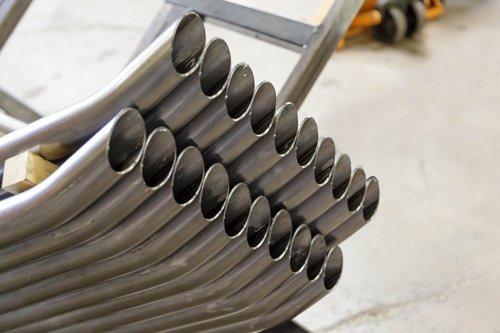
Tube assembly services integrate multiple manufacturing processes to transform raw tubing into precision-engineered components. These services combine cutting, tube bending and assembly, welding, and joining techniques to create complete assemblies that reduce part counts, improve structural integrity, and streamline production across automotive, aerospace, industrial, and hydraulic applications.
Modern manufacturers rely on tube assembly services to deliver stronger, lighter, and more cost-effective solutions than traditional multi-component designs. This guide explores tube assembly fundamentals, manufacturing processes, material selection, quality control standards, and industry applications.
Understanding these integrated services helps engineers and procurement professionals select optimal solutions for complex projects requiring durability, precision, and performance under demanding conditions.
What Are Tube Assembly Services and How Do They Streamline Production?
Tube assembly services integrate multiple manufacturing processes to create finished products from raw tubing. These services transform individual components into complete, ready-to-install assemblies that reduce complexity and improve performance across industries.
What is Tube Assembly and How Does It Fit into Manufacturing Processes?
Tube assembly is the transformation of raw tubes into precisely engineered components through shaping, joining, and modification. Fabricated assemblies combine metal stampings, machined parts, and castings, with tubes serving as the critical framework binding these diverse components together.
These precision assemblies solve three key engineering challenges: component integration, reduced assembly complexity, and enhanced product performance. Tubes function as conduits for fluids, structural elements, or components within intricate systems, making them essential to modern manufacturing workflows.
How Does Tube Assembly Streamline Production in Modern Manufacturing?
Tube assembly streamlines production by reducing total component count and assembly complexity. Integrated assemblies replace multiple individual parts with single, cohesive units that improve structural integrity and design flexibility.
Manufacturers achieve significant cost savings in high-volume production scenarios. Fewer parts mean faster assembly, reduced inventory management, and lower labor costs. The integrated approach delivers stronger, more reliable products while simplifying quality control and reducing potential failure points.
The Key Components of Tube Assembly
Tube assembly combines specialized components, materials, tools, and techniques to create integrated manufacturing solutions. Understanding these elements ensures optimal performance and cost-effectiveness in production.
What Are the Core Components in Tube Assembly Services?
Tube assemblies integrate four primary component types. Metal stampings provide lightweight, high-volume production capabilities. Machined parts deliver precision and complex geometries. Castings offer robust structural elements. Fabricated tubes serve as the critical framework binding everything together.
Essential tools include tube benders, cutters, welding equipment, and end-forming machines. Core techniques—bending, cutting, welding, and end forming—transform raw materials into finished assemblies. This combination of components, tools, and processes enables manufacturers to create complex assemblies from simple starting materials.
How Are Materials Selected for Tube Assembly?
Material selection balances four key properties: mechanical strength, corrosion resistance, thermal conductivity, and weight constraints. Steel provides exceptional strength and durability for structural applications like roll cages and frameworks. Aluminum offers lightweight, corrosion-resistant solutions for chassis parts and heat exchangers. Stainless steel resists corrosion in moisture and chemical exposure environments. Specialized alloys deliver tailored properties including increased strength, heat resistance, or conductivity.
Engineers evaluate tensile strength, yield strength, and ductility alongside environmental factors. Critical design considerations include material compatibility to prevent galvanic corrosion and differential thermal expansion, tolerance management through advanced metrology, and weight optimization for applications where fuel efficiency and performance matter. Proper material selection directly impacts assembly durability, performance, and cost-effectiveness.
Why is Tube Welding a Critical Element in Tube Assembly?
Welding creates permanent, load-bearing bonds between components, making it essential for structural integrity. Precision welding techniques—TIG, MIG, and laser welding—produce strong, reliable joints based on material type, thickness, and quality requirements. TIG welding suits thin materials and detailed work, MIG offers high-speed production capabilities, and laser welding delivers precision for complex geometries.
Complementary joining methods expand design possibilities. Mechanical fastening uses specialized fasteners for detachable connections. Brazing and soldering create metallurgical bonds between dissimilar materials where traditional welding proves impractical. Method selection determines assembly strength, production speed, and long-term reliability across automotive, aerospace, and industrial applications.
Types of Tube Assembly Services
Tube assembly services fall into distinct categories based on application requirements, pressure ratings, and customization needs. Understanding these types helps manufacturers select optimal solutions for specific industrial demands.
What Are Hydraulic Tube Assemblies and Their Applications?
Hydraulic tube assemblies are purpose-built units that safely transmit pressurized hydraulic fluid to power machinery. Each assembly consists of four critical components: the hydraulic hose (inner tube, reinforcement layers, outer covering), fittings (crimped, reusable, or push-on), adapters and connectors (flange, threaded, ORFS, quick-disconnect), and clamps to prevent movement and vibration. The inner tube conveys fluid using PTFE, thermoplastics, or synthetic rubber. Reinforcement layers—spiral, helical, or braided steel wire—withstand pressure. The outer covering protects against chemicals, UV damage, and abrasion.
Hydraulic hoses range from low-pressure (below 300 psi with textile reinforcement) to high-pressure (6,000+ psi with steel wire braids). Spiral hoses with four to six steel wire layers handle high-pressure applications with frequent surges. Thermoplastic and rubber hoses offer flexibility, lightweight construction, and durability for moderate-pressure systems. Applications span construction equipment, agriculture machinery, manufacturing systems, and any operation requiring pressurized fluid transmission.
What Are the Differences Between Custom Tube Assemblies and Standard Tube Assemblies?
Standard tube assemblies follow predetermined specifications and dimensions for common applications. These off-the-shelf solutions offer quick availability and lower costs for typical manufacturing needs.
Custom tube assemblies are bespoke components tailored to unique project requirements. They accommodate complex geometries, specific design constraints, and specialized performance demands that standard assemblies cannot meet. Custom solutions provide flexibility for applications requiring unusual dimensions, material combinations, or performance characteristics in automotive, aerospace, and specialized industrial equipment.
How Does Tube Bending and Assembly Work in Different Industries?
Automotive manufacturers use tube assemblies for suspension systems, powertrain components, and chassis frames where strength-to-weight ratios are critical. Aerospace applications demand hydraulic lines, fuel lines, and structural components where reliability and lightweight design are paramount. Appliance manufacturers incorporate structural frames and hydraulic/pneumatic systems into their products.
Industrial machinery and heavy equipment rely on tube assemblies for robotic arm assemblies, material handling equipment, and high-pressure fluid systems requiring exceptional durability and precision. Energy sector applications focus on high-pressure fluid systems that withstand extreme operating conditions. Each industry uses advanced CNC tube benders and assembly techniques to meet specific performance, safety, and efficiency requirements unique to their operational demands.
Tube Assembly in Product Development
Tube assembly plays a critical role throughout product development cycles, from initial design through final testing. These components influence performance, safety, and manufacturability across diverse applications.
How Does Tube Assembly Contribute to Product Development?
Tube assemblies contribute three essential attributes to product development: strength and durability to endure harsh conditions and immense pressures, efficiency through precision fabrication that enables peak performance, and safety by withstanding stress, pressure, and wear throughout operational lifecycles.
These components are fundamental across industries. Complex fluid power systems in aerospace and construction rely on tube assemblies. Automotive chassis and industrial machinery depend on structural frameworks built from precisely fabricated tubes. Proper tube assembly integration during development determines product reliability, performance longevity, and operational safety across all applications.
How Are Tube Assembly Services Integrated into Product Design and Testing?
Tube assembly integration begins with Design & Engineering, where material selection drives performance outcomes. The multi-stage process demands precision at every step, integrating various manufacturing disciplines to meet exact specifications. Engineers select steel, aluminum, or stainless steel based on mechanical properties, corrosion resistance, and weight requirements for specific applications.
The workflow ensures that design intent translates accurately to finished products. Each manufacturing stage—from initial design through forming, joining, and testing—builds on previous steps. This integrated approach verifies that assemblies meet dimensional tolerances, pressure ratings, and performance specifications before reaching production.
What Role Does Custom Tube Assembly Play in Enhancing Product Performance?
Custom tube assemblies enhance product performance by creating cohesive, high-performance units with superior strength and design flexibility. Strategic integration of multiple manufacturing processes into single assemblies reduces total part count and assembly complexity, directly improving reliability and reducing potential failure points.
This approach delivers substantial economic and performance benefits. Fewer parts mean streamlined production, reduced inventory costs, and faster assembly times. Integrated assemblies eliminate joints and connection points where failures typically occur, resulting in stronger, more durable products that outperform multi-component alternatives while reducing manufacturing complexity and cost.
The Tube Assembly Process
The tube assembly process follows a systematic eight-step workflow that transforms raw materials into finished, tested components. Each stage builds precision and quality into the final product.
What Are the Key Steps in the Tube Assembly Process?
The standard tube assembly process begins with Design & Engineering, where engineers select materials based on mechanical properties, corrosion resistance, and weight. Procurement follows, acquiring specified raw materials. Step three involves cutting tubes to precise lengths and deburring to ensure clean, smooth ends. Forming processes shape tubes according to design requirements. Assembling and joining integrates components using appropriate techniques. Surface treatment applies protective coatings or finishes. Quality testing ensures specifications are met through rigorous protocols. Finally, packaging and delivery prepare assemblies for shipment.
Hydraulic assemblies require specialized procedures. Hose cutting uses specialized saws to create clean, perpendicular cuts that minimize deformation and contamination, with ends thoroughly cleaned. Fitting attachment uses three methods: crimping compresses metal ferrules for permanent connections, swaging compresses metal sleeves for high-pressure applications, and threading inserts fitting barbs secured with clamps. Each method suits specific pressure ratings and maintenance requirements.
How Does Tube Welding and Bending Fit into the Assembly Line?
Tube fabrication differs from pipe bending in scope and purpose. Pipe bending alters pipe shape for fluid transport without changing internal diameter. Tube fabrication encompasses a broader range—cutting, welding, and end forming—to create components for structural, hydraulic, or pneumatic functions.
Integration occurs sequentially within the assembly line. Following procurement, tubes are precisely cut and deburred for clean, smooth ends. Tubes then undergo forming processes based on design specifications before moving to assembly and joining stages. This workflow ensures that each component meets dimensional requirements before permanent joining operations, reducing waste and rework.
What Are the Quality Control Measures in Tube Assembly Services?
Quality control for tube assemblies employs five critical inspection methods. Visual inspection identifies physical defects, misaligned fittings, improper crimping, and damaged components. Dimensional inspection verifies hose length, fitting orientation, and crimp dimensions within specified tolerances. Cleanliness verification ensures internal cleanliness by removing residual debris that could contaminate hydraulic systems.
Pressure testing subjects assemblies to 1.5-2x rated working pressure to confirm performance capability under extreme conditions. Leakage testing uses hydrostatic or pneumatic methods to verify sealing effectiveness at all connection points. Final stages include surface treatment application, comprehensive quality testing protocols, and packaging for shipment. This multi-layered approach ensures assemblies meet safety, performance, and reliability standards before reaching customers.
Applications of Tube Assembly Services Across Industries
Tube assembly services serve diverse industrial sectors, each with unique performance demands and regulatory requirements. Understanding industry-specific applications reveals how tube assemblies solve critical engineering challenges.
How is Tube Assembly Used in Automotive Manufacturing?
Automotive manufacturers rely on tube assemblies where strength-to-weight ratios are critical for fuel efficiency and performance. Suspension systems, powertrain components, and chassis frames incorporate precision tube assemblies to reduce vehicle weight while maintaining structural integrity. Automotive exhaust pipes demand high precision and tight-radius bends to fit complex underbody packaging constraints.
Hydroforming technology produces chassis and subframes, steering columns, anti-roll bars, exhaust and air ducts, and lightweight structural supports. This process creates complex geometries in single pieces, eliminating welds and reducing weight. Weight reduction directly improves fuel economy and handling performance, making tube assemblies essential to modern automotive engineering and emissions compliance.
What Role Does Tube Assembly Play in Aerospace and Aviation?
Aerospace applications demand tube assemblies for hydraulic lines, fuel lines, and structural components where reliability and lightweight design are paramount. Precision rotary draw bending produces aerospace hydraulic lines that meet strict tolerance requirements for critical flight systems. Every component must perform flawlessly under extreme temperature variations, pressure cycles, and vibration.
Hydroforming delivers lightweight, high-strength components with optimized internal structures that reduce fuel consumption. Aluminum and lightweight alloys provide formability for complex shapes, while titanium offers exceptional corrosion and heat resistance for demanding environments. These materials and processes enable aerospace manufacturers to achieve weight savings that translate directly to increased payload capacity, extended range, and improved fuel efficiency.
How is Tube Assembly Critical in Medical Device Manufacturing?
Medical device manufacturing uses tube assemblies for hospital bed frames, ergonomic supports, and orthopedic device components. Hydroforming creates smooth, seamless structures that meet stringent hygiene requirements and provide patient comfort. These applications demand precision, cleanliness, and biocompatibility.
Titanium serves as the primary material for medical applications due to its corrosion resistance, heat tolerance, and biocompatibility. Medical-grade tube assemblies must withstand repeated sterilization cycles, support substantial loads, and maintain dimensional stability throughout their service life. The absence of welds and joints in hydroformed components eliminates potential contamination points and structural weak spots critical to medical safety standards.
Why Are Tube Assembly Services Important in Industrial Equipment Production?
Industrial machinery and heavy equipment incorporate tube assemblies in robotic arm assemblies, material handling equipment, and high-pressure fluid systems requiring exceptional durability and precision. Energy sector applications rely on tube assemblies for systems that withstand extreme operating pressures, temperatures, and corrosive environments. These components must deliver consistent performance under continuous operation.
Construction equipment depends on hydraulic assemblies to power lifting, digging, and material movement functions. Heat induction bending produces large radius components for construction industry applications where traditional bending methods cannot achieve required dimensions. Industrial tube assemblies enable equipment to perform demanding tasks reliably, reducing downtime and maintenance costs while improving operational safety and efficiency.
How to Choose the Right Tube Assembly Service Provider
Selecting the right tube assembly service provider requires evaluating technical capabilities, certifications, and process expertise. The right partner ensures quality, reliability, and cost-effectiveness throughout production.
What Should You Look for When Selecting a Tube Assembly Service Provider?
Evaluate eight critical factors when selecting a tube assembly provider. Budget determines available technologies, as different methods carry varying cost requirements. Precision needs vary—applications like roll cages demand high accuracy, while others tolerate looser tolerances. Workable size matters because methods perform differently with thin versus thick tubes. Bend angle requirements determine method selection: ram bending suits small angles, while rotary draw bending handles large angles effectively.
Assess complexity requirements for simple bends versus complex 3D geometries. Material type influences method selection, as different materials respond better to specific processes. Dimensional precision requirements vary by application and directly impact tolerance management needs. Production volume affects cost-effectiveness—some methods scale efficiently at higher volumes while others suit low-volume or prototype runs. Providers should demonstrate capability across these factors to match your project specifications.
How Does Expertise in Custom Tube Assemblies Impact Quality?
Expertise in custom tube assemblies directly determines final product quality through sophisticated integration of material science, mechanical engineering, and process control. Experienced providers employ advanced metrology and statistical process control for precise tolerance management across different manufacturing processes. This ensures dimensional accuracy at every production stage.
Professional assembly expertise prevents installation failures and performance issues. Skilled technicians understand how materials behave during forming, which welding parameters suit specific applications, and how to verify quality through comprehensive testing protocols. Providers lacking this expertise produce assemblies that may meet basic specifications but fail under real-world operating conditions or require costly rework and adjustments.
Why is Certification Important in Tube Assembly Services?
Certification ensures tube assembly providers use industry-standard components that meet SAE and ISO standards for strength, durability, and dimensional accuracy. These certifications verify that materials, processes, and quality control systems comply with established safety and performance benchmarks. Certified components undergo rigorous testing and documentation to prove reliability.
Professional assembly certification guarantees proper installation procedures and quality verification. Certified providers demonstrate competency in critical processes—welding qualifications, pressure testing protocols, and dimensional inspection techniques. Components must meet stringent requirements throughout their service life, and certification provides traceable evidence that assemblies will perform as specified. Uncertified providers may cut corners on materials, processes, or testing, creating liability and safety risks.
Partner with CRD MFG, Inc. for Expert Tube Assembly Solutions
CRD MFG, Inc. delivers precision tube assembly services that integrate cutting, bending, welding, and forming into streamlined manufacturing solutions. Our expertise spans hydraulic assemblies, custom fabrication, and high-pressure applications across automotive, aerospace, and industrial sectors. We combine advanced material selection, rigorous quality control, and proven integration techniques to reduce your part counts, improve structural integrity, and lower production costs.
Whether you need standard assemblies, complex custom solutions, or specialized food grade tube fabrication services, our engineering team ensures your components meet exact specifications for durability and performance. Contact CRD MFG, Inc. today to discuss your tube assembly requirements and discover how our integrated manufacturing approach delivers superior results for demanding applications.