
Key Takeaways
- Custom tube fabrication uses CNC bending, laser cutting, and robotic welding to create precision components with complex geometries that standard tubing cannot achieve, supporting applications from automotive exhaust systems to aerospace hydraulic lines.
- Digital workflows accelerate product development by enabling rapid prototyping without tooling delays, allowing manufacturers to test iterations quickly and scale from prototype to production using the same programmed specifications.
- Automated processes deliver measurable benefits including consistent accuracy across production runs, optimized material use that reduces waste, high throughput speeds, and flexibility to handle intricate multi-bend designs in single operations.
- Material selection requires balancing performance against cost and fabricability—aluminum offers lightweight ductility for automotive and aerospace, steel provides strength for industrial equipment, while specialty alloys like titanium suit high-stress applications despite higher costs.
- Overcoming fabrication challenges demands strategic approaches including leveraging advanced CNC technologies with adaptive controls, partnering with experienced fabricators who bring material expertise and established tooling, and implementing early design-manufacturing collaboration to optimize manufacturability.
Custom tube fabrication transforms raw tubular materials into precision-engineered components that meet exacting specifications across automotive, aerospace, industrial, and consumer applications. CRD MFG, Inc. leverages advanced custom tube fabrication techniques to deliver high-quality solutions, meeting the demands of modern manufacturing.
Today’s production requirements call for increasingly complex geometries, tighter tolerances, and specialized material properties that standard off-the-shelf tubing cannot provide. Through advanced techniques like CNC bending, laser cutting, and robotic welding, manufacturers achieve design flexibility, cost efficiency, and production speed that traditional methods cannot match.
This guide explores how custom tube fabrication integrates into product development, the core applications driving demand, the benefits and challenges manufacturers face, and emerging trends reshaping the industry. Understanding these processes enables informed decisions about when and how to leverage custom fabrication for competitive advantage, especially when partnering with experts like CRD MFG, Inc.
What is Custom Tube Fabrication and When Should Manufacturers Use It?
Custom tube fabrication transforms raw tube stock into precision-engineered components through bending, cutting, and welding. Manufacturers turn to these processes when standard off-the-shelf parts can’t meet design specifications or performance requirements.
Defining Custom Tube Fabrication
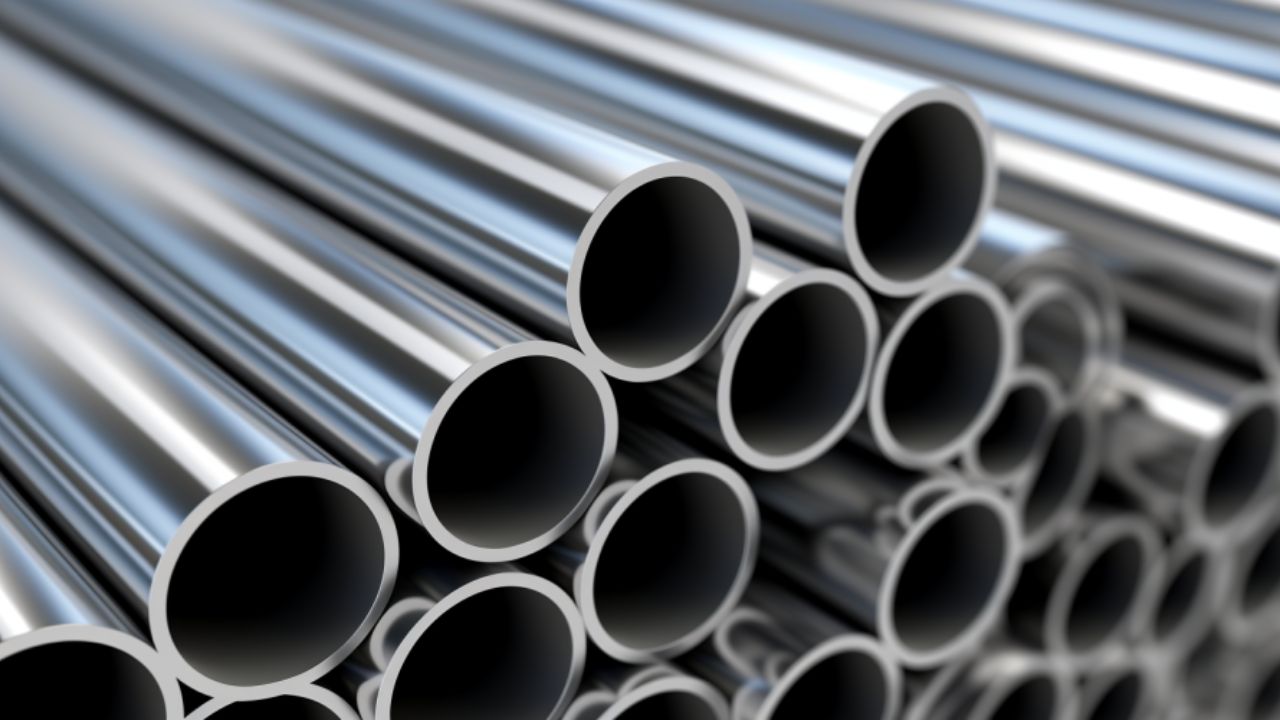
Custom tube fabrication is the process of shaping, cutting, and joining tubular materials to exact specifications for specific applications. Unlike standard tube products, custom fabrication addresses unique dimensional requirements, complex geometries, and specialized material needs. The process combines computer-controlled machinery with specialized tooling to produce components ranging from simple bent tubes to complex multi-bend assemblies with precise tolerances.
Key Techniques in Custom Tube Fabrication
Three core techniques drive modern tube fabrication: automated bending, precision machining, and laser cutting with robotic welding. Each method addresses specific manufacturing challenges while enabling increasingly complex designs.
Custom Tube Bending
CNC benders follow programmed instructions to control tube positioning, rotation, and bending angles, ensuring every bend is identical to the last. This automation eliminates human error and delivers consistent results across production runs.
CNC Machining
CNC machining has advanced sensors and feedback systems that monitor the process in real-time, detecting deviations from programmed parameters and making immediate adjustments to ensure accuracy. This closed-loop control maintains tight tolerances throughout production.
Laser Cutting and Robotic Welding
Two primary laser types dominate tube cutting: fiber lasers offer versatility across material types, while CO2 lasers excel with niche materials like titanium due to enhanced gas coverage. The semi-to-fully automated process delivers high throughput and repeatability. Modern laser systems create through-holes as small as the tube’s wall thickness and produce minimal material waste thanks to the thin kerf. For manufacturers searching for tube laser cutting near me, these systems accommodate tubes with outer diameters from 0.5 to 6.0 inches and wall thicknesses up to 0.5 inches, working with stainless steel, aluminum, and various steel alloys.
When Should Manufacturers Use Custom Tube Fabrication?
Manufacturers should choose custom tube fabrication when projects demand precise geometries, tight tolerances, or materials that require specialized handling. It’s the optimal solution for prototyping new designs, producing small-to-medium production runs, and manufacturing components where weight reduction, strength-to-weight ratios, or specific material properties are critical. Custom fabrication becomes essential when standard tubing cannot achieve required bend angles, when multiple bends must maintain exact spatial relationships, or when integrated features like holes, slots, or end-forming are needed in a single manufacturing process.
How Does Custom Tube Fabrication Fit into Product Development?
Custom tube fabrication plays a crucial role in product development, seamlessly bridging the gap between initial design and full-scale production. From concept to creation, custom tube fabrication supports rapid iteration and scalable manufacturing, ensuring that product designs are quickly translated into physical prototypes.
The digital workflow, powered by advanced technologies like CNC machining and custom tube bending, enables smooth transitions from prototyping to full-scale production, ensuring that each phase aligns with the evolving needs of the product development cycle. This integration allows for quicker product development timelines, improved design accuracy, and more efficient production processes, making it an indispensable tool in modern manufacturing.
Integrating Tube Fabrication in the Design Process
The process begins with a 3D CAD model of the desired part, which is then translated into a set of instructions for the machine. This digital-first approach allows engineers to simulate bends, identify potential manufacturing issues, and optimize designs before cutting metal. Design for manufacturability becomes part of the CAD phase, reducing costly revisions and accelerating time-to-production.
Role of Custom Tube Fabrication in Rapid Prototyping
Custom tube fabrication accelerates prototyping by eliminating tooling delays associated with traditional manufacturing. Engineers can test multiple design iterations quickly, as CNC machines require only programming changes rather than new dies or fixtures. Physical prototypes validate fit, function, and performance within days instead of weeks. This speed enables faster design refinement and earlier identification of potential issues before committing to production tooling.
Benefits of Custom Tube Fabrication in Small and Large Production Runs
Custom tube fabrication scales efficiently across production volumes. Small runs benefit from minimal setup requirements and no hard tooling costs, making low-volume manufacturing economically viable. Large production runs leverage the repeatability of CNC automation, where programmed specifications ensure consistency across thousands of parts. The same digital files drive both prototyping and production, eliminating translation errors and maintaining design intent throughout the product lifecycle. This flexibility allows manufacturers to start small, validate market demand, and scale production without re-engineering processes.
What Are the Core Applications of Custom Tube Fabrication in Manufacturing?
Custom tube fabrication serves diverse industries requiring precision-formed tubular components. Material selection and fabrication techniques vary by application demands, from lightweight aerospace structures to heavy-duty industrial equipment.
Automotive Industry
Automotive manufacturers rely on custom tube fabrication for exhaust systems, roll cages, chassis components, and fluid transfer lines. Performance and weight reduction drive material choices across both OEM and aftermarket applications.
Precision Tube Fabrication for Aftermarket Parts
Aluminum dominates automotive applications where weight reduction is critical. Its high ductility makes it easy to bend into complex geometries without cracking or structural compromise. Aftermarket manufacturers use custom tube fabrication to produce performance exhaust systems, intake manifolds, intercooler piping, and suspension components that meet exacting fitment specifications while reducing vehicle weight.
Aerospace and Defense
Aerospace applications demand materials that withstand extreme conditions while minimizing weight. Every gram matters in flight systems, where fuel efficiency and payload capacity directly impact operational costs.
CNC Machining and Custom Tube Bending in High-Stress Environments
Aluminum’s corrosion resistance and light weight make it ideal for aerospace hydraulic lines, fuel systems, and structural components. Specialty alloys like titanium and chromoly offer exceptional strength-to-weight ratios, reserved for high-performance applications like aerospace and racing where extreme stress, temperature cycling, and vibration are constant factors. CNC precision ensures these critical components meet aerospace tolerances and maintain structural integrity under demanding conditions.
Industrial and Commercial Equipment
Industrial equipment manufacturers need robust tubular components that endure harsh environments and heavy loads. Material durability and application-specific properties drive selection.
Tube Fabrication Services for Complex Assemblies
Steel’s high strength and durability make it the choice for heavy-duty applications like construction equipment, material handling systems, and industrial machinery frames. Stainless steel offers an excellent combination of strength and corrosion resistance, widely used in marine, medical, and food-grade applications where contamination prevention is critical. Copper’s excellent thermal conductivity makes it the standard for plumbing, HVAC, and refrigeration systems, where efficient heat transfer is essential.
Consumer Goods and Electronics
Consumer products leverage custom tube fabrication for structural frames, protective housings, and aesthetic components. Design flexibility and cost efficiency enable creative applications.
Custom Tube Bending for Enclosures and Frames
Manufacturers use custom tube bending to create furniture frames, display fixtures, electronic equipment housings, and appliance structures. The process allows designers to achieve clean lines and integrated features while maintaining structural integrity. Thin-wall tubing reduces material costs without sacrificing strength, making custom fabrication economically viable for consumer products where aesthetics and functionality must balance against price sensitivity.
What Are the Benefits of Custom Tube Fabrication for Manufacturers?
Custom tube fabrication delivers measurable advantages in precision, cost control, production speed, and design flexibility. These benefits translate directly to improved product quality and competitive advantage.
Enhanced Precision and Accuracy
CNC bending delivers consistent accuracy across multiple bends, eliminating the variability of manual operation. Automated quality control minimizes the need for post-bend inspections and rework, leading to higher quality and lower production costs. Digital programming ensures parts meet specifications repeatedly, reducing scrap rates and maintaining tight tolerances that manual processes cannot achieve. This precision consistency becomes critical in assemblies where multiple components must interface correctly.
Cost-Effectiveness through Optimized Material Use
Custom tube fabrication minimizes material waste through precise cutting and efficient nesting of parts. Laser cutting’s thin kerf removes only the necessary material, while CNC programming optimizes tube lengths to reduce offcuts. Manufacturers eliminate the markup costs associated with off-the-shelf parts and avoid over-engineering components with excess material. The ability to use exact material specifications—wall thickness, diameter, and length—means paying only for what the design requires, not what’s available in standard catalogs.
Increased Production Speed and Efficiency
Laser cutting offers highly complex, clean, and precise cuts with high throughput. Automated processes run continuously with minimal operator intervention, dramatically reducing cycle times compared to manual fabrication. Quick changeovers between different parts require only program loading rather than physical tool changes, enabling efficient batch production and rapid response to schedule changes. The elimination of secondary operations like deburring further accelerates time-to-completion.
Flexibility to Handle Complex and Unique Designs
CNC bending excels at producing intricate shapes and multiple bends in a single piece without sacrificing structural integrity. Manufacturers can create components with compound angles, variable radii, and integrated features that would require multiple parts in traditional fabrication. This flexibility supports design innovation without the constraints of standard tooling limitations. Engineers can specify optimal geometries for performance rather than compromising designs to fit available manufacturing capabilities.
Custom Tube Bending and Its Impact on Design Possibilities
Custom tube bending expands design possibilities by enabling organic shapes, space-efficient routing, and weight-optimized structures. Designers can follow natural load paths, create ergonomic contours, and integrate mounting features directly into bent tubes. The technology supports lightweighting strategies through strategic material placement and hollow-section advantages. Complex assemblies consolidate into fewer parts, reducing fastener counts, potential failure points, and assembly time while improving overall structural performance.
What Are the Challenges in Custom Tube Fabrication?
Custom tube fabrication presents specific challenges that manufacturers must address to achieve optimal results. Material limitations, setup investments, and process constraints require careful planning and expertise.
Material Selection and Availability
Material choice involves trade-offs between performance, cost, and fabricability. Steel offers high strength and durability but is heavy and susceptible to corrosion unless it is stainless steel or coated. Specialty alloys like titanium and chromoly are more expensive and difficult to bend, limiting their use to applications where performance justifies the premium. Lead times for specialty materials can extend project schedules, particularly for non-standard sizes or alloys. Manufacturers must balance ideal material properties against availability, cost constraints, and fabrication complexity when specifying tube materials.
High Initial Setup Costs for Complex Designs
Complex tube fabrication projects require significant upfront investment in programming, tooling, and process validation. CNC programming for multi-bend assemblies demands skilled technicians and time for simulation and optimization. Custom mandrels, dies, and fixtures add costs for specialized geometries or tight-radius bends. First-article inspections and process refinement extend project timelines before production begins. These setup costs distribute more favorably across larger production runs but can make low-volume custom fabrication economically challenging for budget-constrained projects.
Managing Tight Tolerances in Custom Fabrication
Achieving and maintaining tight tolerances requires process control and material understanding. The laser cutting process is generally reserved for thin-walled materials, limiting options for heavy-wall applications requiring laser precision. Some laser-cut materials may exhibit a small halo of discoloration near the cut edges due to backsplash, necessitating secondary finishing operations for appearance-critical parts. Springback in tube bending varies by material and geometry, requiring compensation in tooling and programming. Temperature, humidity, and material batch variations can affect dimensional consistency, demanding robust quality systems and experienced operators to maintain specifications across production runs.
How Can Manufacturers Overcome Challenges in Custom Tube Fabrication?
Strategic approaches and partnerships mitigate common fabrication challenges. Technology adoption, expert collaboration, and optimized workflows reduce costs and improve outcomes.
Leveraging Advanced CNC Machining Technologies
Modern CNC systems with adaptive control algorithms automatically compensate for material variations and springback, maintaining tolerances without constant manual adjustment. Multi-axis machines handle complex geometries in single setups, reducing handling errors and improving consistency. Simulation software identifies potential issues before production begins, allowing virtual testing of bend sequences, collision detection, and mandrel requirements. Investing in advanced machinery and software reduces per-part costs through higher throughput, lower scrap rates, and minimal operator intervention while expanding capability to handle increasingly complex designs.
Partnering with Experienced Tube Fabrication Providers
Experienced fabrication partners bring material expertise, established supplier relationships, and proven process knowledge that internal teams may lack. These specialists understand how different alloys behave during bending, which coatings withstand forming operations, and how to optimize designs for manufacturability. Their existing tooling libraries and equipment investments eliminate setup costs for standard operations, making low-volume production economically viable. Established fabricators maintain quality certifications and inspection capabilities required for regulated industries, providing documentation and traceability that meet aerospace, medical, and automotive standards.
Streamlining Production and Design Feedback Loops
Early engagement between design and fabrication teams prevents costly late-stage revisions. Digital prototyping and design for manufacturing reviews identify bend radius limitations, wall thickness requirements, and tolerance capabilities before committing to production. Rapid prototype iterations validate concepts quickly, allowing functional testing and design refinement with minimal investment. Standardizing communication protocols—shared CAD formats, defined tolerance callouts, and documented material specifications—eliminates ambiguity and reduces back-and-forth clarifications. Regular production feedback informs future designs, building institutional knowledge about what works, what doesn’t, and how to optimize new projects based on proven fabrication successes.
What Are the Future Trends in Custom Tube Fabrication?
Emerging technologies and sustainability demands are reshaping tube fabrication. Automation, precision improvements, and environmental responsibility drive industry evolution.
Automation and Robotic Integration in Tube Fabrication
Collaborative robots and automated material handling systems are transforming tube fabrication workflows. Robotic loading and unloading reduce cycle times and enable lights-out manufacturing for high-volume production. Vision systems and AI-powered quality inspection catch defects in real-time, eliminating end-of-line inspection bottlenecks. Integrated automation connects bending, cutting, and welding cells into continuous production lines where parts flow between operations without manual intervention. Machine learning algorithms optimize process parameters based on accumulated production data, continuously improving quality and efficiency while reducing operator dependency.
Advancements in Precision Tube Fabrication Services
Next-generation laser systems with higher power density and improved beam control are expanding material capabilities and processing speeds. Hybrid manufacturing combining additive and subtractive processes enables complex internal geometries and integrated features impossible with conventional methods. Advanced metrology systems using laser scanning and coordinate measuring provide 100% inspection without slowing production. Digital twin technology creates virtual models that predict performance, simulate manufacturing processes, and enable predictive maintenance before equipment failures occur. These precision advances push tolerances tighter while making complex fabrication more accessible and cost-effective.
Sustainable Practices in Tube Fabrication
Environmental pressures are driving adoption of sustainable fabrication practices. Closed-loop cooling systems and energy-efficient laser sources reduce power consumption and water waste. Scrap recycling programs and optimized nesting algorithms minimize material waste, with offcuts returning to the supply chain rather than landfills. Manufacturers are increasingly specifying recyclable materials and eliminating hazardous coatings where possible. Carbon footprint tracking and supply chain transparency are becoming standard requirements, particularly for aerospace and automotive clients with corporate sustainability commitments. Electric and hybrid-powered machinery reduces facility emissions while meeting tightening environmental regulations.
Why Choose Custom Tube Fabrication for Your Manufacturing Needs?
Custom tube fabrication delivers strategic advantages that off-the-shelf components cannot match. Precision, flexibility, and speed combine to strengthen competitive positioning.
The Competitive Advantage of Precision and Customization
Custom tube fabrication enables design differentiation and performance optimization impossible with standard parts. Manufacturers gain the ability to specify exact dimensions, materials, and geometries that align with product requirements rather than compromising designs to fit available inventory. This precision translates to better product performance, reduced assembly complexity, and opportunities for weight reduction or material cost savings. Companies that leverage custom fabrication can respond to unique customer requirements, enter niche markets, and protect innovations through specialized component designs that competitors cannot easily replicate.
How Custom Tube Fabrication Enhances Product Quality and Time-to-Market
Automated fabrication processes deliver consistent quality while accelerating development cycles. Digital workflows eliminate traditional tooling delays, allowing rapid prototyping and faster iteration toward final designs. The ability to scale from prototype to production without re-engineering processes reduces time-to-market and lowers development risk. Integrated quality control catches defects early, reducing costly field failures and warranty claims. For manufacturers balancing quality demands with schedule pressures, custom tube fabrication provides the speed, precision, and reliability needed to launch products confidently and compete effectively in demanding markets.
Partner with CRD MFG, Inc. for Your Custom Tube Fabrication Needs
CRD MFG, Inc. delivers precision custom tube fabrication solutions engineered for your specific manufacturing requirements. Our advanced CNC bending, laser cutting, and robotic welding capabilities handle complex geometries and tight tolerances across steel, aluminum, stainless steel, and specialty alloys.
From rapid prototyping to full-scale production runs, we optimize designs for manufacturability while maintaining quality standards for automotive, aerospace, industrial, and commercial applications.
Our experienced team provides design collaboration, material expertise, and streamlined workflows that accelerate time-to-market and reduce production costs—whether for aerospace tube fabrication or general industrial applications. Contact CRD MFG, Inc. today to discuss how custom tube fabrication can enhance your product performance and competitive positioning.