
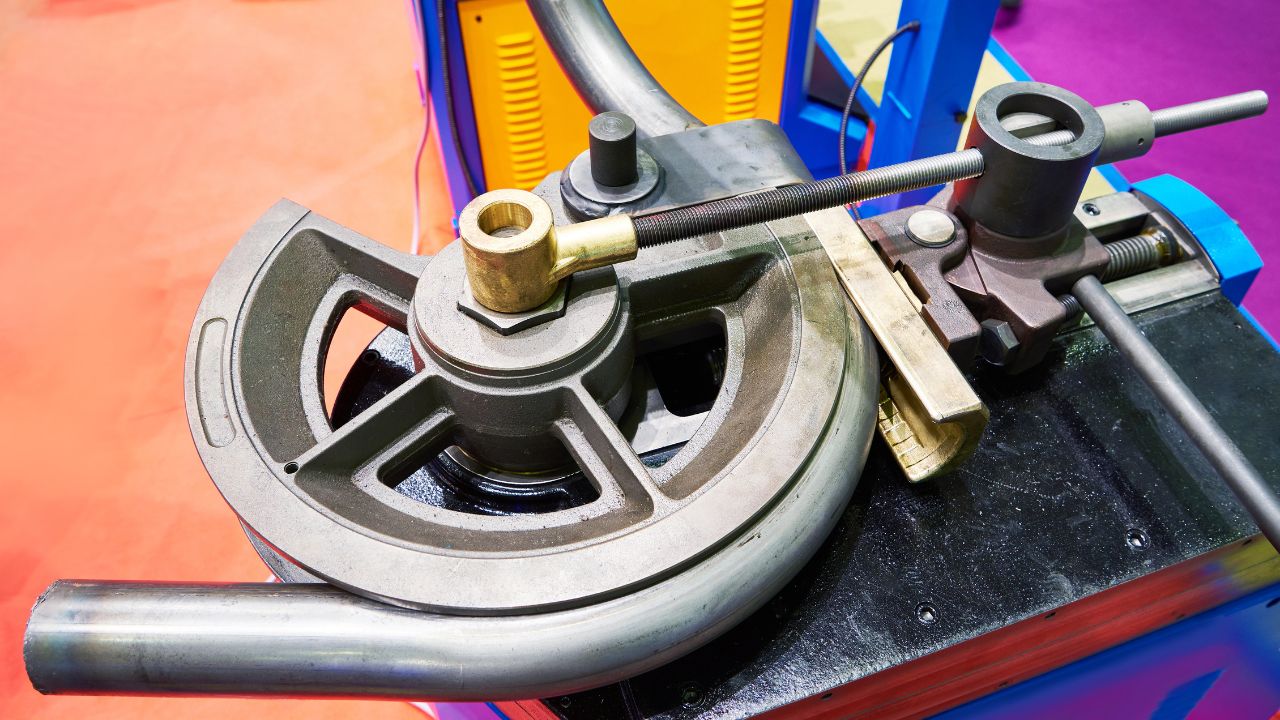
Effective tube bending partnerships drive manufacturing efficiency across automotive, aerospace, and industrial sectors. The global tube bending services market reached USD 3.1 billion in 2024 and is projected to grow to USD 5.2 billion by 2033. Strong supplier relationships enable manufacturers to meet tight tolerances, scale production capacity, and maintain consistent quality. Treating these manufacturing partnerships as part of broader strategic planning helps organizations select partners aligned with their technical requirements and business objectives.
Key Takeaways
- Service reliability and quality precision rank as top priorities when selecting tube bending partners
- First Pass Yield above 95% indicates world-class manufacturing capability and operational excellence
- Provider categories range from large-scale manufacturers to specialized job shops, each with distinct advantages
- Transparent communication and aligned quality metrics form the foundation of partnership success
- Regional demand patterns and industry-specific requirements shape strategic partnership decisions
What Are Tube Bending Service Partnerships and Their Importance?
Defining Tube Bending Services and Partnerships
A tube-bending partnership represents a collaborative relationship between manufacturers and specialized service providers for precision metal forming. This manufacturing process produces precision parts that meet exact dimensional requirements. The global tube bending services market operates at a 6.1% compound annual growth rate through 2033. Mandrel bending produces smooth, wrinkle-free bends essential for thin-walled automotive and aerospace applications. Rotary draw bending serves high-volume production environments requiring consistent geometric accuracy.
Purpose and Benefits of Strategic Partnerships
Strategic tube bending partnerships reduce production complexity and eliminate multi-vendor coordination challenges. Service collaboration enables manufacturers to access advanced CNC equipment without capital investment. Partners provide design for manufacturability guidance that optimizes part geometry for production efficiency and workflow optimization. Integrated relationships improve supply chain management and reduce the total cost of ownership.
Key Industry Sectors Driving Partnership Demand
The automotive industry generates 31% of global tube-bending services revenue. Industries that rely on precision-bent components include aerospace, construction, medical, and oil and gas sectors. Automotive applications span chassis construction, exhaust systems, and structural systems meeting emission standards. Aerospace demands corrosion-resistant tubing for hydraulic systems, health system equipment depends on clean medical assemblies, and industrial equipment manufacturing relies on pipe profiling for high-pressure assemblies.
What Factors Influence Choosing the Right Tube Bending Partner?
Prioritizing Service Reliability and Quality Metrics
Service reliability constitutes 28% of consumer priorities when establishing a supplier relationship, making supplier relationship management a central concern. Quality control and precision account for 24% of selection criteria in partnership evaluations. Evaluating critical factors ensures partners maintain consistent on-time delivery and minimal defect rates. Industry certifications like ISO 9001 and AS9100 verify adherence to quality standards.
Assessing Capacity and Scalability Capabilities
Capacity and scalability represent 18% of decision factors when selecting strategic suppliers for tube bending partnerships. Partners must demonstrate the capability to handle volume fluctuations without compromising quality or delivery schedules. Production systems should accommodate both prototype runs and high-volume manufacturing requirements. Scalability assessment includes equipment availability, workforce capacity, and supply chain integration.
Evaluating Cost Competitiveness and Technical Support
Cost competitiveness influences 15% of partnership decisions, while technical support contributes 8%. Lead time considerations affect 4% of selection criteria, with customization flexibility representing 3%. Technical support includes design for manufacturability assistance, rapid prototyping, and guidance across the design-to-fabrication process. Transparent pricing structures enable accurate total cost of ownership calculations.
How Do Different Types of Providers Compare in Tube Bending Services?
Large-Scale Integrated Manufacturers Vs. Mid-Size Providers
Large-scale integrated manufacturers control 35-40% of the tube bending services market, often pairing bending with CNC laser cutting under one roof. Mid-size specialized service providers represent 30-35% of market share with regional distribution networks. Enterprise-level facilities charge USD 50-500 per bent assembly depending on complexity. Mid-size providers offer pricing between USD 25-200 per assembly with 2-6 week lead times.
Small Job Shops and Customization Advantages
Small independent job shops comprise 20-25% of market share, serving local manufacturing needs as a flexible fabrication partner. These facilities provide pricing from USD 15-100 per bent assembly with 24-48 hour turnaround capability. Job shops achieve 85-95% First Pass Yield without imposing minimum order quantity requirements. Flexible scheduling and experienced operators enable rapid prototype development and design iteration.
Emerging Technology Platforms and Overseas Providers
Technology-driven digital platforms account for 5-10% of the tube bending services market. Overseas tube fabrication providers represent 10-15% of market share with USD 10-50 per assembly pricing. International suppliers offer 40-60% cost savings but require 8-16 week lead times that complicate risk management. Digital platforms leverage AI-powered design optimization and real-time production visibility.
How Can Capacity and Quality Metrics Be Effectively Assessed?
Analyzing Equipment, Technology, and Hidden Factory Impact
Equipment evaluation examines the mix of CNC, semi-automated, and manual bending machinery. Hidden factory analysis investigates rework rates that consume production capacity without appearing on schedules, pointing to continuous improvement opportunities. Supply chain integration ensures material sourcing, prevents production bottlenecks, and maintains inventory flow. Scalability assessment determines the capability to manage sudden volume spikes during demand fluctuations.
Using First Pass Yield and Cost of Quality for Performance Evaluation
First Pass Yield captures the combined effects of material defects, machine stability, and operator skill. Quality assurance protocols establish that enterprise providers achieve First Pass Yield exceeding 98%. Cost of Poor Quality ranges from 5% to 30% of annual revenue across manufacturing organizations. World-class operations maintain First Pass Yield benchmarks at 95% or above through consistent performance monitoring.
Implementing Supplier Capability Assessments
Supplier Capability Assessments evaluate managerial systems and production capabilities comprehensively. These assessments examine cost control, delivery reliability, quality systems, and supplier performance data. In-depth evaluations identify potential risks before committing to long-term contracts. Assessment frameworks verify alignment between supplier capabilities and customer requirements.
What Are the Best Practices for Fostering Collaboration in Partnerships?
Aligning on Transparent Quality and Delivery Metrics
Partnership success depends on establishing clear, quantifiable performance measurements from project initiation. Quality metrics include dimensional accuracy, surface finish standards, and material certification requirements. Delivery metrics track on-time performance, lead time consistency, and order fulfillment rates. Aligned expectations prevent misunderstandings and enable objective performance evaluation.
Maintaining Open Communication for Issue Resolution
Communication benefits include rapid problem-solving and reduced manufacturing errors throughout production cycles. Transparent dialogue regarding design changes, production schedules, and quality issues builds trust. Regular status updates enable proactive issue resolution before problems impact delivery schedules. Direct communication channels and strong interpersonal communication between engineering teams accelerate technical problem-solving.
Sharing Data and Leveraging Digital Tools for Partnership Success
Data sharing improves forecast accuracy and supports collaborative teamwork in capacity planning between partners. Digital tools provide real-time production visibility and automated quality documentation. Shared platforms facilitate design file exchange, specification updates, and engineering change management. Technology integration streamlines communication and reduces administrative overhead.
How Do Consumer Preferences Shape Partnership Strategies?
Understanding Material and Service Type Requirements
Steel accounts for over 48% of the total tube bending market revenue across applications. Materials, including aluminum, copper, brass, and titanium, serve specialized thermal and aerospace requirements. Mandrel bending dominates market share due to smooth bend quality for thin-walled tubing. Design for manufacturability assistance optimizes part geometry for production efficiency and cost reduction.
Regional and Industry-Specific Demand Influences
North America leads global tube bending services with 36% market share. Asia Pacific expects 7.8% compound annual growth driven by urbanization at 3.8% rates. Europe represents 18% of the global market share with steady, mature market characteristics. Regional infrastructure development and manufacturing concentration patterns influence partnership location strategies.
Balancing Lead Times with Customization Needs
Lead time reduction strategies balance production efficiency with customization flexibility requirements. Mid-size providers deliver custom projects within 2-6 weeks compared to 8-16 weeks overseas. Small job shops offer 24-48 hour turnaround for prototypes and urgent production needs. Enterprise facilities require 4-12 weeks for complex custom assemblies with tight tolerances.
What Challenges Commonly Affect Tube Bending Service Partnerships?
Managing Production Volume Fluctuations and Lead Times
Volume fluctuations strain production capacity and complicate resource planning for service providers. Partners must maintain adequate equipment availability and workforce flexibility during demand spikes. Extended lead times impact production scheduling and inventory management across supply chains. Capacity constraints force difficult decisions between existing commitments and new opportunities.
Overcoming Communication and Supply Chain Risks
Communication challenges with international providers create misunderstandings regarding specifications and quality requirements. Supply chain disruption risks increase with geographic distance and border crossing complexity. Language barriers and time zone differences slow problem resolution and technical clarification. Transportation delays and customs procedures extend total delivery cycles beyond production time.
Addressing Quality Inconsistencies and Rework
Quality inconsistencies generate rework costs that reduce effective capacity and profitability. Overseas providers typically achieve 80-90% First Pass Yield compared to domestic benchmarks. Material variability, process instability, and operator skill differences contribute to defect rates. Rework requirements consume production capacity while delaying delivery schedules.
Building Successful Tube Bending Service Partnerships Through Capacity and Reliability Alignment
Effective tube bending partnerships align capacity capabilities with reliability requirements across production lifecycles. Service collaboration prioritizes transparent quality metrics, consistent communication, and shared performance objectives. Organizations that emphasize First Pass Yield, Cost of Quality, and Supplier Capability Assessments build stronger relationships. Regional considerations, equipment technology, and scalability planning determine long-term partnership success.
CRD MFG delivers integrated tube bending solutions through advanced equipment and dedicated project management. The company’s 22,500 square foot facility combines laser tube cutting, CNC bending, and robotic welding. Single-source manufacturing eliminates multi-vendor complexity while maintaining precision for demanding aerospace and automotive applications.
Partner With CRD MFG, Inc. for Tube Bending Built to Spec
Tired of chasing production updates and juggling multiple vendors? CRD MFG, Inc. brings CNC tube bending, laser tube cutting, robotic welding, and full assembly under one roof, with a dedicated project manager who advocates for your build from first quote to final delivery. Contact our team to request a quote and discuss your project requirements and capacity needs.
