
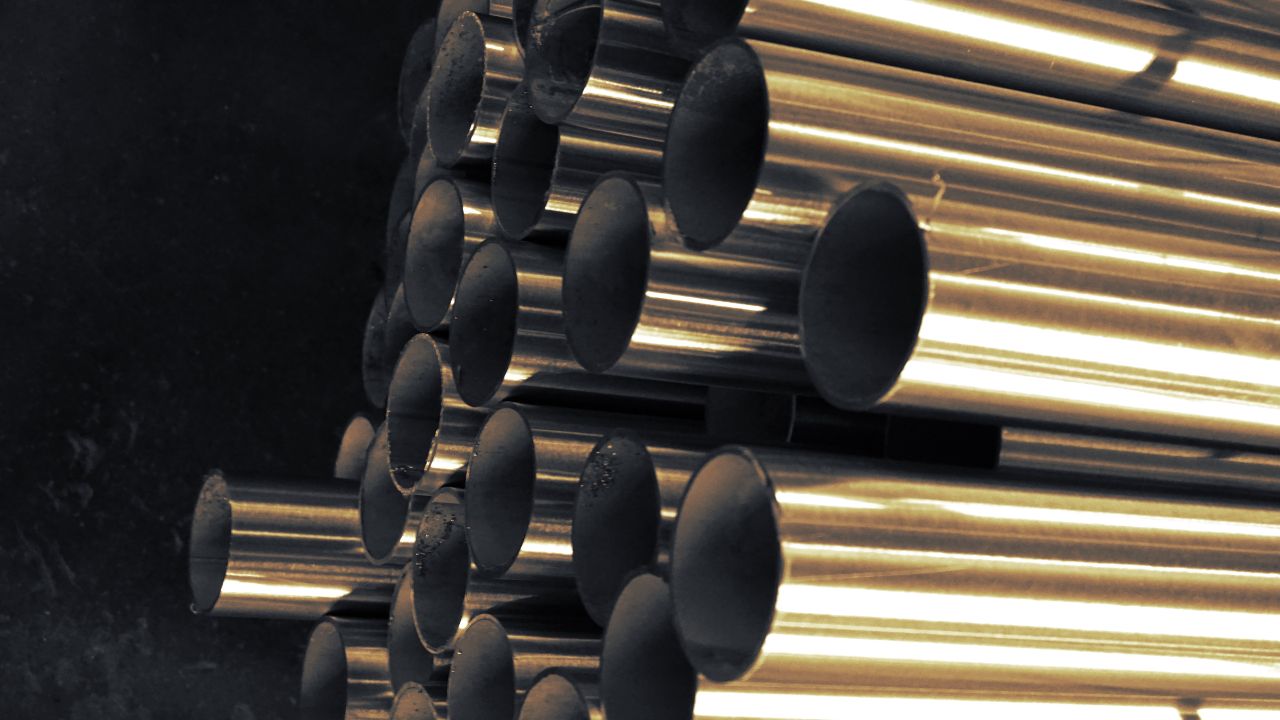
Modern manufacturing demands rapid adjustments to product specifications without sacrificing quality or extending lead times. Design change flexibility in tube forming services addresses this need by allowing manufacturers to modify tube dimensions, bend angles, and material specifications. This adaptation capability reduces costs associated with tooling changes and supports seamless transitions from prototype development to high-volume production runs.
The tube forming industry has evolved from rigid, tooling-dependent processes to software-driven systems that accommodate design revisions within hours rather than weeks. Manufacturers now integrate CNC programming, real-time measurement systems, and automated springback compensation to deliver consistent results across changing specifications. This enables customization options that meet industry-specific requirements while maintaining precision standards demanded by aerospace, automotive, and medical device sectors.
Key Takeaways
- Design change flexibility allows manufacturers to modify tube specifications without expensive tooling replacements
- CNC automation reduces scrap by 85% and speeds production by 400% compared to manual methods
- Springback compensation through predictive modeling and real-time measurement ensures dimensional accuracy
- Market growth projects tube bending valuation from USD 4.661 billion in 2024 to USD 7.874 billion by 2035
- Integrated CAD/CAM systems enable rapid transitions from prototype to full-scale production
What Is Design Change Flexibility in Tube Forming?
Definition and Importance
Design change flexibility refers to the capacity to modify tube specifications without requiring extensive tooling replacements or process reconfigurations. This becomes critical when product designs evolve during development or when manufacturers must accommodate customer-specific requirements across different production batches. Rotary draw bending is a mechanical bending technique that uses a fixed-radius bend die to control the bend’s geometry with high accuracy.
Software-driven adjustments revise bend angles, radii, and sequences through programming changes rather than physical tool modifications. Springback refers to the elastic recovery of the tube after it has been bent, when the material tries to return to its original shape once the bending force is released. Understanding and compensating for springback in tube bending operations requires predictive algorithms that account for material properties and wall thickness variations.
Role in Modern Manufacturing
The global tube bending market, valued at USD 4.661 billion in 2024, demonstrates strong industrial demand for precision forming services. The market is projected to reach USD 7.874 billion by 2035, driven by automotive, aerospace, and construction sector growth. This expansion reflects a Compound Annual Growth Rate (CAGR) of 4.88% as manufacturers prioritize automation and precision control.
Steel Bending Machines are expected to reach USD 2.5 billion by 2035, maintaining dominance in heavy industrial applications. Aluminum Bending Machines, projected to reach USD 1.6 billion by 2035, represent the fastest-growing segment due to lightweighting initiatives. North America holds approximately 45% market share, supported by extensive automotive and construction industries requiring complex tube assemblies.
Key Challenges and Considerations
Springback can lead to rejected parts when dimensional tolerances exceed specification limits established during design validation. This material behavior causes increased scrap rates in high-volume production, where consistency determines profitability. Quality control in tube fabrication standards and best practices addresses verification methods that prevent dimensional drift across production runs.
Springback results in poor fit-ups during assembly when mating components fail to align within acceptable tolerance bands. Springback leads to costly rework, consuming labor hours and delaying delivery schedules. Manufacturers address these challenges through auto-compensation algorithms and in-line laser measurement systems that verify angles during production.
How Do Tube Forming Processes Support Adaptation?
Overview of Tube Bending Techniques
Tube forming processes range from manual operations requiring operator skill to fully automated CNC systems executing complex programs. Each methodology offers distinct advantages in adaptation capabilities based on precision requirements, production volume, and material characteristics. Process adaptability depends on equipment sophistication, with CNC systems providing the highest flexibility for design modifications through programmable controls.
Manual methods suit low-volume applications where design iterations occur frequently during prototype development. Hydraulic systems bridge the gap between manual flexibility and automated precision for mid-volume production. CNC vs manual tube bending when automation makes sense for your production evaluates the transition point where automation investment delivers measurable returns through reduced labor and scrap costs.
Rotary Draw Vs. Hydraulic Vs. Manual Methods
Manual benders achieve accuracy within ±2° to 5°, limiting their application to projects where tight tolerances are not critical. Hydraulic benders improve accuracy to ±1° to 2°, supporting structural applications requiring consistent bend geometry. CNC benders deliver accuracy within ±0.1°, meeting aerospace and medical device specifications demanding dimensional precision across thousands of parts.
Manual bender speed ranges from 5 to 15 seconds per bend, with variations based on operator experience and material complexity. Hydraulic bender speed improves to 3 to 8 seconds per bend through powered forming operations. CNC systems execute bends in 1 to 3 seconds, multiplying throughput while maintaining consistent quality standards.
Automation and CNC Integration
CNC benders can reduce scrap by 85% through precise control of bend parameters and real-time error correction. These systems can speed up production by 400% compared to manual methods by eliminating setup time between design changes. Achieving part consistency with CNC tube bending repeatability advantages demonstrates how programmable automation maintains dimensional accuracy across production batches without operator variability.
Manual benders offer no automation, relying entirely on operator judgment for bend angle verification. Hydraulic benders provide partial automation through powered forming operations while requiring manual setup and measurement. CNC benders offer full programmable automation, storing multiple programs that operators can recall instantly when design specifications change.
What Factors Influence Flexibility in Tube Forming Services?
Material Types and Their Impact
Materials include copper tube, aluminum, stainless steel, heavy steel, DOM, titanium, and Inconel, each presenting distinct forming characteristics that influence process selection. Manual benders are limited to lighter materials like copper and aluminum due to force constraints. Hydraulic benders work best with heavy steel and DOM tubing, generating sufficient pressure to overcome material yield strength.
Material selection for tube bending steel, aluminum, and specialty alloys guides manufacturers through alloy characteristics affecting springback behavior and minimum bend radius. CNC systems accommodate the full material spectrum, adjusting forming parameters automatically based on programmed material properties. Titanium and Inconel require precise force control available only through advanced CNC systems equipped with adaptive forming algorithms.
Precision and Springback Compensation
Auto-compensation algorithms address springback by calculating overbend angles that account for elastic recovery after forming force removal. Predictive springback modeling uses material properties, wall thickness, and bend radius to determine compensation values before production begins. In-line laser measurement systems verify angles in real-time, comparing actual geometry against programmed specifications during forming.
Automatic adjustment of the bend program occurs when measured values deviate from specification, preventing defects in subsequent parts. Software-based design modifications eliminate the need for custom tooling changes when engineering revisions alter bend angles or radii. This supports rapid design iterations during product development without incurring tooling lead times or fabrication costs.
Tooling and Equipment Constraints
Tight radii can be less than one times the tube’s outside diameter (1D), challenging conventional forming methods without mandrel support. CNC bending accuracy how modern technology improves manufacturing precision explains how specialized tooling prevents wall collapse during extreme radius bends. Precision requirements for aerospace applications often require ±0.1° accuracy, achievable only through CNC systems with closed-loop feedback control.
Manual bender tube OD range extends from ¼” to ⅞”, limiting application to small-diameter tubing in HVAC and plumbing installations. Hydraulic bender tube OD range spans ½” to 4″, accommodating structural applications requiring thicker wall sections. CNC bender tube OD range covers ¼” to 6″, providing the widest capacity spectrum for diverse manufacturing requirements.
Which Technologies Enhance Design Change Adaptability?
CNC Programming and Software Tools
Software-based design modifications eliminate the need for custom tooling changes by storing bend sequences as digital programs rather than physical templates. Automatic adjustment of the bend program responds to measurement feedback, correcting deviations before they accumulate across production batches. Designing custom tube assemblies, engineering best practices, and guidelines demonstrates how CAD integration accelerates the transition from concept to validated production geometry.
Programmable controllers store multiple part configurations, allowing operators to switch between designs by selecting different program files. This flexibility supports small-batch production where manufacturers produce various tube configurations without lengthy changeover procedures. Digital libraries of bend programs preserve institutional knowledge, reducing dependence on individual operator experience when design modifications occur.
Real-time Measurement and Feedback Systems
In-line laser measurement systems verify angles in real-time, capturing dimensional data during the forming cycle rather than through post-process inspection. These sensors detect deviations immediately, triggering program adjustments that prevent continued production of nonconforming parts. Predictive springback modeling calculates expected elastic recovery based on material database values, enabling preemptive compensation before the first bend occurs.
Closed-loop control systems compare measured geometry against programmed specifications continuously throughout production. Deviations exceeding tolerance thresholds trigger automatic corrections, maintaining dimensional consistency without operator intervention. This automation becomes essential when design changes require different springback compensation values across material batches or wall thickness variations.
Industry 4.0 and Smart Manufacturing
Connected manufacturing systems integrate tube forming equipment with enterprise resource planning platforms that track production status and quality metrics, marking the digital transformation of the shop floor from isolated machines to a shared data environment. Smart sensors monitor machine performance parameters, predicting maintenance requirements before equipment failures disrupt production schedules. Data analytics identify patterns in springback behavior, refining compensation algorithms as manufacturers accumulate production history across diverse material specifications.
Digital twin technology simulates forming operations before physical production begins, validating design changes without consuming material or machine time. These virtual models predict potential forming defects, allowing engineers to modify bend sequences that might cause wall collapse or excessive distortion. Remote monitoring capabilities enable engineering teams to review production data and implement design revisions without physical presence at manufacturing facilities.
How Do Market and Consumer Trends Affect Flexibility Needs?
Demographic and Regional Adoption Patterns
North America holds approximately 45% market share due to the extensive automotive and aerospace industries requiring precision tube assemblies. Regional concentration creates demand for tube forming services, supporting just-in-time delivery schedules and rapid design iterations. Asia-Pacific represents the fastest-growing market, driven by infrastructure development and manufacturing expansion requiring adaptable production capabilities.
Small to medium-sized enterprises increasingly adopt entry-level CNC systems that provide automation benefits without overwhelming capital investment. Large corporations invest in multi-axis CNC platforms capable of complex geometries, supporting electric vehicle cooling systems and advanced structural designs. This demographic diversity drives equipment manufacturers to offer scalable solutions supporting various production volumes and budget constraints.
Industry-Specific Flexibility Requirements
Automotive applications include exhaust systems, hydraulic lines, chassis components, and brake lines requiring consistent geometry across high production volumes. Can tube bending handle complex designs, capabilities, and limitations explained, addresses the technical boundaries manufacturers encounter when pursuing extreme geometries. Aerospace components include hydraulic lines, structural frames, and fuel systems, demanding defect-free surfaces and dimensional verification through coordinate measuring machine inspection.
Construction applications include structural frames and support systems where strength requirements outweigh precision demands. Manual benders suit HVAC, plumbing, and prototyping applications where design iterations occur frequently and production volumes remain low. Hydronic heating draws on the same forming skills, where finned tube heating equipment depends on a precisely formed finned tube element to drive high heat transfer along baseboard runs while limiting perimeter heat losses in the conditioned space. Hydraulic benders serve heavy industrial and structural applications requiring force capacity beyond manual operation while maintaining cost advantages over CNC automation.
Cost Considerations and ROI Impact
Manual tube benders’ price range extends from $200 to $800 for basic tools, reaching up to $4,000 for construction models supporting professional fabrication shops. Hydraulic benders’ price range spans $11,000 to $55,000, reflecting power capacity and tooling sophistication required for thick-walled steel tubing. CNC tube benders start around $20,000 for entry-level systems, while high-end multi-axis platforms exceed $150,000 with advanced measurement and compensation capabilities.
ROI payback is typically achieved in 12 to 18 months for operations performing 1,000 or more bends per month through scrap reduction and labor savings. Design change flexibility accelerates payback by eliminating tooling costs associated with engineering revisions during product development. Equipment utilization rates improve when manufacturers can transition between different tube configurations without extended changeover procedures requiring specialized setup skills.
What Are the Operational Benefits of Flexible Design Changes?
Rapid Prototyping and Small-Batch Production
Manual benders remain optimal for HVAC, plumbing, and prototyping applications where design validation requires physical samples before production commitment. Quick setup procedures allow fabricators to produce sample parts within hours of receiving design specifications. This responsiveness supports iterative development processes where engineering teams evaluate multiple design alternatives before selecting the final geometry.
CNC systems extend rapid prototyping capabilities to complex multi-bend assemblies requiring dimensional consistency across prototype iterations. Software-based design changes enable engineers to test geometry variations without physical tooling modifications between trials. Small-batch production benefits from stored programs that manufacturers can recall when customers reorder specialized configurations months after initial production runs.
Reduced Lead Times and Scrap Rates
CNC benders can reduce scrap by 85% through precise control, eliminating operator error and material recovery from rejected parts. This reduction translates directly to material cost savings and improved delivery performance when manufacturers eliminate rework cycles. Reduced scrap rates improve environmental sustainability metrics by minimizing waste generation associated with dimensional nonconformance.
Lead time compression occurs when design changes require only program modifications rather than tooling, fabrication, and validation cycles. Manufacturers respond to customer requests within days instead of weeks when software adjustments replace physical tool development. Production scheduling flexibility improves as operators switch between tube configurations during single shifts without lengthy changeover procedures.
Enhanced Product Customization
Customization options expand when manufacturers can accommodate customer-specific requirements without incurring tooling penalties for low-volume orders. This opens market opportunities in specialty applications where standard catalog components fail to meet installation requirements, from medical equipment frames to a heating special application that needs cradle-type expansion brackets sized for thermal movement. Design change flexibility supports value-added services where manufacturers collaborate with customers during product development rather than functioning as transaction-based suppliers.
Mass customization strategies become economically viable when tube forming services deliver individualized specifications at near-standard pricing levels. Software-driven processes eliminate the traditional cost premium associated with custom orders requiring unique tooling investments. Manufacturers differentiate their offerings by providing engineering support that optimizes tube geometry for specific applications rather than forcing customers to adapt designs around available standard configurations.
How Can Manufacturers Implement Flexible Design Changes Effectively?
Integration with CAD/CAM Systems
Direct CAD/CAM integration transfers bend sequences from engineering workstations to CNC controllers without manual data entry, introducing transcription errors. A connected CAD package preserves design intent as geometry moves from the drawing board to the machine, holding form even as design complexity increases across multi-bend assemblies. This digital workflow accelerates the transition from approved design to validated production geometry within single-shift timeframes. Parametric design and parametric modeling enable engineers to explore design alternatives by adjusting dimensional variables, while parametric expressions link related features so a single change updates the full model and immediately reveals its impact on manufacturability.
Simulation capabilities within CAD/CAM platforms identify potential forming defects before physical production, preventing material waste during design validation. Reverse engineering rebuilds an accurate model from an existing part, giving 3D product development a verified starting point when original drawings are unavailable. Generative design and generative modeling propose multiple geometry options against set constraints, helping engineers arrive at higher-order structures that balance weight, strength, and formability, and the same platforms extend to sheet metal design so brackets and enclosures stay coordinated with the tube assembly. Collision detection algorithms verify that tooling components will not interfere during complex bend sequences involving multiple plane changes. Post-processor software converts engineering geometry into machine-specific code, ensuring program compatibility across different CNC controller platforms that manufacturers may operate.
Training and Skill Development
Operator training programs focus on CNC programming fundamentals rather than manual bending techniques requiring years of experience. This approach reduces the learning curve for new employees while enabling existing staff to transition from manual to automated operations. Cross-training initiatives ensure multiple operators can manage design change implementation, preventing production delays when key personnel are unavailable.
Engineering staff requires familiarity with forming limitations affecting design feasibility to avoid specifying geometry exceeding equipment capabilities. Collaborative training between engineering and manufacturing personnel improves design-for-manufacturability outcomes by establishing a shared understanding of process constraints. Continuous education on emerging technologies maintains a competitive advantage as Industry 4.0 capabilities expand available adaptation tools.
Quality Assurance and Precision Control
CNC benders achieve accuracy within ±0.1° through closed-loop feedback systems comparing measured geometry against programmed specifications continuously. This precision level meets aerospace and medical device requirements where dimensional variations affect safety-critical assembly functions. CNC bender speed of 1 to 3 seconds per bend maintains high throughput while executing measurement cycles, ensuring quality compliance.
CNC benders suit aerospace, automotive, and medical applications where regulatory standards mandate statistical process control documentation for every production batch. Automated data collection eliminates manual record-keeping errors while providing traceability linking individual parts to specific production parameters. Quality assurance protocols incorporate first-article inspection procedures, validating program accuracy before releasing full production runs following design changes.
Design Change Flexibility in Tube Forming Services: Adaptation Capabilities in Context
Design change flexibility transforms tube forming from a rigid manufacturing constraint into a competitive advantage, supporting rapid product development cycles. Manufacturers implementing CNC automation, predictive springback compensation, and real-time measurement systems position themselves to accommodate evolving customer requirements without sacrificing dimensional accuracy or delivery performance. The integration of software-driven processes with physical forming capabilities enables customization options previously available only through expensive tooling investments, limiting market accessibility.
Market growth projecting industry expansion from USD 4.661 billion in 2024 to USD 7.874 billion by 2035 reflects increasing demand for adaptation capabilities across automotive, aerospace, and construction sectors. Companies that establish design change flexibility as a core competency capture opportunities in specialty applications where standardized products fail to meet installation requirements. CRD MFG demonstrates this approach through integrated services supporting prototype-to-production transitions under single-source accountability.
Investment in CNC tube bending technology delivers measurable returns through reduced scrap rates, accelerated lead times, and expanded market opportunities enabled by customization capabilities. Manufacturers achieve competitive differentiation by providing engineering collaboration during product development rather than functioning solely as transactional component suppliers. This strategic positioning creates long-term customer relationships based on problem-solving partnership rather than price-driven commodity transactions.
Build Your Next Tube Assembly With CRD MFG, Inc.
When a design changes late in the program, chasing status across separate shops costs you time you do not have. CRD MFG, Inc. keeps CNC tube bending, laser tube cutting, robotic welding, and full assembly under one roof in Placentia, California, with one dedicated project manager who owns your job from first sample to final shipment. Bring a prototype, a drawing, or a part that needs a fix, and get a clear path from concept to production without the department-to-department runaround. Contact us to request a quote and start your next build.
