
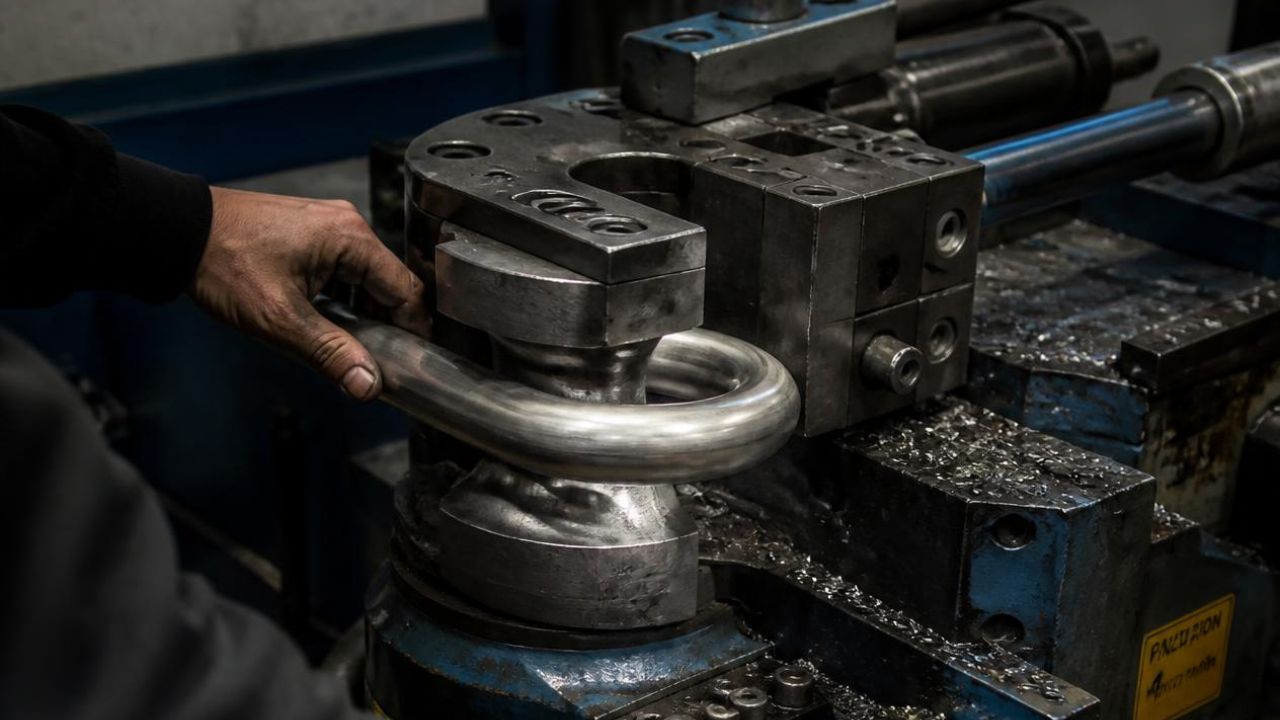
The manufacturing landscape increasingly favors geographic proximity between fabricators and their clients as companies prioritize supply chain resilience and production efficiency. Local CNC tube bending services deliver measurable advantages in communication speed, lead time reduction, and quality oversight that directly impact project outcomes across automotive, aerospace, and industrial sectors.
Regional services eliminate the hidden costs and delays inherent in overseas fabrication while providing collaborative engineering support throughout the production cycle. Manufacturers selecting local tube bending services gain operational flexibility that distant suppliers cannot match, particularly for custom runs and time-sensitive projects requiring precision tubular components.
Key Takeaways
- CNC tube bending services use 5-axis technology with real-time monitoring to maintain tolerances within thousandths of an inch across automotive, aerospace, and HVAC applications
- Local CNC tube bending providers reduce lead times from two months to one day while enabling immediate design adjustments and on-site quality oversight
- Proximity advantages include zero-lag communication that prevents costly manufacturing errors and allows rapid response to urgent or custom production requirements
- Quality certifications, including ISO 9001:2015, AS9100, and NADCAP, serve as critical evaluation criteria when selecting regional services for precision fabrication
- The industrial tubes market projects growth to USD 62.4 billion by 2033, with North America commanding 35% market share, driven by nearshoring trends
What Are CNC Tube Bending Services and Their Manufacturing Role?
CNC tube bending services provide automated precision forming of tubular components using computer-controlled machinery to achieve exact specifications. These services transform straight tubes into complex geometries required for fluid transport, structural support, and heat exchange applications across multiple industries.
The manufacturing role extends beyond simple bending operations to include material selection consultation, design optimization, and integrated quality control. Fabricators coordinate tube cutting, bending, welding, and finishing operations to deliver complete assemblies rather than isolated components.
What Technologies Define Modern CNC Tube Bending?
Modern CNC systems utilize 5-axis tube-bending machines offering precise control over bend angle, radius, rotation, and feed rate simultaneously. Real-time monitoring detects deviations instantly while closed-loop control maintains tolerances within thousandths of an inch.
Automated bending systems have achieved widespread adoption, with 68% of manufacturing facilities implementing these technologies as of 2024. In the United States, approximately 63% of tube forming companies utilize CNC-controlled bending machines compared to conventional systems.
Which Industries Rely on CNC Tube Bending?
The automotive segment represents 32% of the tube bending market, driven by lightweight vehicle initiatives requiring high-performance exhaust systems and fuel lines. Aerospace applications account for 25% of market demand, necessitating extreme precision for hydraulic lines and structural supports.
HVAC systems comprise 18% of the market with copper and aluminum tubing for heat exchangers. General industrial manufacturing represents 15%, while energy and other sectors account for the remaining 10% of tube bending applications.
What Materials and Specifications Are Common in CNC Tube Bending?
Seamless tubes hold close to 48% market share due to superior strength characteristics in critical applications. Material selection spans standard steel and aluminum through exotic alloys, including titanium and Inconel for aerospace hydraulic lines.
Tolerances within ±0.1 mm are required for 72% of complex tubular components in heavy manufacturing sectors. Aerospace applications demand even tighter specifications of ±0.05 mm or less to ensure structural integrity and system performance.
Why Does Proximity Matter for CNC Tube Bending?
Proximity advantages fundamentally alter project outcomes through faster response times and collaborative problem-solving opportunities. Geographic distance creates communication barriers and shipping delays that increase total project costs beyond initial pricing comparisons.
Local manufacturing partnerships enable same-day site visits and immediate engineering consultation during critical production phases. These communication benefits prevent specification misunderstandings that cause defective parts and production delays.
How Does Local Service Enhance Communication and Collaboration?
Zero-lag communication with regional services eliminates the information gaps common with distant fabricators operating across time zones. Direct access to project managers and engineers ensures specifications are understood correctly before production begins.
Language and cultural barriers create misunderstandings that produce costly rework when working with international suppliers. Face-to-face consultations with local CNC tube bending providers allow real-time design adjustments based on manufacturing constraints and cost optimization opportunities.
What Impact Does Geographic Proximity Have on Lead Times?
Truck shipping from local facilities delivers components in one day compared to overseas shipping requiring up to two months. This dramatic reduction in transit time enables manufacturers to respond quickly to production schedule changes and urgent replacement needs.
Local manufacturers handle urgent orders and custom runs without requiring full cargo containers to justify shipping costs. International suppliers typically demand minimum order quantities that block small-batch production and prototype development.
How Does Location Influence Quality Control and Oversight?
On-site engineers examine every production aspect when facilities operate within visiting distance for client teams. Direct oversight with local services surpasses the limited quality control available with distant suppliers relying solely on documentation.
Automated CNC precision combined with human inspection creates collaborative quality assurance impossible with remote fabricators. Buyers can verify quality control procedures through facility audits and witness critical production stages firsthand.
How to Evaluate Local CNC Tube Bending Providers?
Evaluation begins with assessing equipment capabilities and technological sophistication relative to project requirements. Critical factors include machinery specifications, material expertise, quality certifications, and production capacity for both prototype and volume manufacturing.
Systematic comparison across multiple providers requires structured criteria weighting quality assurance, technical capabilities, and total cost factors. Procurement teams must verify certifications through documentation review and prioritize providers demonstrating proven expertise in required materials.
What Equipment and Technological Capabilities Are Essential?
BLM GROUP manufactures leading global CNC tube and wire bending equipment utilized by premium fabricators. AMOB supplies CNC tube bending machines for heavy industrial applications requiring robust construction and high tonnage capacity.
Hines Bending Systems provides custom tube and pipe bending machine solutions for specialized manufacturing needs. Premium tier providers use advanced multi-axis CNC systems while budget tier operations rely on entry-level NC or manual equipment.
Which Quality Certifications Should Buyers Require?
ISO 9001:2015 serves as the foundational quality management system required by most industries for consistent process control. AS9100 represents the mandatory quality management standard for aerospace manufacturing, building upon ISO 9001 with additional traceability requirements.
NADCAP validates special processes in aerospace through independent audits, ensuring compliance with industry-specific standards. First Article Inspections (FAI) are quality control procedures verifying initial production runs meet all specifications before full-scale manufacturing.
How Do Pricing Tiers Reflect Service Levels and Materials?
Secondary operations can add 30% to 50% to base bending project costs, depending on assembly, welding, and finishing requirements. Total Cost of Ownership (TCO) analysis considers long-term value, including defect rates and delivery reliability beyond initial pricing.
Mid-range providers employ CNC 3-axis equipment with ISO 9001 certification suitable for general industrial applications. Premium fabricators maintain AS9100/NADCAP certifications and handle exotic alloys essential for aerospace and medical device manufacturing.
What Are the Buyer Priorities and Challenges in Selecting Providers?
Buyer priorities center on quality assurance, technical expertise, and transparent pricing when evaluating pipe bending companies. Procurement executives weigh multiple factors simultaneously to balance immediate costs against long-term partnership value and supply chain reliability.
Decision-making complexity increases with specialized material requirements and tight tolerance specifications beyond standard fabrication capabilities. Manufacturers must verify that selected providers possess both equipment sophistication and process expertise for required applications.
What Motivates Procurement Decisions in CNC Tube Bending?
Quality certifications and compliance assessment carries 25% weight in structured supplier evaluation frameworks. Technical expertise and equipment evaluation account for 20% of the selection criteria based on machinery specifications and material handling capabilities.
Total cost and pricing transparency analysis represents 15% weight alongside lead time and capacity review. Communication and responsiveness evaluation comprises another 15%, reflecting the operational importance of reliable technical support.
What Common Objections Affect Supplier Selection?
Quality uncertainty fear with new suppliers lacking proven track records creates hesitation among risk-averse procurement teams. Lead time anxiety regarding scheduling reliability impacts supplier selection when production delays threaten downstream assembly operations.
Manufacturing errors cost time, money, and customer relationships when specification misunderstandings produce defective parts. Buyers prioritize established relationships over potential cost savings when quality assurance outweighs price considerations.
How Can a Supplier Evaluation Scorecard Optimize Decision Making?
Geographic proximity assessment carries 10% weight in comprehensive evaluation frameworks measuring CNC bending proximity benefits. Scoring matrices transform qualitative assessments into comparable metrics, enabling objective provider comparisons across multiple criteria.
Weighted evaluation prevents single-factor decisions that overlook critical capabilities or introduce unacceptable risks. Systematic scoring identifies providers offering an optimal balance between technical capabilities, quality assurance, and total project costs.
How Are Market Dynamics and Industry Trends Shaping Local CNC Services?
The global industrial tubes market projects growth to USD 62.4 billion by 2033 with a CAGR of 7.1% from 2026 through 2033. The CNC tube bending machine market expansion from USD 0.56 billion in 2026 to USD 0.85 billion by 2035 reflects sustained technology investment.
The tube forming machinery market growth from USD 1.2 billion in 2024 to USD 2.2 billion by 2033 demonstrates increasing automation adoption. Metal fabrication service market expansion from USD 708.31 billion in 2024 to USD 1,241.23 billion by 2035 indicates broad industry growth.
Who Are the Leading Equipment Manufacturers and Service Providers?
Morton Industries ranks among the largest tube-bending firms globally with diverse material handling capabilities. Tube Form Solutions specializes in end-to-end tube fabrication, integrating CNC bending with laser cutting and assembly operations.
CRD Manufacturing provides precision aerospace tubing fabrication with AS9100 compliance for high-tolerance applications. Regional providers differentiate through specialized capabilities, responsive customer service, and proximity advantages unavailable from distant competitors.
What Role Does Industry 4.0 Play in CNC Tube Bending?
Industry 4.0 integration transforms metal fabrication through robotics, automation, and real-time data analytics, monitoring production continuously. CNC systems detect deviations instantly and automatically adjust for variables like material springback during bending operations.
Connected manufacturing enables predictive maintenance, reducing unplanned downtime and improving production scheduling reliability. Digital quality control systems document every production parameter, creating comprehensive traceability for aerospace and automotive applications.
How Is Nearshoring Influencing the CNC Tube Bending Market?
North America commands 35% share of the industrial tubes market, driven by infrastructure investment and nearshoring trends. Supply chain disruptions accelerated the transition from offshore sourcing toward regional manufacturing partnerships, reducing international shipping dependencies.
Logistical advantages of proximity manufacturing enhance supply chain resilience while reducing transportation emissions and inventory carrying costs. Manufacturers prioritize regional services providing quick access to critical components without customs clearance delays.
What Advantages Do Local CNC Tube Bending Services Offer Over Offshore Alternatives?
Local CNC tube bending services eliminate customs clearance delays and international shipping uncertainties affecting production schedules. Regional providers support agile manufacturing through rapid prototyping capabilities and flexible order quantities unavailable from overseas suppliers.
Geographic proximity enables collaborative engineering relationships where design optimization occurs before production rather than after costly errors. Hidden costs of overseas fabrication include communication delays, quality control limitations, and supply chain vulnerability exceeding apparent price advantages.
How Do Local Services Support Agile and Custom Manufacturing?
International suppliers often require full cargo containers to justify shipping costs, blocking small production runs and custom orders. Full cargo container requirements prevent prototype development and low-volume specialty applications requiring immediate production.
Local manufacturers accommodate urgent specialized orders efficiently without minimum quantity constraints limiting design flexibility. Same-day shipping and rapid iteration cycles enable manufacturers to respond quickly to engineering changes and market demands.
In What Ways Do Local Providers Mitigate Supply Chain Risks?
Supply chain disruptions from international shipping create production delays extending weeks or months for replacement components. Customs clearance delays introduce unpredictable timelines incompatible with just-in-time manufacturing strategies, requiring reliable delivery schedules.
Regional fabricators provide supply chain redundancy, reducing dependency on single overseas sources vulnerable to geopolitical disruptions. Proximity enables rapid supplier switching and emergency production runs, maintaining operational continuity during supply interruptions.
How Does Proximity Enable Better Cost-Benefit Outcomes?
Total Cost of Ownership analysis reveals local services often provide superior value despite higher quoted prices than offshore alternatives. Reduced inventory carrying costs, eliminated customs fees, and minimized defect rates, offsetting initial price differentials when calculating complete project expenses.
Faster lead time reduction accelerates time-to-market, generating revenue sooner and improving cash flow compared to extended international shipping timelines. Direct quality oversight prevents costly rework and production delays that compound total project costs beyond the initial purchase price.
How Do Regional and Demographic Factors Affect CNC Tube Bending Demand?
Regional manufacturing concentration influences demand patterns, with urban centers requiring higher volumes of standardized components. Industrial distribution varies geographically based on automotive clusters, aerospace hubs, and energy sector locations, driving localized tube bending requirements.
Demographic factors, including company size, industry sector, and technology adoption rates, affect service provider selection criteria. Market segmentation reveals distinct preferences between established manufacturers and emerging companies regarding price sensitivity versus technical capability prioritization.
What Variations Exist Between Urban and Rural Manufacturing Needs?
Urban manufacturing facilities typically demand higher volumes of standardized parts supporting mass production operations. Rural manufacturing focuses on specialized lower-volume components for agricultural equipment and heavy machinery applications.
Metropolitan areas concentrate aerospace and automotive suppliers requiring tight tolerances and advanced certifications. Rural fabricators often serve regional construction and agricultural sectors with less stringent specifications but immediate availability requirements.
How Do Company Profiles Influence the Adoption of Local Services?
Older manufacturing firms exhibit slower adoption speeds for new digital platforms, preferring established supplier relationships. Younger technology-forward companies prioritize advanced capabilities and Industry 4.0 integration over legacy partnerships.
Large enterprises negotiate volume pricing and dedicated capacity, while small manufacturers value flexible minimum orders and responsive service. Mid-sized companies balance cost considerations against technical requirements when evaluating regional services for manufacturing success.
What Seasonal Patterns Affect Tube Bending Demand?
Holiday-related shutdowns affect Q4 demand as manufacturing facilities reduce operations during year-end periods. Seasonal demand patterns create cyclical industry dependency, with Q1 and Q2 experiencing production surges following budget approvals.
Construction and HVAC sectors drive summer demand peaks while automotive production follows new model introduction schedules. Agricultural equipment manufacturing creates spring demand spikes for specialized tubing components supporting planting season equipment needs.
Local CNC Tube Bending Services as a Strategic Asset for Manufacturing Success
Geographic proximity transforms CNC tube bending partnerships from transactional vendor relationships into strategic manufacturing alliances. Regional services deliver measurable advantages through accelerated lead times, collaborative engineering support, and supply chain resilience that offshore alternatives cannot match, regardless of initial pricing.
Manufacturers achieving optimal outcomes prioritize total cost analysis over quoted prices while weighing quality certifications, technical capabilities, and communication responsiveness equally. The industrial tubes market expansion to USD 62.4 billion by 2033 reflects sustained demand for precision tubular components across automotive, aerospace, and industrial applications, where local expertise provides competitive differentiation.
CRD MFG delivers integrated tube bending capabilities combining advanced multi-axis CNC equipment with responsive project management for complex geometries and tight tolerances. Our Placentia, California facility provides Southern California manufacturers with same-day collaboration and rapid production cycles supporting prototype development through volume manufacturing.
Get Precision Tube Bending Without the Cross-Country Wait
Waiting weeks for an offshore quote, then discovering a tolerance problem after the parts ship, turns a simple bend job into a blown deadline. A local partner removes that risk. CRD MFG, Inc. runs multi-axis CNC tube bending out of a single Placentia, California facility, so Southern California manufacturers get same-day collaboration, direct access to the project manager handling the job, and production cycles that move from prototype to volume without the lag of a distant supplier. Whether you need a one-off custom run or repeatable tight-tolerance components for automotive, aerospace, or industrial work, the bending, precision laser tube cutting services, welding, and inspection all happen under one roof. Contact us to talk through your tube bending project.
