
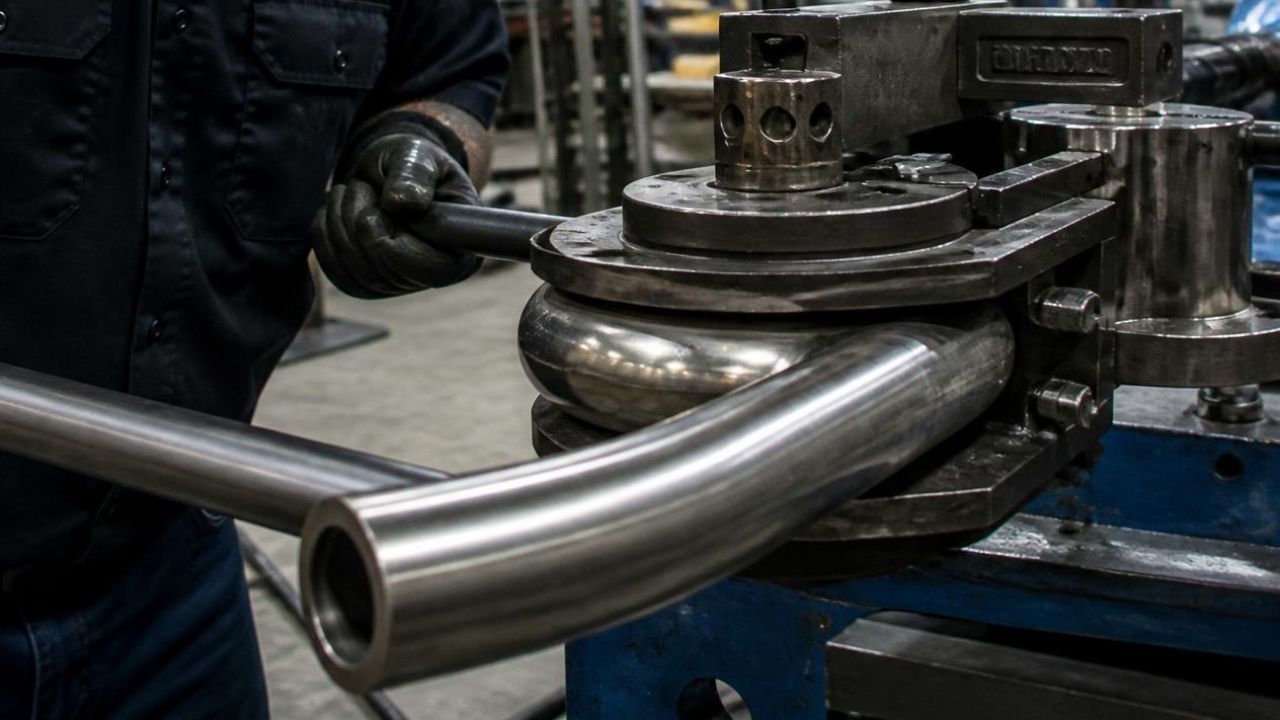
Architectural tube fabrication represents a specialized manufacturing discipline where visual design meets engineering precision. This process creates tubular components that serve dual purposes in modern construction: delivering structural integrity while contributing to building aesthetics. The global industrial tubes market reflects this growing importance, valued at USD 701.8 billion in 2025 and projected to reach USD 1,587.0 billion by 2036.
The selection of materials, manufacturing methods, and design specifications directly impacts both appearance and load-bearing capacity. Procurement decisions now prioritize compliance, sustainability, and supply chain reliability over traditional price-focused approaches. This shift has transformed architectural tube fabrication from a commodity purchase into a specification-led engineering solution.
Key Takeaways
- Stainless steel tubes offer 30+ year service life with superior corrosion resistance for architectural applications
- Seamless tubes provide pressure resistance up to 5,000+ psi but cost 20-40% more than welded alternatives
- 79% of stakeholders rank supply chain reliability as the critical priority in procurement decisions
- Robotic welding automation reduces labor costs by 20-30% while addressing skilled workforce shortages
- The industrial tubes market will grow from USD 701.8 billion in 2025 to USD 1,587.0 billion by 2036
What Is Architectural Tube Fabrication and Its Purpose?
Architectural tube fabrication produces cylindrical metal components engineered to meet both aesthetic design requirements and structural demands. These tubes serve as visible building elements in facades, railings, and exposed frameworks. The fabrication process combines material selection for consistent tube bending with precise forming techniques to achieve specific visual and mechanical properties.
The purpose extends beyond simple structural support to include corrosion resistance, visual continuity, and long-term durability. Projects specify tube dimensions, surface finishes, and material grades based on environmental exposure and design intent. Architectural applications demand tighter tolerances and superior surface quality compared to industrial tubing.
What Materials Are Commonly Used in Architectural Tubes?
The most prevalent construction materials include 304L stainless steel containing 18% chromium and 8% nickel for standard applications. This grade provides adequate corrosion resistance for interior and moderate exterior environments. The 316L variant adds 2-3% molybdenum for enhanced resistance in marine or industrial atmospheres.
Steel is expected to account for 78.5% of the material segment by 2026. Stainless steel commands 50% to 100% higher cost than carbon steel but delivers a service life exceeding 30 years. Material selection balances upfront investment against lifecycle performance and maintenance requirements.
How Do Aesthetic and Structural Needs Influence Design Choices?
Design specifications must simultaneously address visual impact and load-bearing capacity in architectural tube fabrication. In developed markets, 65% of stakeholders prioritized technical performance, while 55% in Western Europe emphasized aesthetic design. Urban buyers demonstrate a preference for premium, aesthetically pleasing products at 64% adoption rates.
Regional priorities create distinct material and finish selections across global markets. Building facades using stainless steel architectural tubes represent a growing demand for corrosion-resistant, low-maintenance surfaces. Cost-sensitive emerging markets assign only 28% priority to aesthetics, focusing instead on functional structural integrity.
What Are the Key Differences Between Seamless, Welded, and Stainless Steel Tubes?
Seamless tubes offer pressure resistance up to 5,000+ psi through manufacturing processes without weld joints. These tubes cost 20% to 40% higher than welded alternatives but eliminate potential failure points. Seamless tubes account for 57.2% of the market share due to superior reliability in demanding applications.
Welded tubes are 20% to 40% more cost-effective than seamless tubes, fabricated through the best welding methods for tube fabrication. These tubes typically achieve ratings between 1,500 and 3,000 psi for moderate-pressure applications. Stainless steel architectural tubes serve both categories, selected for corrosion resistance and aesthetic design requirements.
How Do Consumer Preferences and Regional Factors Shape Tube Fabrication?
Consumer procurement patterns have shifted from price-driven spot buying to specification-led long-term contracts. This transformation reflects changing demographic profiles among decision-makers and regional economic variations. The market now prioritizes supply chain reliability, sustainability compliance, and total cost of ownership over initial purchase price.
Regional regulatory environments and infrastructure maturity create distinct material selection patterns across geographic markets. North American buyers emphasize established supplier relationships and regulatory compliance while paying premiums for advanced features. European stakeholders focus on carbon neutrality and circular economy principles in architectural tube fabrication projects.
What Are the Demographic Trends Affecting Procurement Decisions?
Millennials represent more than 50% of B2B decision-makers in tube fabrication procurement. Generation X represents approximately 35% of the market with a strong focus on ROI validation. Baby Boomers comprise roughly 10% of decision-makers, preferring established supplier relationships and proven systems.
Millennials spend an average of 13 weeks on initial research phases before purchase decisions. Generation X spends 12 weeks on research, prioritizing business value and supply chain reliability. Younger demographics drive the adoption of digital procurement channels and sustainability requirements in design specifications.
How Do Geographic and Urban-Rural Variations Impact Material Selection?
North America demonstrates a willingness to pay 15% to 20% premium for advanced coatings and automation capabilities. Approximately 83% of Western European stakeholders emphasize carbon neutrality in material sourcing decisions. Urban areas show 72% adoption rate for advanced technologies compared to a rural cost-optimization focus.
Rural buyers prioritize cost efficiency, with 73% seeking budget optimization in tube procurement. Supply chain accessibility challenges affect 61% of rural buyers, limiting access to specialized materials. Geographic proximity to manufacturing centers and distribution networks significantly influences construction materials availability and project timelines.
What Are the Priority Factors for Buyers in Architectural Tube Projects?
Supply chain reliability ranks as a critical priority for 79% of surveyed stakeholders. Cost management remains essential for 72% of buyers amid rising raw material prices. Sustainability and ESG compliance represent a growing priority identified by 68% of decision-makers.
Urban buyers prioritize sustainability at 68% adoption rates in architectural projects. Western Europe shows 57% preference for recyclable and green steel in tube fabrication. Technical performance specifications dominate developed markets while emerging markets emphasize functional value over premium features.
Which Industry Standards Govern Architectural Tube Fabrication?
Regulatory frameworks and compliance mandates accelerate the transition toward higher-specification products in architectural applications. Standards establish minimum performance criteria for safety, durability, and environmental impact. Quality control in tube fabrication relies on adherence to internationally recognized specifications.
Certification requirements vary by geographic market and intended application environment. North American projects emphasize ASTM specifications while international markets reference ISO standards. Compliance documentation has become essential for specification-led procurement processes.
What Are the Relevant Structural and Fabrication Standards?
ASTM A500 provides a standard specification for cold-formed welded and seamless carbon steel structural tubing. This standard covers round, square, and rectangular shapes used in construction applications. Electric Resistance Welding (ERW) represents the primary process for fabricating welded tubes through metal strip forming.
ISO 18752 classifies hydraulic fluid power hose assemblies by required pressure and flow rates. ISO 4413 establishes general rules and safety requirements for hydraulic fluid power systems. These international standards enable cross-border design compatibility and procurement specification consistency.
How Do Hydraulic Design and Safety Standards Apply to Tube Assemblies?
SAE J1273 provides comprehensive recommended practices covering selection, routing, fabrication, installation, and maintenance procedures. This standard mandates a 4:1 safety factor for pressure ratings in tube welding standards. Premium hydraulic systems command 15% to 25% price premium justified by enhanced reliability and lifecycle value.
Hydraulic assemblies integrate with architectural applications requiring both pressure containment and aesthetic considerations. Safety factors account for pressure spikes, environmental degradation, and installation stresses throughout service life. Certification documentation proves compliance with specified performance criteria and reduces liability exposure.
How Are Sustainability and Compliance Integrated into Standards?
Approximately 60% of surveyed stakeholders are actively shifting toward sustainable material sourcing in procurement decisions. Green steel certifications and recycled content requirements increasingly appear in architectural project specifications. Carbon footprint documentation now accompanies technical performance data in specification submittals.
Environmental compliance extends beyond material composition to manufacturing processes and supply chain transparency. Third-party verification confirms sustainability claims and enables LEED or equivalent building certification credits. Standards evolution reflects market demand for measurable environmental performance alongside traditional structural integrity requirements.
What Manufacturing Processes Are Used in Architectural Tube Fabrication?
Manufacturing method selection significantly impacts cost, performance capabilities, and aesthetic finish quality in tube fabrication. Process choice depends on pressure requirements, dimensional tolerances, and production volume considerations. What is custom tube fabrication demonstrates the range of techniques available for specialized applications.
Each fabrication approach offers distinct advantages and limitations for architectural applications. Material properties, wall thickness requirements, and final dimensions influence optimal process selection. Production efficiency and quality consistency drive manufacturing technology investments across the industry.
How Are Seamless Tubes Produced and What Are Their Advantages?
The rotary piercing process and the extrusion process represent primary methods for seamless tube manufacturing. These techniques eliminate weld seams, creating uniform wall thickness and superior pressure resistance. Oil and gas drilling (OCTG) applications and petrochemical refining require seamless tube reliability.
Aerospace hydraulic systems use seamless tubes for critical high-pressure applications demanding zero failure tolerance. The manufacturing complexity results in higher costs but delivers extended service life in demanding environments. Seamless production capacity remains limited compared to welded alternatives, creating longer lead times for specialized specifications.
What Are the Features and Limitations of Welded Tubes?
Bending and welding metal strips through Electric Resistance Welding (ERW) creates cost-effective tube fabrication. Construction scaffolding and automotive frames represent high-volume applications for welded tubes. Manufacturing efficiency enables flexible sizing and shorter production lead times compared to seamless alternatives.
Weld seams create potential failure points requiring inspection and manufacturing complex tube assemblies process controls. Pressure ratings remain lower than seamless equivalents, limiting applications in high-stress environments. Corrosion resistance at weld joints requires additional surface treatment in exposed architectural installations.
How Are Stainless Steel Architectural Tubes Fabricated for Premium Applications?
Handrails and building facades use stainless steel architectural tubes for corrosion resistance and aesthetic appeal. Marine environments demand 316L grade material for enhanced durability against salt exposure. Specialized fabrication skills ensure proper handling of stainless steel’s higher thermal expansion coefficient.
Surface finishing requirements add complexity to stainless steel tube production compared to carbon steel alternatives. Stainless steel architectural tubes demonstrate a CAGR of 6.5% to 7.2%, reflecting premium market growth. Polished and brushed finishes require additional processing steps that increase production costs but enhance visual design impact.
How Are Hydraulic Tube Assemblies Integrated with Architectural Tubes?
Hydraulic tube assemblies provide complete pressure-rated systems combining hoses, fittings, and adapters into integrated solutions. These assemblies serve specialized applications where both structural support and fluid power transmission occur simultaneously. Integration requires coordination between architectural design requirements and hydraulic performance specifications.
Complete assemblies reduce on-site installation time and eliminate compatibility issues between individual components. Pre-tested systems arrive ready for installation with documented pressure ratings and compliance certifications. This approach transfers quality assurance responsibility to the assembly manufacturer.
What Components Make Up Hydraulic Tube Assemblies?
Heavy construction equipment relies on hydraulic tube assemblies for power transmission and structural mounting. Agricultural machinery integrates hydraulic systems within tubular frames for combined functionality. Mining operations and industrial automation require robust assemblies withstanding extreme operating conditions.
Component selection includes hoses, fittings, adapters, and mounting brackets engineered as complete systems. Material compatibility ensures leak-proof connections throughout the pressure range and temperature extremes. Assembly testing validates performance before shipment, reducing field failures and installation delays.
What Are the Performance and Installation Considerations?
Higher upfront costs for hydraulic tube assemblies reflect integrated engineering and pre-assembly labor investment. Limited customization options post-delivery require accurate initial specifications and design coordination. Specialized installation expertise ensures proper mounting and system commissioning procedures.
Pressure ratings, flow capacity, and environmental compatibility guide assembly configuration decisions. Installation procedures follow manufacturer specifications to maintain warranty coverage and performance guarantees. Field modifications risk compromising system integrity and voiding compliance certifications.
How Do Hydraulic Assemblies Complement Structural Requirements?
Architectural applications occasionally require tubular components serving both load-bearing and hydraulic functions simultaneously. Integration enables compact designs where space constraints limit separate structural and hydraulic systems. Engineering analysis confirms adequate wall thickness for combined pressure and structural loading conditions.
Material selection must satisfy both mechanical strength and fluid compatibility requirements in dual-purpose applications. Achieving part consistency with rigid CNC tube bending ensures dimensional accuracy for both structural fit and hydraulic sealing surfaces. This specialized integration demands collaboration between structural engineers and hydraulic system designers.
What Innovations and Technologies Are Transforming Tube Fabrication?
Advanced manufacturing technologies address labor shortages, quality consistency, and sustainability requirements in tube fabrication. Automation investment accelerates among manufacturers facing skilled workforce limitations and precision demands. Digital integration enables predictive maintenance and real-time quality monitoring throughout production processes.
Technology adoption rates vary significantly by geographic region and market maturity level. Capital investment decisions balance automation costs against labor availability and quality improvement benefits. Innovation focus areas include welding automation, AI-driven inspection, and sustainable material development.
How Is Automation Enhancing Welding and Bending Processes?
Robotic welding systems reduce labor costs by 20% to 30% while improving consistency. Automated CNC tube bending processes deliver repeatable accuracy for complex geometries and tight tolerances. Approximately 67% of USA/Europe manufacturers believe automation is worth investment compared to 34% in Japan.
Implementation addresses skilled labor shortages affecting 53% of US manufacturers in the tube fabrication sector. Robotic systems operate continuously with consistent quality output independent of operator skill variations. Programming flexibility enables rapid changeover between different tube specifications and production runs.
What Role Does AI Play in Quality Control and Predictive Maintenance?
AI-driven manufacturing adoption reaches 71% in China and 54% in the USA for tube fabrication operations. IoT sensors integration enables predictive maintenance that reduces unplanned downtime and production interruptions. Machine vision implementation provides automated quality control, detecting defects invisible to manual inspection.
Real-time monitoring systems identify process variations before producing non-conforming parts, reducing scrap rates. Predictive algorithms schedule maintenance based on actual equipment condition rather than arbitrary time intervals. Data analytics optimize production parameters for energy efficiency and material utilization improvements.
How Are Sustainable Materials and Practices Being Adopted?
Green steel certifications and recycled content increasingly appear in architectural project specifications and procurement requirements. Biodegradable hydraulic fluids reduce environmental impact in systems requiring fluid power transmission. Manufacturing process improvements focus on energy consumption reduction and waste stream minimization.
Carbon footprint documentation now accompanies technical specifications in sustainability-focused procurement processes. Circular economy principles drive design for disassembly and material recovery at end-of-life. Industry transition toward sustainable practices reflects both regulatory mandates and market demand from environmentally conscious buyers.
How Do Market Dynamics Affect Architectural Tube Fabrication Strategies?
Market consolidation favors manufacturers combining production scale, technical capability, and distribution proximity to demand centers. Competitive advantage increasingly depends on compliance documentation, sustainability credentials, and supply chain reliability. Price competition diminishes as specification-led procurement emphasizes total cost of ownership over initial purchase cost.
Regional growth rates diverge based on infrastructure investment, regulatory environments, and economic development stages. Emerging markets prioritize cost-effective solutions while developed markets emphasize premium features and sustainability compliance. Strategic positioning requires understanding regional priorities and demographic procurement patterns.
Who Are the Major Industry Players and How Is the Market Consolidating?
Parker Hannifin, Gates Corporation, and Eaton dominate as global leaders in hydraulic systems and assemblies. Chinese manufacturers, including Baosteel and TPCO, operate large-scale seamless tube production facilities, driving regional growth. Market consolidation concentrates around companies offering comprehensive product lines and compliance certifications.
Premium segment players command 15% to 25% price premiums through innovation and quality assurance capabilities. Volume segment competition emphasizes production efficiency and proximity to construction demand centers. Strategic partnerships between tube manufacturers and architectural fabricators create integrated supply chain solutions.
What Are the Growth Projections and Segment Trends?
The industrial tubes market, valued at USD 701.8 billion in 2025, is projected to expand to USD 1,587.0 billion by 2036. Market growth reflects 7.7% CAGR from 2026 to 2036, driven by infrastructure investment and regulatory compliance requirements. The hydraulic hose market, estimated at USD 12.2 billion in 2025, reaches projected USD 19.9 billion by 2035.
Seamless tubes demonstrate 5.7% to 5.8% CAGR, outpacing welded alternatives in high-performance applications. Aluminum tubes emerge as the fastest-growing segment at 8% to 10% CAGR driven by electric vehicle lightweighting. Stainless steel architectural tubes expand at 6.5% to 7.2% CAGR, reflecting premium construction market growth.
How Does Specification-Led Procurement Influence Competitive Advantage?
Detailed design specifications shift purchasing power toward manufacturers demonstrating technical capability and compliance documentation. Long-term supply agreements replace spot buying, rewarding reliability over the lowest initial price. Engineering collaboration during design phases creates competitive barriers through approved vendor status.
Specification conformance requires investment in quality systems, testing equipment, and certification maintenance. Manufacturers unable to document compliance lose access to specification-driven project opportunities. This procurement evolution favors established players with technical resources over price-focused commodity suppliers.
Integration of Aesthetic and Structural Requirements in Architectural Tube Fabrication
Successful architectural tube fabrication requires simultaneous optimization of visual design impact and structural performance capabilities. Material selection, manufacturing processes, and surface finishing must align with both aesthetic intent and load-bearing requirements. Project specifications increasingly demand documentation proving both compliance and sustainability credentials.
The market transition toward specification-led procurement rewards manufacturers demonstrating technical expertise, quality consistency, and supply chain reliability. Regional variations in priorities require flexible approaches balancing cost, performance, and environmental considerations. Technology adoption in automation, AI quality control, and sustainable materials positions forward-thinking manufacturers for competitive advantage.
CRD MFG, Inc. combines advanced fabrication capabilities with dedicated project management to deliver architectural tube solutions meeting both aesthetic design and structural integrity requirements. Their integrated approach from design through production eliminates fragmented workflows and ensures consistent quality across prototype and production volumes.
Build to Specification Without the Vendor Juggling
Architectural tube projects fail when aesthetic intent and structural requirements get split across multiple suppliers who never talk to each other. CRD MFG, Inc. keeps the entire process under one roof, from CNC tube bending and laser tube cutting to robotic welding and precision inspection, with a dedicated project manager who owns your project from design through production. The same integrated workflow supports certified aerospace tube fabrication services and automotive assemblies, so architectural projects benefit from that same discipline. That means consistent surface quality, documented compliance, and the same point of contact whether you need a single architectural prototype or a full production run. Explore our tube fabrication services to discuss your specific design specifications and performance requirements.
