
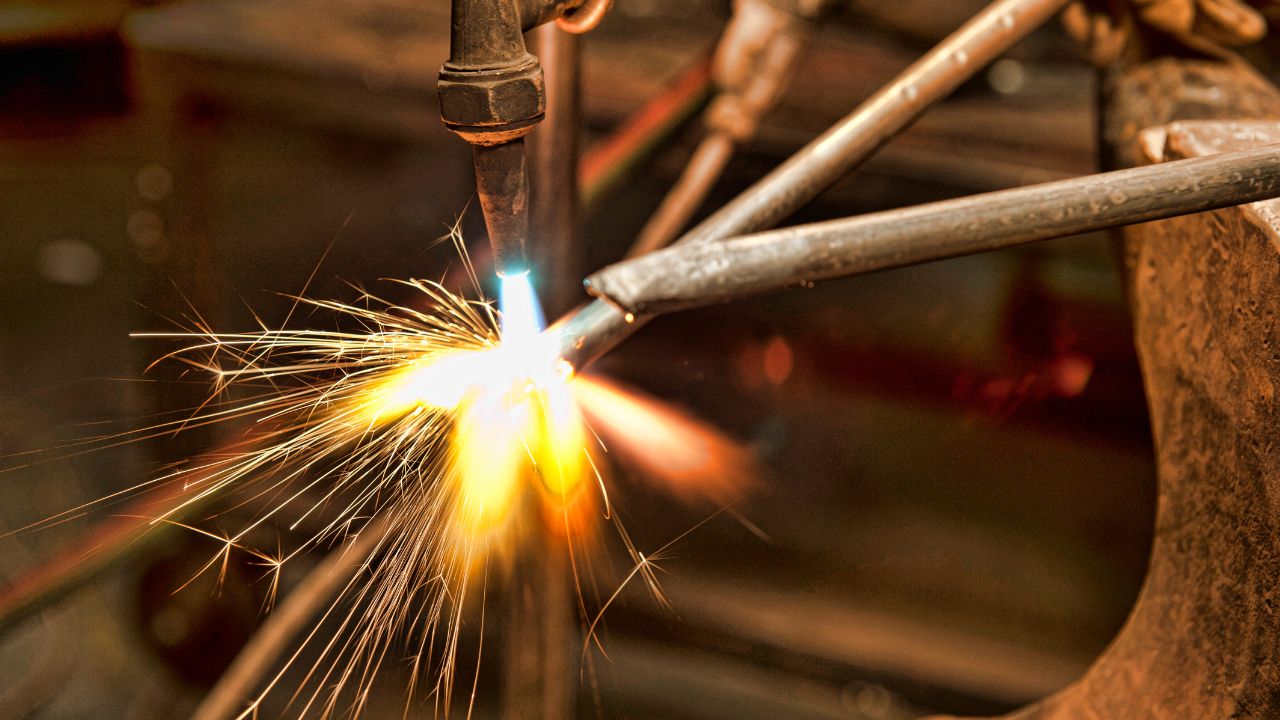
Automation in CNC fabrication transforms tube manufacturing through integrated systems that reduce costs and improve precision. Modern facilities deploy computer-controlled equipment handling multiple operations without manual intervention, delivering consistent quality across production runs. This evolution addresses rising labor expenses while meeting tighter tolerances demanded by aerospace, automotive, and industrial sectors.
Manufacturing automation creates measurable financial advantages through reduced cycle times, lower material waste, and minimized workplace injuries. The global CNC machine market, valued at USD 101.22-109.36 billion in 2025, reflects growing adoption. Smart machining technologies enable manufacturers to scale operations efficiently while maintaining cost-competitive pricing.
Key Takeaways
- Automated CNC tube fabrication combines cutting, bending, welding, and finishing operations in integrated production cells
- Labor cost reductions reach 35% while setup time decreases by 40-60% through CNC bending software implementation
- Fiber laser cutting delivers 25-30% efficiency compared to CO2 lasers at 10-15% efficiency
- ROI requirements typically demand minimum production volumes exceeding 500 units annually for automation justification
- The CNC machine market grows at 8.7-9.9% CAGR, reaching USD 195.59 billion by 2032
What Is Automated CNC Tube Fabrication?
Automated CNC tube fabrication integrates computer-controlled machinery to perform cutting, bending, welding, and finishing without continuous operator input. These systems execute programmed instructions with repeatability that manual operations cannot match. Production cells combine multiple processes into unified workflows, eliminating material handling between stations and reducing labor requirements.
Computer Numerical Control machines interpret digital designs and translate them into physical components. Achieving part consistency with CNC tube bending becomes possible through automated positioning systems, eliminating human variation. Modern implementations incorporate sensors and feedback mechanisms, maintaining quality standards throughout production runs.
Key Components of Automated CNC Tube Fabrication Systems
CNC machines execute precision manufacturing operations by following programmed toolpaths without manual guidance. The CNC controller interprets CAD designs and coordinates multi-axis movements, producing complex geometries with minimal operator intervention. Industrial automation relies on these systems to maintain consistent output across thousands of production cycles.
Fully automated systems combine tube bending, cutting, welding, and finishing within integrated production cells. Understanding automated precision bending reveals how robotic loading systems, automatic tool changers, and in-process inspection technologies work together seamlessly. These solutions reduce cycle times by 30-50% compared to traditional manufacturing.
Common Technologies Used in Tube Fabrication Automation
Fiber laser cutting operates at a 1.064 micrometer wavelength with 25-30% efficiency, making it preferred for metal tube fabrication. CO2 laser cutting uses a 10.6 micrometer wavelength with 10-15% efficiency, but remains suitable for non-metal materials. The laser cutting market expands from USD 6.85 billion in 2025 to a projected USD 18.43 billion by 2034.
Abrasive waterjet systems operate at 55,000-90,000 PSI using garnet or aluminum oxide abrasives for cutting thick materials. Pure waterjet technology requires no abrasive and operates at 40,000-60,000 PSI for softer materials. Kerf represents material removed during cutting, measuring 0.004-0.008 inches for laser systems compared to 0.040-0.060 inches for waterjet.
Who Are the Major Manufacturers and Suppliers?
TRUMPF TruLaser Series represents premium market positioning with systems starting at USD 200,000, featuring advanced automation capabilities. Bystronic ByStar Fiber delivers high-performance cutting with intuitive interfaces priced in the USD 150,000-plus range. Amada ENSIS Fiber provides reliable mid-market solutions ranging from USD 80,000 to USD 250,000 per system.
Kirin Laser systems offer value positioning between USD 40,000 and 150,000, making automation accessible to smaller manufacturers. Cincinnati Inc. CL-900 Series maintains American manufacturing heritage with domestic support networks and mid-range pricing from USD 100,000-300,000. These manufacturers serve the automation market, projected to reach USD 435.24 billion by 2030.
How Does Automation Reduce Costs in CNC Tube Fabrication?
Automation reduces manufacturing costs through direct labor savings, improved material utilization, and enhanced production efficiency. Cost-saving strategies eliminate repetitive manual tasks, driving up per-unit expenses while introducing quality inconsistencies. The cost reduction technology delivers measurable ROI through faster cycle times, reduced scrap rates, and lower workplace injury costs.
Equipment investments ranging from USD 150,000 to USD 2,000,000 typically achieve payback periods between 18 and 36 months based on production volume. Annual benefits total USD 105,000-400,000 through combined labor savings, material waste reduction, and productivity improvements. Manufacturers operating above 500 units annually justify automation investments through cumulative advantages compounding over equipment lifespans exceeding 10 years.
Labor Cost Savings and Productivity Improvements
Glenn Metalcraft documented 14 hours saved per production cycle with 35% labor cost reduction after implementing tube laser cutting automation. CNC bending software reduces setup time by 40-60%, allowing operators to program multiple jobs without physical tooling changes. The new UAW contract increases vehicle manufacturing costs by USD 500-900 per unit by 2028, accelerating automation adoption across automotive suppliers.
Workplace injuries cost USD 167 billion annually in the United States, with musculoskeletal disorders representing significant manufacturing burdens that automation prevents. Production efficiency improves 30-50% through automated systems, maintaining consistent quality without fatigue-related errors.
Material Waste Reduction and Quality Enhancements
Poor data costs companies USD 15 million annually on average, highlighting the importance of automated systems capturing real-time production information. Technology comparison for manufacturers reveals how precision cutting reduces scrap by 15-30% through optimized nesting algorithms and accurate toolpath execution. Material waste reduction contributes USD 10,000-50,000 in annual savings, depending on production volume and material costs.
Quality enhancements reduce rework, warranty claims, and customer returns, damaging profitability. Automated inspection systems detect defects immediately, preventing downstream quality issues. Consistent edge quality eliminates secondary finishing operations, adding time and expense to traditional workflows.
Energy Efficiency and Maintenance Impacts
Fiber laser efficiency reaches 25-30% compared to CO2 laser systems operating at 10-15% efficiency, reducing electricity consumption per cut. Energy savings contribute USD 5,000-20,000 annually through 10-15% reductions in power consumption. Smart machining technologies optimize cutting parameters dynamically, further reducing energy waste while maintaining precision requirements.
Maintenance costs stabilize at 2-5% of equipment value annually, with predictive systems preventing unexpected downtime. Automated lubrication systems, wear sensors, and diagnostic software extend component lifespans while reducing manual inspection requirements.
What Are the Main Technologies for Tube Fabrication, Cutting, and Bending?
Cutting technologies divide between thermal processes like laser systems and mechanical methods, such as waterjet equipment. Bending operations rely on CNC-controlled forming machines executing complex geometries through programmed die movements. The tube bending equipment market reaches USD 0.56 billion in 2026, growing to USD 0.85 billion by 2035 at 4.8% CAGR.
Software solutions bridge design and production by translating CAD models into machine instructions. CNC bending programming complexity varies based on part geometry, material properties, and equipment capabilities. Integrated automation systems combine these technologies into production cells, minimizing material handling and maximizing throughput.
Differences Between Laser Cutting and Waterjet Cutting
Laser cutting handles material thickness up to 1-2 inches optimally, while waterjet systems cut through 6-plus inches without heat distortion. Laser cutting speed ranges from 20-70 inches per minute compared to waterjet’s 1-20 inches per minute. Laser cutting kerf measures 0.004-0.008 inches, producing less material waste than waterjet’s 0.040-0.060 inch kerf width.
Laser cutting precision achieves ±0.001 inches tolerance while waterjet delivers ±0.003 inches. Equipment costs range from USD 20,000-500,000 for laser systems versus USD 60,000-700,000 for waterjet installations.
Role and Benefits of CNC Bending Software Solutions
Bend-Tech PRO software provides industry-leading CAD/CAM capabilities for tube bending with comprehensive simulation and tooling design features. Current Tech offers CAD importing software translating designs into machine-ready programs without manual re-entry. T-Project Transfluid software delivers comprehensive CNC programming with offline simulation, preventing costly machine crashes.
WireWare CNC wire forming software specializes in complex spring and wire component programming with automated collision detection. Software investments range from USD 5,000-15,000 for basic packages to USD 500-2,000 monthly for enterprise cloud solutions. These tools reduce programming time by 40-60% while minimizing material scrap through optimized nesting algorithms.
Automated Tube Bending Machines and Their Features
Hines Bending specializes in rotary draw bending with CNC control systems, executing complex multi-plane geometries. AMOB manufactures rotary draw bending machines with advanced CNC capabilities for automotive and aerospace applications. Pipe and tube bending machines reach USD 7.874 billion market value by 2035, growing at 4.88% CAGR.
Automatic bending machines grow from USD 2.31-2.54 billion in 2025 to USD 3.94 billion by 2036 as manufacturers adopt automation. CNC tube bending machines expand from USD 0.56 billion in 2026 to USD 0.85 billion in 2035 at 4.8% CAGR. These systems feature multi-axis control, automated tooling changes, and integrated quality inspection.
How Do Laser and Waterjet Cutting Compare for CNC Tube Fabrication?
Laser and waterjet cutting technologies serve different manufacturing requirements based on material properties, thickness demands, and precision specifications. Advantages of tube laser cutting include superior speed and precision for metals under 2 inches in thickness with minimal heat-affected zones. Waterjet systems excel with heat-sensitive materials, composites, and thick-section tubes where thermal distortion poses quality concerns.
Selection decisions depend on production volume, material specifications, budget constraints, and long-term operational costs. Laser cutting operating costs range from USD 8-15 per hour versus USD 15-30 per hour for waterjet systems.
Precision, Speed, and Material Compatibility Differences
Laser cutting precision achieves ±0.001 inches tolerance, delivering exceptional accuracy for tight dimensional control. Waterjet cutting precision reaches ±0.003 inches, sufficient for most industrial manufacturing while maintaining superior edge quality on composites. Laser systems maintain speed advantages across thin to medium materials, completing cuts 3-7 times faster than waterjet alternatives.
Material compatibility differs substantially, with waterjet cutting any material, including stone and ceramics, while laser systems optimize for metals.
Cost Structures and Maintenance Requirements
Laser cutting operating cost ranges from USD 8 to 15 per hour, including electricity, consumables, and maintenance. Waterjet cutting operating cost spans USD 15-30 per hour, with higher consumable expenses from abrasive materials and pump replacement. Laser equipment costs range from USD 20,000-500,000 versus waterjet systems at USD 60,000-700,000.
Maintenance requirements differ between technologies, with laser systems needing optical component cleaning versus waterjet pump and nozzle replacement. Annual maintenance costs stabilize at 2-5% of equipment value for both technologies when properly maintained.
Ideal Applications for Each Cutting Technology
Laser cutting excels in automotive manufacturing for exhaust components, chassis parts, and structural elements requiring rapid throughput. Electronics manufacturers deploy laser systems for enclosures, brackets, and heat sinks where intricate designs demand minimal kerf width.
Waterjet cutting serves aerospace component manufacturing, where aluminum, titanium, and composite materials require cold cutting without thermal distortion. Specialized manufacturers processing ceramics, glass, and heat-sensitive polymers rely on waterjet technology, where laser systems cannot operate effectively.
What Factors Influence Technology Selection in Tube Fabrication Automation?
Production volume requirements determine whether automation investments generate positive returns, with minimum thresholds exceeding 500 units annually. Product complexity influences technology selection as intricate geometries with tight tolerances justify advanced CNC equipment. Budget constraints establish feasible equipment ranges between entry-level systems at USD 150,000-300,000 and premium installations exceeding USD 2,000,000.
Regional adoption patterns show North America achieving 65-70% automation penetration among mid-to-large manufacturers compared to 55-60% in the Asia Pacific. Demographic factors influence decision-making as millennials represent 35% of decision-makers, Generation X accounts for 45%, and baby boomers comprise 20%.
Production Volume and Product Complexity Considerations
Automation requires a minimum production volume exceeding 500 units per year for ROI justification. High-volume operations above 5,000 units annually justify premium automation systems with integrated quality control. Product complexity affects equipment selection as simple geometries require basic CNC systems while aerospace components demand multi-axis machines.
When automation makes sense for your production depends on repeatability requirements, tolerance specifications, and cost-per-unit targets that manual operations cannot achieve consistently.
Budget and Technical Expertise Requirements
Entry-level CNC tube systems range from USD 150,000 to 300,000, providing basic automation for small manufacturers. Premium installations span USD 750,000-2,000,000 for fully integrated production cells with robotic material handling. Basic CNC software costs USD 5,000-15,000 for perpetual licenses versus enterprise cloud solutions at USD 500-2,000 monthly.
TRUMPF positioning targets premium markets starting above USD 200,000, while Kirin Laser offers value alternatives between USD 40,000-150,000. Urban investment levels reach USD 200,000-1,000,000 while rural installations typically range from USD 50,000-300,000.
Regional and Demographic Adoption Patterns
Millennials represent 35% of manufacturing decision-makers, favoring digital interfaces, cloud integration, and real-time analytics. Generation X comprises 45% of decision-makers, preferring proven technology with strong ROI documentation. Baby boomers account for 20% of decision-makers, emphasizing reliability, simplicity, and established brand reputations.
North America’s adoption rate reaches 65-70% among mid-to-large manufacturers, driven by labor cost pressures and skilled worker shortages. Asia Pacific adoption rate stands at 55-60%, propelled by expanding electric vehicle production and electronics manufacturing growth.
How Can Manufacturers Implement CNC Tube Fabrication Automation Effectively?
Manufacturers implement CNC tube fabrication automation through structured phases spanning 12-24 months from initial assessment through full production optimization. Phase 1 assessment during months 1-2 evaluates current processes, identifies automation opportunities, and establishes baseline metrics. Phase 2 planning in months 2-4 develops detailed business cases with ROI projections, vendor selection, and implementation timelines.
Phase 3 acquisition spans months 4-8, covering equipment procurement, facility modifications, installation, and commissioning with operator training. Phase 4 optimization during months 8-12 fine-tunes processes, adjusts programming parameters, and measures performance. Phase 5 scaling in year 2 and beyond expands automation to additional production lines.
Step-by-Step Implementation Roadmap
Phase 1 assessment in months 1-2 evaluates current production processes, calculating baseline cycle times, labor costs, and quality metrics. Phase 2 planning during months 2-4 develops detailed business cases with equipment specifications, vendor proposals, and financial projections. Phase 3 acquisition spans months 4-8, procuring and installing equipment while conducting operator training.
Phase 4 optimization in months 8-12 fine-tunes processes by adjusting cutting parameters, optimizing toolpaths, and implementing quality control protocols. Phase 5 scaling during year 2 and beyond expands automation to additional production lines while integrating sensors and data analytics. Engineering best practices and guidelines ensure successful implementations meeting design specifications consistently.
Integration of Software and Hardware Solutions
Software integration connects CAD systems to CNC controllers, enabling seamless design-to-production workflows, eliminating manual data entry. Hardware solutions include machine tools, material handling systems, inspection equipment, and safety enclosures functioning as coordinated production cells. Cloud-based platforms provide remote monitoring capabilities, allowing managers to track production metrics from any location.
Industry 4.0 integration adds sensors, data analytics, and predictive maintenance capabilities, optimizing performance while minimizing unplanned downtime. Machine learning algorithms analyze production data to recommend parameter adjustments, improving quality and reducing cycle times.
Training, Support, and Compliance Requirements
Operator training programs typically span 40-80 hours, covering machine operation, basic programming, troubleshooting, and safety protocols. Advanced programming training requires 80-160 hours for engineers developing complex toolpaths and optimizing cutting parameters. Vendor support agreements cost 5-10% of equipment value annually, providing preventive maintenance, emergency repairs, and software updates.
Compliance requirements include ISO 9001 quality management, ISO 13849-1 machinery safety, and OSHA workplace regulations. Industry-specific standards such as AS9100 for aerospace, ISO 13485 for medical devices, and IATF 16949 for automotive demand additional documentation.
What Are the Emerging Trends Shaping CNC Tube Fabrication Automation?
AI and Industry 4.0 integration transform manufacturing through predictive maintenance, real-time optimization, and data-driven decision-making. The industrial automation market is projected to reach USD 435.24 billion by 2030, growing at 10.5% CAGR. Global CNC machine market value stands at USD 101.22-109.36 billion in 2025, expanding at 8.7-9.9% CAGR through 2032.
Hybrid manufacturing combines additive and subtractive processes in a single system, enabling complex geometries while reducing material waste. Real-time quality control uses vision systems and sensors to detect defects immediately. Sustainability initiatives drive energy-efficient equipment adoption, waste reduction programs, and recycling systems, lowering environmental impact.
AI and Industry 4.0 Integration
Industrial automation market projections reach USD 435.24 billion by 2030 as manufacturers adopt connected systems with real-time data analytics. The global CNC machine market, valued at USD 101.22-109.36 billion in 2025, demonstrates substantial investment in precision manufacturing capabilities.
Machine learning algorithms optimize cutting parameters dynamically, adjusting speed, power, and toolpath based on real-time sensor feedback. Predictive maintenance systems analyze vibration patterns, temperature data, and performance metrics to schedule service before component failures cause costly downtime.
Hybrid Manufacturing and Real-Time Quality Control
Hybrid manufacturing systems combine laser metal deposition with CNC machining, creating complex geometries through additive processes, then finishing with subtractive operations. These integrated approaches reduce material waste by 30-50% compared to traditional machining. Real-time quality control employs vision systems measuring dimensions during production, automatically adjusting parameters to maintain tolerances.
AI-powered inspection detects surface defects, dimensional deviations, and material inconsistencies at production speeds exceeding human inspection capabilities by 10-20 times. Automated quality data feeds back to process controllers, creating closed-loop systems that continuously improve output while reducing scrap rates.
Sustainability and Energy Efficiency Innovations
Sustainability initiatives focus on reducing energy consumption, minimizing material waste, and implementing closed-loop recycling systems. Fiber laser systems achieve 25-30% wall-plug efficiency compared to older CO2 technology at 10-15%, cutting electricity costs substantially. Advanced nesting algorithms optimize material utilization, reducing scrap from 15% to under 5%.
Water recycling systems for waterjet cutting reduce consumption by 80-90%, addressing environmental concerns while lowering utility costs. Manufacturers increasingly adopt energy management systems monitoring consumption patterns, identify optimization opportunities, and reduce peak demand charges.
Strategic Insights on Automation in CNC Tube Fabrication for Cost Reduction
Cost reduction technology delivers measurable advantages through integrated automation combining cutting, bending, and finishing operations. Manufacturers achieving 35% labor cost reductions and 40-60% setup time improvements demonstrate substantial financial benefits, justifying equipment investments. Production efficiency gains of 30-50% transform competitive positioning by enabling lower per-unit costs while maintaining quality standards.
Technology selection requires careful analysis of production volumes, material specifications, precision requirements, and budget constraints. Entry-level systems starting at USD 150,000-300,000 provide accessible automation pathways for small manufacturers, while premium installations exceeding USD 750,000 serve high-volume operations.
CRD MFG, Inc. helps manufacturers navigate technology decisions through comprehensive design-for-manufacturability consultation and integrated fabrication services from prototyping through production. The company’s state-of-the-art 22,500 square foot facility in Placentia, California, combines advanced equipment with dedicated project management. Manufacturers seeking single-source solutions benefit from streamlined workflows, eliminating vendor coordination while maintaining aerospace-grade precision standards.
Ready to Cut Production Costs Without Cutting Corners?
Coordinating separate vendors for cutting, bending, and welding adds hidden costs, slows your timelines, and leaves you chasing updates across departments. CRD MFG, Inc. brings laser tube cutting, CNC tube bending, robotic welding, and full assembly under one roof in Placentia, California, so your project moves through a single facility with a dedicated project manager who answers directly to you.
You get accurate quotes, fewer spec surprises, and one point of contact from prototype through production volume. Contact us to request a quote and talk through your tube fabrication project.
