
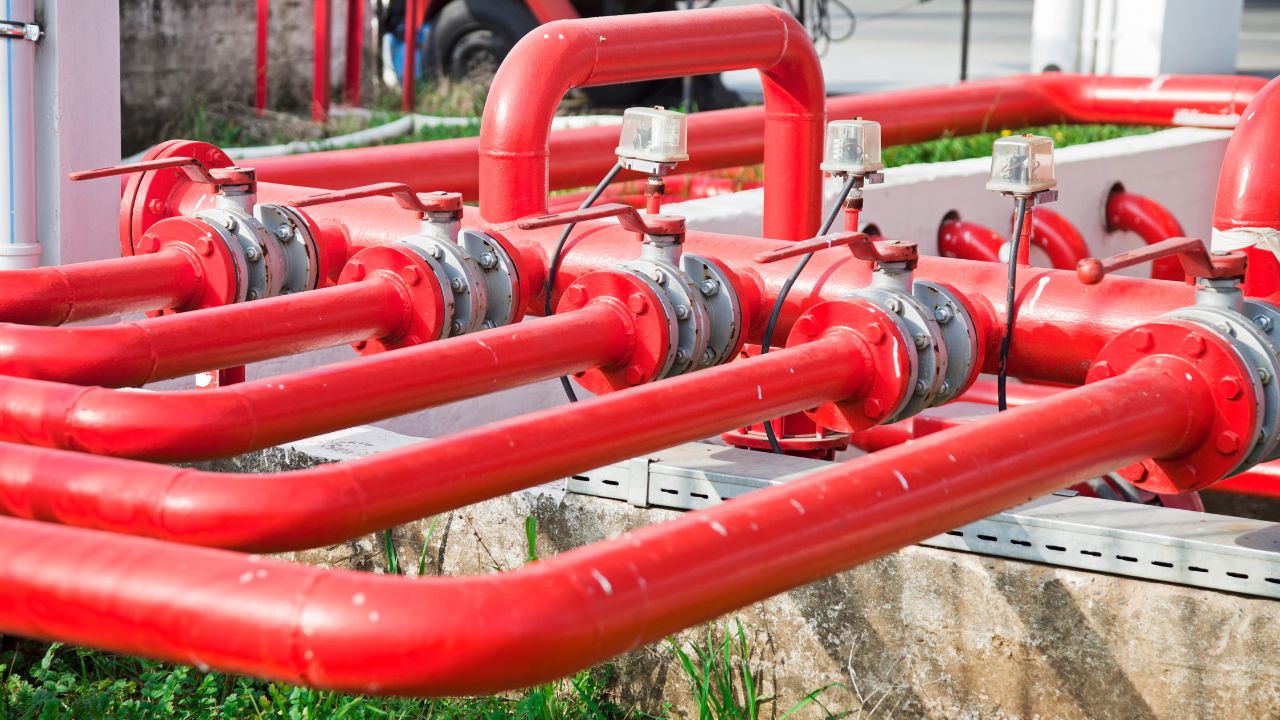
Fuel line tube assemblies are critical components that transport highly combustible fluids in automotive, marine, and aerospace applications. These assemblies must withstand extreme temperatures, pressure fluctuations, and chemical exposure while maintaining leak-proof integrity. Regulatory compliance and manufacturing precision determine the reliability and safety of fuel system design across all industries.
The global industrial tubes market reached USD 725.75 billion in 2025 and is projected to grow to USD 1,346.66 billion by 2034. Safety standards govern every aspect of production, from material selection to final inspection. Manufacturing requirements ensure fuel line tube assemblies perform reliably under demanding conditions while meeting strict environmental and transport safety regulations. The same fabrication discipline supports fuel handling in industrial plants, where interconnecting piping moves volatile fluids between process equipment.
Key Takeaways
- Fuel line tube assemblies must comply with SAE J30R9, SAE J1527, EPA, and DOT safety standards
- Manufacturing involves precision CNC bending, hydroforming, and orbital welding techniques
- Quality assurance requires ISO 5817 welding standards and comprehensive non-destructive testing protocols
- Material selection impacts durability, compatibility, and compliance with regulatory requirements
- Manufacturing method choice significantly affects performance, cost, lead times, and production scalability
What Are Fuel Line Tube Assemblies and Their Primary Functions?
Fuel line tube assemblies convey gasoline, diesel, ethanol blends, liquefied petroleum gas, and alternative fuels from storage tanks to engines. These systems prevent leakage, resist chemical degradation, and maintain structural integrity under varying pressure and temperature conditions. A vapor pressure product such as propane raises the bar further, demanding tubing rated for the pressures it generates at elevated temperatures. Proper assembly design ensures safe fuel delivery while meeting regulatory compliance standards.
Modern assemblies integrate precision-bent tubing with specialized fittings to create leak-proof connections. Advanced materials resist corrosion and maintain flexibility across temperature ranges from sub-zero to over 300°F. The assemblies accommodate vehicle vibration, thermal expansion, and mechanical stress without compromising performance.
Key Components and Materials Used
Fuel line tube assemblies consist of precision-formed tubing, connection fittings, protective coatings, and sealing elements. Material selection follows ASTM A269 standards for seamless and welded austenitic stainless steel tubing in high-performance applications. Steel, aluminum alloys, and specialized polymers each offer distinct advantages for specific operating environments and fuel compatibility requirements.
Stainless steel provides exceptional corrosion resistance and maintains structural integrity under high-pressure conditions in aerospace applications. Aluminum alloys reduce weight while offering adequate strength for automotive installations where mass reduction improves efficiency. Specialized polymer materials accommodate ethanol blends and biodiesel fuels that can degrade conventional rubber compounds. Carbon steel components often receive hot-dip galvanizing for corrosion protection in outdoor service, and material data sheets list tensile strength alongside yield values so engineers can match each grade to its load case.
Typical Applications in Automotive, Marine, and Aerospace
Automotive manufacturing accounts for 22% of the industrial tubes market share, with fuel line assemblies essential for passenger vehicles and commercial trucks. Marine applications require corrosion-resistant materials that withstand saltwater exposure and harsh conditions. Aerospace and defense sectors represent 15% of market share, demanding the highest quality standards and rigorous testing protocols.
Oil and gas operations consume 28% of the industrial tubes market share for fuel transfer and distribution. Construction equipment relies on durable fuel line assemblies that function reliably in demanding field conditions. Propane and liquefied petroleum gas distribution depends on tubing and a container assembly that links shutoff valves, container valves, and level gaging hardware into one safe unit. Heavy commercial vehicles add another use case, where air brake tubing and air brake hose route compressed air to braking systems under constant pressure. Each application sector requires specific material properties, regulatory compliance standards, and quality assurance methods.
Which Safety Standards Govern Fuel Line Tube Assemblies?
Safety standards establish minimum performance requirements for fuel line tube assemblies across all industrial applications. Pressure-containing components also fall under the ASME Code, the rules published by the American Society of Mechanical Engineers for vessels and piping that hold compressed or liquefied fuels. These specifications define material properties, temperature resistance, pressure tolerances, and testing protocols that manufacturers must satisfy. Compliance verification requires documentation, inspection records, and traceability systems throughout production.
Industry standards evolve to address new fuel types, environmental concerns, and safety improvements based on field performance data. Manufacturers must continuously update processes and materials to maintain compliance with current specifications. Non-compliance exposes manufacturers to legal liability, product recalls, and catastrophic failures.
SAE J30R9, J1527, and Related Specifications
SAE J30R9 and J30R10 establish performance requirements for gasoline and ethanol fuel hoses capable of withstanding temperatures up to 302°F. These standards specify permeation limits, burst pressure ratings, and aging resistance for automotive fuel delivery systems. SAE J1527 provides specifications for diesel and biodiesel fuel lines that must resist different chemical properties.
Additional SAE specifications cover specific applications, including low-permeation requirements for emissions control and fire resistance for racing applications. Material compatibility testing verifies that fuel line assemblies maintain integrity when exposed to specific fuel formulations. Performance validation requires accelerated aging tests simulating years of field exposure.
EPA and DOT Requirements for Environmental and Transport Safety
EPA regulations mandate vapor-tight hose construction and breakaway devices to prevent environmental contamination during fuel transfer. Annual inspections verify that installed fuel line assemblies maintain compliance with emissions standards and leak prevention. DOT specifications govern fuel transport systems in commercial vehicles, establishing safety protocols that prevent accidents.
Environmental regulations increasingly restrict fuel permeation rates to minimize hydrocarbon emissions throughout vehicle service life. Transport safety standards require flame-resistant materials and pressure relief mechanisms that prevent catastrophic failures during collision events. Pressurized fuel containers carry their own mandated safety relief devices. Safety relief valves, sized to a defined safety relief capacity, discharge excess pressure before a vessel can rupture, and each pressure relief valve carries a stamped pressure setting matched to the container rating. Automatic safety devices add a second protective layer that closes the system when sensors detect abnormal conditions. Compliance documentation must demonstrate adherence to environmental protection and occupational safety requirements through the entire product lifecycle.
Impact of Regulatory Compliance on Design and Materials
Strict regulatory compliance increases manufacturing costs through required testing, documentation, and quality control procedures. Design teams must balance performance requirements with material availability, production capabilities, and cost constraints while maintaining regulatory adherence. Alternative fuel compatibility drives material innovation as biodiesel, ethanol blends, and hydrogen fuel cells require specialized compounds. Installed fuel storage adds further requirements. A fixed liquid-level gage and other liquid level gaging devices let operators verify contents without opening the system, while cooling devices such as water spray protect tanks during nearby fires. An underground container shifts the corrosion and access challenges, and above-ground containers often sit on fire-resisting foundations that keep the vessel stable when surrounding structures burn.
Material selection significantly impacts compliance costs as exotic alloys and specialized polymers command premium pricing. Testing protocols add development time as prototype validation requires multiple iterations to satisfy all applicable standards. Manufacturers investing in the best welding methods for tube fabrication quality and durability guide achieve better long-term compliance outcomes through superior joint integrity.
How Are Fuel Line Tube Assemblies Manufactured?
Manufacturing fuel line tube assemblies requires precision equipment, skilled operators, and rigorous process controls to achieve specified tolerances and performance characteristics. Production begins with material selection for tube bending steel aluminum and specialty alloys based on application requirements. Advanced forming technologies create complex geometries while maintaining wall thickness uniformity and structural integrity.
Quality compliance depends on consistent process execution and comprehensive inspection protocols that verify dimensional accuracy. Modern facilities employ automated systems that reduce human error and improve repeatability across production runs. Real-time monitoring enables immediate process adjustments when measurements indicate deviation from established tolerances.
Precision Bending and Fitting Integration
CNC rotary draw bending utilizes computer-controlled rotary action with mandrel support to produce tight-radius bends without wrinkling or wall thinning. This method achieves repeatable accuracy within 0.005 inches for critical aerospace and automotive applications. Mandrel selection and die design determine bend quality by supporting the tube interior during forming.
Fitting integration requires precise tube end preparation, including cutting, deburring, and flaring operations that ensure leak-proof connections. Automated positioning systems align components for welding or mechanical joining with minimal operator intervention. The tube assembly fabrication process from design to final inspection coordinates multiple operations while maintaining quality control throughout production.
Material Selection Criteria for Durability and Compatibility
Material durability requirements balance strength, corrosion resistance, weight, and cost considerations specific to each application. Fuel compatibility testing verifies that selected materials resist chemical attack from specific fuel formulations over projected service lifetimes. Temperature cycling tests validate material performance across the full operational range.
Fatigue resistance becomes critical in applications involving vibration or thermal cycling that can initiate crack propagation over thousands of duty cycles. Compatibility with alternative fuels requires specialized materials, as ethanol blends and biodiesel have different solvency properties than conventional petroleum products. Weight reduction goals drive aluminum alloy adoption in aerospace applications, where mass savings justify higher material and fabrication costs.
Advances in Manufacturing Technologies and Sensor Integration
Hydroforming uses high-pressure hydraulic fluid to shape tubes into complex three-dimensional geometries in a single forming operation. This process achieves up to 30% weight reduction by optimizing material distribution and eliminating welded joints. Reduced part count simplifies assembly operations while improving structural integrity through continuous material paths.
Orbital welding provides automated arc rotation around stationary tubes, delivering consistent penetration and minimal heat-affected zones. Real-time sensor integration monitors process parameters, including temperature, pressure, and position, to detect deviations before defects occur. Designing custom tube assemblies, engineering best practices, and guidelines incorporates these advanced technologies for optimal performance and manufacturability.
What Are the Critical Quality Assurance and Inspection Methods?
Quality assurance protocols verify that fuel line tube assemblies meet all specified requirements through systematic inspection and testing. Quality assurance for bent tube assemblies inspection and testing methods establishes verification checkpoints throughout production to catch defects before final assembly. Documentation systems maintain traceability from raw material receipt through final product delivery.
Three-tiered inspection processes utilize visual examination, dimensional measurement, and non-destructive testing to comprehensively evaluate product conformance. Advanced measurement equipment, including coordinate measuring machines and laser scanning systems, provides micron-level accuracy. Statistical process control methods identify trends that predict potential quality issues before they result in non-conforming products.
Welding Standards Including ISO 5817 and ISO 6520-1
ISO 5817 defines quality levels for imperfections in fusion-welded joints across three acceptance criteria tiers. Level B represents the highest requirement for safety-critical aerospace and medical applications, where weld integrity is paramount. Level C establishes the industrial baseline for general manufacturing applications, balancing quality with production efficiency.
Level D accommodates moderate requirements for non-critical structural applications. ISO 6520-1 provides standardized classification codes for weld imperfections, enabling consistent defect reporting across inspection teams. Welding Procedure Specifications document exact parameters, including amperage, voltage, travel speed, and shielding gas composition to ensure repeatable results.
Visual and Non-Destructive Testing Techniques
Visual testing per ISO 17637 provides initial defect screening through systematic examination using proper lighting and magnification. Inspectors identify surface discontinuities, dimensional deviations, and assembly errors before products advance to subsequent manufacturing operations. Surface finish evaluation verifies that cleaning processes remove contaminants that could compromise coating adhesion or corrosion resistance.
Non-destructive testing methods, including radiography and ultrasonic inspection, detect internal defects invisible to surface examination. Radiographic testing reveals porosity, inclusions, and incomplete fusion through X-ray imaging of welded joints. Rigorous NDT inspection adds significant time and cost but prevents field failures that could result in safety incidents.
Documentation and Traceability in Quality Management
AS9100D quality management standards for aerospace manufacturing ensure rigorous documentation and traceability through all production and inspection activities. Material certifications verify chemical composition and mechanical properties traceable to specific heat numbers and mill test reports. Process control records document machine settings, operator qualifications, and environmental conditions during critical operations.
First article inspection reports demonstrate that new designs and processes meet all specifications before full production authorization. Deviation records track non-conformances and corrective actions implemented to prevent recurrence. Certificate of conformance documents accompany finished products, attesting that all requirements were satisfied and verifying full regulatory compliance.
How Do Manufacturing Methods Affect Performance and Cost?
Manufacturing method selection fundamentally impacts product performance, production efficiency, quality consistency, and total cost. CNC vs manual tube bending when automation makes sense for your production requires analysis of volume requirements, tolerance specifications, and long-term production plans. Process capability determines achievable quality levels and drives equipment investment decisions.
Volume economics favor automated processes for high-production scenarios while manual methods remain cost-effective for prototypes and limited runs. Complex geometries and custom bend radii increase costs and lead times regardless of production method. Initial tooling investments for automated processes require amortization over sufficient production volumes.
CNC Rotary Draw Bending Vs. Manual Press Bending
CNC rotary draw bending delivers superior repeatability and dimensional accuracy essential for high-volume production and tight-tolerance applications. Computer control eliminates operator variability and enables quick changeovers between part configurations using stored programs. Mandrel support prevents tube collapse during tight-radius bends that manual methods cannot reliably produce.
Manual press bending offers lower equipment costs for simple geometries and limited production volumes. Setup time advantages favor manual processes for prototype development and design validation before committing to automated production tooling. Quality consistency suffers in manual processes as operator technique variations affect repeatability.
Role of Hydroforming and Orbital Welding
Hydroforming eliminates welding operations by forming complex shapes from single tube blanks, reducing assembly time and improving structural integrity. Weight reduction through optimized material distribution provides significant performance advantages in aerospace and automotive applications. Process versatility accommodates design changes more easily than assemblies requiring custom welding fixtures.
Orbital welding provides unmatched consistency for critical joints where weld quality directly impacts safety and reliability. Automated arc rotation eliminates human factors that introduce variability in manual welding processes. Aerospace tubing fabrication special requirements and quality standards mandate orbital welding for many safety-critical applications requiring documented process control.
Cost Implications of Material Choice and Process Complexity
Labor rates for general fabrication average $50-$75 per hour, while specialized welding services command $100-$105 per hour. Skilled operator availability affects production scheduling and may drive automation investments to reduce labor dependency. Steel prices surged over 30% between 2024 and 2025, creating volatile material costs that impact fabrication quotes.
Exotic materials, including titanium and Inconel, demand premium pricing and specialized processing capabilities. Lead times for specialized fittings extend 52-80 weeks, requiring advance planning and inventory investment. Material certification requirements add costs through additional testing and documentation, but remain essential for aerospace and safety-critical applications.
What Are Current Market Trends and Consumer Priorities?
Market dynamics reflect shifting consumer preferences toward enhanced safety, environmental compliance, and compatibility with emerging fuel technologies. Safety compliance scores 98 out of 100 on importance indices, establishing risk mitigation as the paramount purchasing criterion. Quality assurance follows at 96, with durability at 94, demonstrating that performance characteristics outweigh cost considerations.
The global industrial tubes market exhibits a compound annual growth rate of 7.11%, driven by infrastructure expansion and increasing regulatory requirements. North America holds 30% of the global market share, while Europe accounts for 28%. Asia Pacific regions experience the fastest growth due to rapid industrialization and expanding commercial aviation sectors.
Shift Toward Alternative Fuel Compatibility
Alternative fuel adoption drives material innovation as hydrogen fuel cells, high-ethanol blends, and biodiesel require specialized compounds and construction methods. Compatibility testing validates material performance with new fuel formulations before widespread commercial deployment. Design flexibility becomes essential as fuel specifications continue evolving with environmental regulations.
Retrofit market opportunities emerge as existing vehicles and equipment require fuel system design upgrades to accommodate alternative fuel compatibility. Material suppliers develop new compounds specifically formulated for alternative fuel applications that traditional materials cannot reliably support. Fuel system design must anticipate future fuel composition changes to extend product service life.
Importance of Safety and Quality in Consumer Decision-Making
Cost efficiency scores 88 on importance indices, indicating that buyers prioritize performance and reliability over initial purchase price. Quality compliance and safety certification influence purchasing decisions more heavily than marginal price differences between competing suppliers. Warranty terms and service history provide confidence that manufacturers will support products throughout their operational lifecycle.
Reputation for consistent quality reduces perceived risk and justifies premium pricing for established manufacturers with documented track records. Third-party certifications validate manufacturing capabilities and provide independent verification of quality management system effectiveness. Customer testimonials and case studies demonstrate real-world performance under demanding conditions.
Regional Market Dynamics and Growth Drivers
North America maintains 30% global market share, supported by a strong industrial base and significant aerospace manufacturing infrastructure. Europe holds 28% market share, driven by stringent environmental regulations and advanced automotive engineering capabilities. Emerging markets experience rapid growth as infrastructure development and industrialization increase demand.
Asia Pacific markets demonstrate the highest growth rates due to expanding commercial aviation and increasing automotive production capacity. Regional regulatory variations require manufacturers to adapt products for local compliance while maintaining core performance characteristics. Supply chain considerations influence manufacturing location decisions as proximity to customers reduces lead times and transportation costs.
How Do Expert Recommendations Influence Design and Production?
Expert recommendations emphasize design for manufacturability principles that simplify production while maintaining required performance and regulatory compliance. Engineers should minimize complex geometries and custom bend radii unless application requirements specifically justify added manufacturing difficulty. Supply chain considerations require designing with multiple material sourcing options to mitigate lead time risks.
Standardized defect reporting using ISO 6520-1 imperfection codes prevents miscommunication between quality assurance and production teams. Clear acceptance criteria established during the design phase guide inspection decisions and prevent subjective interpretations. Process documentation enables continuous improvement through data analysis, identifying patterns that predict quality issues.
Design for Manufacturability and Supply Chain Considerations
3D CAD modeling and physical prototyping validate complex routing solutions before committing to production tooling investments. Virtual assembly simulation identifies interference issues and installation challenges during the design phase when modifications cost significantly less than post-production changes. Collaborative design reviews involving manufacturing engineers prevent specification of features that exceed production capabilities.
Lead times for specialized titanium fittings extend 52-80 weeks, requiring advance planning and maintaining safety stock for critical applications. Dual-source material specifications provide supply chain flexibility when primary suppliers experience capacity constraints. Vendor qualification processes verify that alternative suppliers maintain equivalent capabilities before production authorization.
Standardized Defect Reporting and Inspection Protocols
Consistent defect classification using standardized terminology enables accurate data collection and meaningful trend analysis. Visual reference standards provide objective comparison criteria that reduce subjective interpretation variations between individual inspectors. Statistical sampling plans optimize inspection resources while maintaining confidence that production lots meet quality requirements.
Automated inspection systems improve consistency and throughput for high-volume production where manual inspection becomes economically impractical. Machine vision technology detects dimensional deviations and surface defects with repeatability exceeding human capabilities. Hybrid inspection strategies combine automated screening with manual verification for critical features requiring human judgment.
Case Studies Highlighting Cost Reduction and Quality Enhancement
Precise Flight achieved a 15-20% reduction in fabrication costs for OEMs through optimized manufacturing processes and advanced measurement technologies. Implementation of three-tiered inspection protocols utilizing Hexagon OptivClassic and seven-axis Absolute Arm equipment improved quality consistency. Lifetime warranty offerings demonstrate manufacturer confidence in product reliability resulting from rigorous quality management systems.
Process optimization studies identify bottlenecks and inefficiencies that increase production costs without adding value. Lean manufacturing principles eliminate waste while maintaining quality standards through focused improvement initiatives. Investment in advanced equipment and operator training delivers long-term cost advantages through improved throughput and reduced scrap rates.
Integrating Safety Standards and Manufacturing Best Practices for Fuel Line Tube Assemblies
Fuel line tube assemblies require comprehensive integration of safety standards, manufacturing requirements, and quality compliance throughout the product lifecycle. Success depends on selecting appropriate materials, implementing proven manufacturing methods, and maintaining rigorous inspection protocols that verify conformance. Industry growth continues as regulatory requirements become more stringent and alternative fuel adoption drives material innovation.
CRD MFG, Inc. provides expert guidance for fuel system design projects requiring precision fabrication and regulatory compliance support. Our integrated approach combines advanced manufacturing technologies with rigorous quality assurance protocols to deliver reliable fuel line tube assemblies.
Build Your Fuel Line Tube Assemblies with CRD MFG, Inc.
Late spec changes, leaks discovered in the field, and chasing several vendors for one assembly all put your fuel system project at risk. CRD MFG, Inc. handles the full build under one roof: CNC tube bending, laser tube cutting, robotic welding, and complete tube assembly, backed by inspection records that document compliance. One dedicated project manager owns your job from quote to delivery, so you always know where your parts stand. Contact us to request a quote and get your next fuel line tube assembly project moving.
