
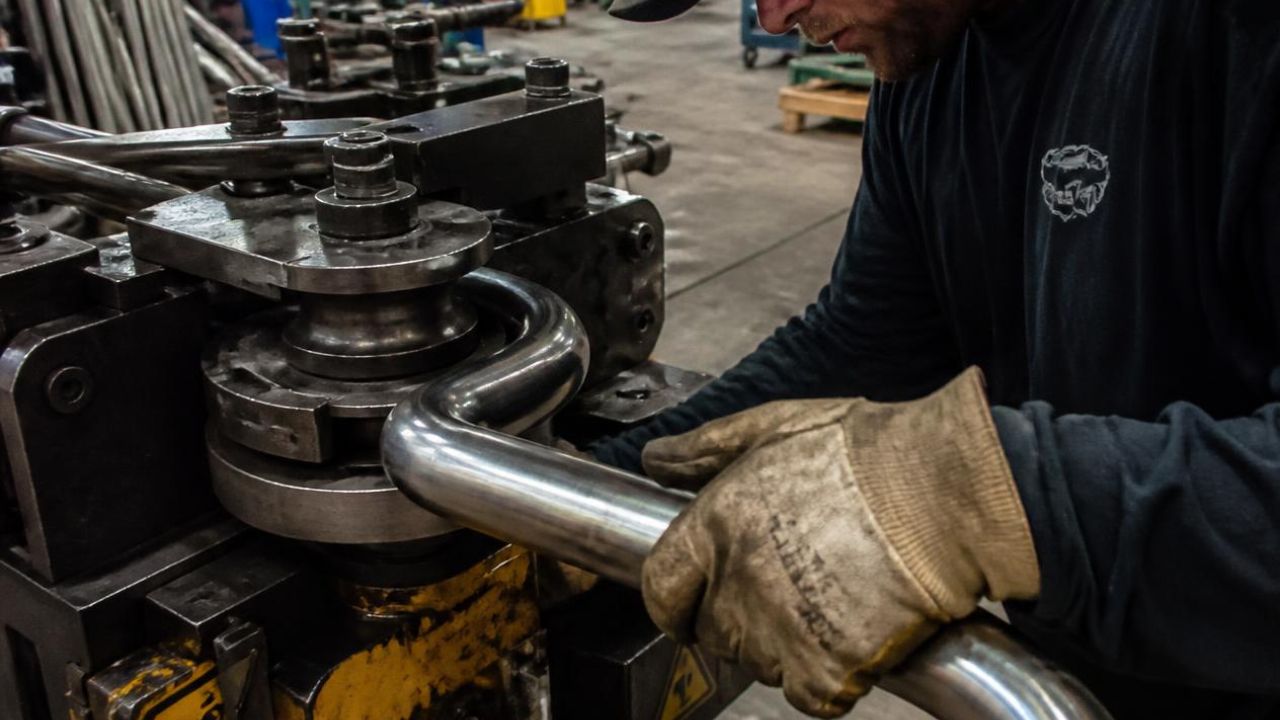
Precision tube fabrication pricing reflects a complex interaction of material selection, manufacturing methods, and quality requirements. Buyers evaluating tube fabrication pricing must consider how each variable affects the final cost. This guide breaks down the primary cost factors and explains how project management practices influence precision tube manufacturing expenses from initial design through final delivery.
Key Takeaways
- Material costs represent 45-55% of the total project budget, with labor accounting for 20-40%
- Seamless tubes cost more than welded alternatives but offer superior pressure capacity
- Project management across five stages controls costs and prevents scope creep
- Tight tolerances (±0.005″) require advanced equipment and drive up inspection expenses
- Aerospace assemblies run 5:1 to 10:1 higher than commercial equivalents due to certifications
What Is Precision Tube Fabrication and Why Is Pricing Complex?
Precision tube fabrication transforms raw tubing into finished assemblies through cutting, bending, welding, and inspection processes. The price breakdown varies significantly based on tube type, application requirements, and production volume.
Key Definitions and Industry Applications
Seamless tubes are formed by extruding or piercing a solid steel billet, then elongating without creating a weld seam. Welded tubes are produced by rolling a flat steel plate into a cylindrical shape and welding the seam. Electric Resistance Welded (ERW) tubes use high-frequency current to heat and fuse edges without requiring filler material. Mandrel-bent assemblies use an internal steel rod during bending to prevent collapse or deformation. Aerospace and defense applications demand the highest precision levels with extensive documentation and quality control in tube fabrication protocols.
Types of Tube Assemblies and Their Pricing Tiers
High-pressure fuel injection systems require seamless construction to withstand extreme pressures without failure. Fuel injection systems and hydraulic systems typically use ERW or mandrel-bent assemblies offering balanced performance and cost. Boilers and heat exchangers rely on seamless tubes for consistent heat transfer and pressure containment. Performance automotive applications demand precise bends and tight tolerances for optimal flow characteristics. Each application category carries different pricing tiers based on material grades, inspection requirements, and manufacturing complexity.
Overview of Market Demand and Growth Drivers
The Precision Steel Tube Market was valued at USD 6.04 billion in 2025 and is projected to reach USD 8.96 billion by 2034. This represents a Compound Annual Growth Rate of 4.48% driven by automotive expansion and aerospace demand. The Aerospace Tube Assemblies Market demonstrates stronger momentum at USD 2.0 billion in 2024, projected to reach USD 3.39 billion by 2032. Asia-Pacific exhibits the fastest regional growth at 6.5% CAGR, closely followed by North America at 6.3%.
What Factors Influence Buyer Decisions in Tube Fabrication?
Procurement decisions in tube assembly services follow a clear hierarchy of priority factors. Quality and reliability rank highest because failure in pressure-rated systems can be catastrophic.
Quality, Lead Time, and Price Competitiveness
Quality and reliability score 95 out of 100 in importance for buyers evaluating fabrication partners. Price competitiveness follows at 88 out of 100, essential for high-volume automotive and commercial production. Lead time ranks at 82 out of 100, crucial for manufacturers operating just-in-time inventory systems. Standard manufacturing cycles run 3-5 weeks, but expedited delivery requires overtime labor or rush surcharges that increase costs.
Importance of Certifications and Technical Support
Technical support scores 76 out of 100 in buyer priorities, particularly valued during design and prototyping phases. Certifications rank at 71 out of 100, serving as a mandatory baseline for regulated industries. AS9100 certification is required for aerospace applications, ensuring suppliers meet stringent quality management standards. Buyers in the medical device and nuclear sectors require additional certifications that influence tube assembly fabrication capabilities and pricing structures.
Customer Demographics and Their Impact on Pricing
Medium enterprises with 51-500 employees represent 35% of the customer base for precision tube manufacturing. Large corporations with 500-5,000 employees account for 32% of customers, often requiring volume pricing structures. North America leads geographic distribution with 35% of the customer base, followed by Europe at 28%. Urban metro areas account for 42% of customers, reflecting the concentration of advanced manufacturing hubs. Organization size and location affect pricing through volume discounts, shipping costs, and service accessibility.
How Does Project Management Affect Precision Tube Fabrication Costs?
Effective project management directly controls manufacturing expenses by preventing scope creep and resource waste. Structured coordination across multiple disciplines reduces handoffs and shortens timelines compared to fragmented multi-vendor approaches.
The Five Key Stages of Manufacturing Project Management
Initiation defines project scope, identifies stakeholders, conducts feasibility analysis, and establishes success criteria. Planning develops a detailed roadmap, creates a Work Breakdown Structure, allocates resources, implements capacity planning, and develops risk mitigation strategies. Execution transforms plans into production, manages resources, implements daily standups, and tracks real-time progress. Monitoring compares actual progress to plan, tracks KPIs, measures quality metrics, and enables early course correction. Closure formalizes project completion, secures stakeholder acceptance, documents lessons learned, and archives project documentation.
Critical Success Factors for Cost Control
Critical Success Factors are essential elements that determine manufacturing project management success. Scope creep occurs when goals are not clear and realistic, adding unplanned expenses. Downstream delays and cost overruns result from inadequate upfront planning during the initiation phase. Continuous execution interruptions happen without adequate budget allocation for materials, tooling, and labor. Project manager leadership drives team alignment, while top management support ensures resource availability throughout production.
Benefits of Integrated Manufacturing Coordination
Integrated tube manufacturing consolidates operations, including cutting, forming, welding, and inspection under single-source accountability. This approach reduces handoffs between vendors, shortening typical cycles to 3-5 weeks. Single-source coordination tightens process control, improving welding methods for tube fabrication consistency and reducing defect rates. Robotic welding achieves defect rates under 2%, critical for pressure-rated assemblies requiring leak-free performance.
What Are the Main Types of Tube Fabrication and Their Cost Differences?
Manufacturing method selection fundamentally determines both capability and cost structure for tube assemblies. Each fabrication type offers distinct advantages that align with specific application requirements.
Seamless Versus Welded Tube Assemblies
Seamless tubes have uniform strength throughout, while welded tubes are slightly weaker at the weld seam. Seamless tubes provide superior pressure capacity compared to welded tubes, requiring extensive weld inspection. Seamless tubes cost more and have longer lead times versus welded tubes, offering lower cost and faster production. Seamless tubes are limited to a 24-inch maximum size, while welded tubes are available up to 100+ inches. Welded tubes may have minor internal beads that affect flow characteristics in sensitive applications.
Electric Resistance Welded (ERW) Tubes and Mandrel-Bent Assemblies
ERW tubes use high-frequency current to heat and fuse edges, providing cost-effective solutions for low-to-medium pressure applications. Mandrel-bent assemblies insert an internal steel rod during bending to prevent collapse and maintain cross-sectional integrity. Seamless tubes typically remain available up to 24 inches for standard industrial applications. Mandrel bending produces smooth, precise bends without wrinkling, essential for tight radius bends in aerospace assemblies. Material selection for tube bending affects both the bending process and final assembly cost.
Impact of Manufacturing Methods on Pricing
Typical manufacturing cycles run 3-5 weeks, depending on complexity, material availability, and inspection requirements. Prototype and low-volume runs have higher per-piece costs because setup and programming time spreads across fewer parts. High volumes enable efficiency gains and tooling amortization, reducing unit costs significantly. Custom alloys require minimum order quantities that increase material costs for smaller production runs. The custom tube fabrication timeline varies based on these factors and affects overall project budgets.
Which Cost Drivers Most Affect Precision Tube Fabrication Pricing?
Seven primary cost factors determine final pricing in precision tube manufacturing. Understanding each driver helps buyers optimize specifications without sacrificing performance requirements.
Material Selection and Availability
Material costs represent 45-55% of the total project budget for most tube fabrication projects. Custom alloys require minimum order quantities that add expense for smaller production runs. Thicker wall tubes add material cost and require larger equipment setups for bending and forming. Standard sizes cost less than custom dimensions requiring specialized mill runs or additional machining.
Part Complexity and Tooling Requirements
Tooling and equipment costs represent 5-10% of the budget, varying significantly based on complexity. Tight tolerances of ±0.005 inches require advanced machinery compared to standard tolerances of ±0.030 inches. A single 90-degree bend costs substantially less than multi-plane assemblies with compound bends. Non-standard radii necessitate custom-machined tooling that represents a large portion of quotes for low-volume jobs. Wrinkling during tight radius bends without specialized mandrels creates scrap and increases manufacturing expenses.
Inspection Standards, Quantity, and Lead Time
Overhead and facilities costs represent 5-10% of the budget, often absorbed into labor and equipment rates. Failure is catastrophic in high-pressure and aerospace applications, requiring extensive inspection protocols and documentation. Expedited delivery requires overtime labor or rush surcharges that can increase costs by 20-50%. Production quantity directly affects per-unit pricing, with high volumes enabling reduced tube fabrication lead times through efficient scheduling and tooling amortization.
How Do Secondary Operations and Equipment Influence Fabrication Costs?
Post-bending operations add significant labor and equipment time to final manufacturing expenses. Equipment capability determines what complexity levels fabricators can economically produce.
Welding, Finishing, and Testing Expenses
Labor costs represent 20-40% of the total project budget, depending on assembly complexity and skill requirements. Robotic welding achieves defect rates under 2%, justifying higher equipment investment for volume production. Defects from insufficient quality control processes create rework costs and schedule delays. Secondary operations, including threading, flaring, coating, and pressure testing, add incremental costs based on specification requirements.
Pricing Tiers for CNC Tube Bending Equipment
Entry-level equipment costs $10,000-$18,000 with basic automation and limited features for simple bending applications. Mid-range equipment costs $20,000-$32,000, offering higher capacity and advanced features for commercial production. High-capacity equipment costs $35,000-$49,000, handling complex bends with multiple axes and mandrel support. Custom and industrial equipment exceeds $100,000, providing full automation and advanced control for high-precision aerospace assemblies.
Effects of Scheduling and Rush Orders
Tight radii require slower bending speeds to prevent material deformation and maintain dimensional accuracy. Rush orders necessitate schedule adjustments that may require overtime labor or expedited material procurement. Equipment utilization affects pricing, with shops running at capacity charging premiums for urgent projects. Standard lead times of 3-5 weeks allow optimal scheduling, while expedited timelines increase costs proportionally.
What Does the Competitive Landscape Reveal About Pricing Strategies?
The tube assembly market is divided between global conglomerates serving high-volume sectors and specialized fabricators offering custom solutions. Capital investment and certification requirements create significant market differentiation.
Leaders in Aerospace and Automotive Segments
PFW Aerospace in Germany specializes in high-precision assemblies for commercial and military aircraft. Leggett & Platt and Parker Hannifin in the United States serve diverse industrial and aerospace markets. Eaton Corporation, based in Ireland, provides hydraulic and fuel system components globally. Aerospace assemblies run 5:1 to 10:1 higher cost than commercial equivalents due to specialized alloys and rigorous inspection protocols.
Role of Specialized Regional Fabricators
Precision Tube Bending serves the mid-market with custom solutions for automotive and industrial applications. Bassett Industries brings over 75 years of experience to precision metal fabrication projects. Zeman Manufacturing, Morton Industries, and FormFab LLC offer specialized capabilities in complex geometries and tight tolerances. These fabricators compete on technical expertise, flexibility, and customer service rather than volume pricing.
Certification and Capital Investment as Market Differentiators
AS9100 certification requirements for aerospace applications create barriers to entry, requiring substantial quality system investment. Advanced equipment, including five-axis laser cutting and robotic welding systems, requires capital investment exceeding $500,000. Certifications and capabilities directly influence pricing structures, with certified shops commanding premiums for regulated industries. Technical support capabilities during design phases add value that justifies higher pricing for complex projects.
Integrating Cost Factors and Project Management for Effective Precision Tube Fabrication Pricing
Successful tube fabrication procurement balances quality requirements against budget constraints through informed decision-making. Material selection, manufacturing method, tolerances, and volume all interact to determine final costs. Project management discipline across the initiation, planning, execution, monitoring, and closure stages prevents scope creep and controls expenses. Buyers should evaluate fabricators based on quality scores, certifications, technical support capabilities, and lead time performance rather than price alone.
Understanding pipe bending service costs helps buyers optimize specifications without sacrificing performance in critical applications. Integrated manufacturing coordination reduces handoffs, shortens timelines, and improves quality consistency compared to fragmented multi-vendor approaches. At CRD MFG, Inc., we provide full-service precision tube fabrication with dedicated project managers serving as single points of contact throughout production.
Get a Tube Fabrication Quote Without the Guesswork
Unclear quotes and scattered vendors make it hard to know what you are actually paying for, and surprise costs surface long after a project starts. CRD MFG, Inc. delivers full-service precision tube fabrication under one roof, combining CNC tube bending, laser tube cutting, robotic welding, and in-house inspection so you see the real cost drivers up front. A dedicated project manager stays with your project from quote through delivery, giving you one point of contact and clear answers on material, tolerance, and lead-time decisions before work begins. Contact us to request a detailed quote and talk through your specifications.
