
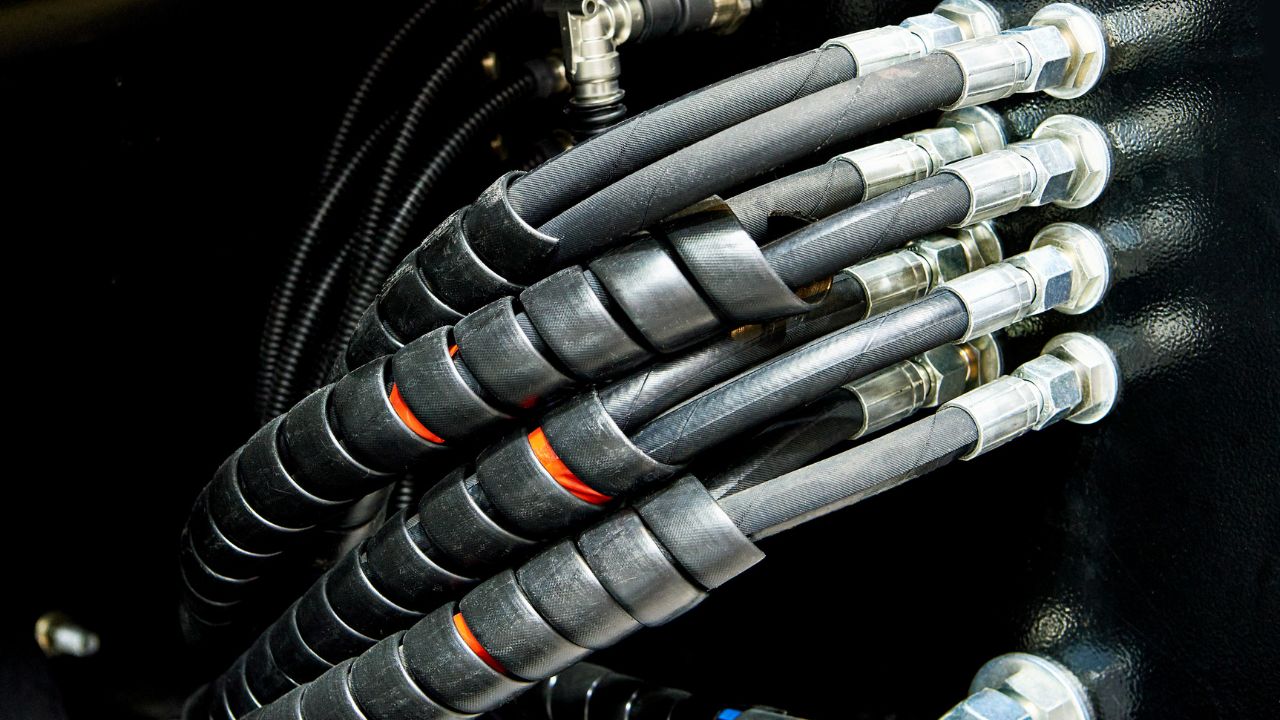
Custom tube assemblies for industrial use span sectors from aerospace hydraulics to pharmaceutical sanitary systems, each demanding specific material grades and fabrication precision. Requirements for custom tube assemblies include pressure ratings, bend tolerances, weld quality standards, and industry-specific certifications governing safe operation.
Applications for custom tube assemblies range from 3,000–5,000 psi aerospace hydraulic lines to Clean-In-Place (CIP) food processing systems requiring crevice-free welds. Understanding these sector-specific parameters ensures reliable performance and regulatory compliance across industrial tube fabrication projects.
Key Takeaways
- Custom tube assemblies serve critical functions across aerospace, automotive, oil & gas, pharmaceutical, and food processing sectors with distinct material and design requirements
- Center-Line Radius (CLR) and wall thickness specifications vary significantly by industry, from motorsports roll cages to pharmaceutical sanitary systems
- Pressure ratings range from 150 psi in sanitary applications to 8,000 psi in aerospace hydraulic systems, governed by standards like ISO 12151-5 and ASME B31.3
- Orbital and robotic welding methods achieve defect rates 3–5× lower than manual welding while maintaining consistent quality for high-volume production
- Sanitary tube fabrication requires surface finishes of ≤0.8 μm Ra per 3-A standards and ≤0.38 μm Ra for ASME BPE pharmaceutical applications
What Are Custom Tube Assemblies and Their Industrial Roles?
Custom tube assemblies transport fluids and gases under controlled pressure and temperature in engineered systems. Industrial tube assemblies across sectors must meet specifications for bend geometry, connection types, material composition, and surface finish.
What Defines a Custom Tube Assembly?
A custom tube assembly consists of bent, cut, and welded tubing configured to precise dimensional tolerances for specific installations. Center-Line Radius (CLR) serves as the primary multi-bend design parameter, with standard 3×D ratios allowing smoother flow and tighter radii of 2.5×D–1.5×D requiring specialized mandrel tooling. DOM (Drawn Over Mandrel) tube manufacturing produces seamless tubing with uniform wall thickness and superior strength for high-pressure applications. SAE 4130 chromoly steel alloy identifies normalized chromium-molybdenum steel used in aerospace and motorsports for a high strength-to-weight ratio.
AN (Army-Navy) 37° flare fittings appear in aerospace tube assemblies as the standard mechanical connection, creating leak-tight joints through metal-to-metal seal compression at the 37-degree cone interface. The AN standard originated during World War II and remains specified for military and commercial aircraft hydraulic systems operating across −65°F to +275°F at sustained pressures of 3,000–5,000 psi.
Which Industries Require Custom Tube Assemblies?
The global tube assembly market reached $12.5 billion in 2024 and projects growth to $20.23 billion by 2033 at 6.2% CAGR. Oil and gas commands a 25.5% share of the tubes and fittings market in 2025, with a 9.0% CAGR forecast through 2035. Medical stainless-steel tubing represents $5.04 billion in 2025, expanding to $11.54 billion by 2033 at 8.5% CAGR. Food and beverage applications account for approximately 12% of stainless tube demand across 95,000+ processing facilities globally.
Aerospace, automotive, pharmaceutical, and energy sectors drive precision requirements that shape manufacturing complex tube assemblies and fabrication capabilities. Pharmaceutical manufacturers specify Water For Injection (WFI) grade systems with electropolished surface finishes. Clean-In-Place (CIP) system design mandates crevice-free weld interiors to prevent bacterial colonization. Renewable energy solar installations use roll-formed torque tubes exceeding 200 feet supporting photovoltaic arrays.
What Functions Do Tube Assemblies Serve in Industrial Systems?
Aerospace hydraulic systems transmit force through pressurized fluid at 3,000–5,000 psi across temperature extremes of −65°F to +275°F, distributing hydraulic power to flight controls, landing gear, and braking systems. Titanium Grades 5 and 9 and Inconel 625/718 alloys withstand these conditions while minimizing weight. Critical aerospace applications require full material traceability and welder qualification under AWS D17.1 Class A standards.
Clean-In-Place (CIP) systems circulate cleaning solutions through food processing equipment without disassembly. Pharmaceutical Water For Injection (WFI) systems deliver pyrogen-free water meeting USP specifications for injectable drug manufacturing. Sanitary tube assemblies in both applications require internal surface roughness ≤0.8 μm Ra per 3-A Standard 33-03. ASME BPE SF4 designation specifies 0.38 μm Ra maximum for pharmaceutical product-contact surfaces through electropolishing.
How Do Industry Requirements Shape Tube Assembly Design?
Industry-specific operating conditions dictate connection types, fabrication methods, and testing protocols. Pressure ratings, temperature ranges, and fluid compatibility determine material selection and joint design. Assembly design must accommodate installation constraints, thermal expansion, and vibration while maintaining leak-tight performance.
What Connection and Joint Types Are Common Across Industries?
AN (Army-Navy) 37° flare fittings dominate aerospace tube assemblies due to proven reliability under vibration and pressure cycling, creating a metal-to-metal seal without thread sealants or gaskets. HVAC and refrigeration systems use CNC bending with coiled tubing and brazed joints for compact heat exchanger configurations. Brazing produces permanent joints by flowing filler metal above 840°F to join copper, brass, and aluminum tubing.
Industrial hydraulic systems commonly specify compression or flare fittings for field assembly and maintenance. A 4:1 design factor applies to fitting leak testing, meaning 3,000 psi rated fittings must withstand 12,000 psi test pressure. Oil and gas small-bore systems follow IOGP S-716 specification for tube fitting selection and installation.
Which Fabrication Methods Align with Specific Industry Needs?
Aerospace manufacturers use CNC and mandrel bending combined with orbital TIG welding to achieve tight tolerances and repeatable quality on exotic alloys. Automotive production relies on rotary draw and mandrel bending with robotic MIG and spot welding for high-volume body-in-white assembly. Industrial fabricators apply CNC bending, laser cutting, and robotic welding for custom hydraulic manifolds and processing equipment.
Solar torque tubes employ roll-formed construction with seam welding for long-span structural members supporting photovoltaic arrays. Roll forming continuously shapes flat steel strip through successive forming stations, creating round, octagonal, or square profiles. Seam welding joins formed edges using high-frequency resistance or laser welding at speeds exceeding 100 feet per minute.
What Governing Standards Apply to Different Sectors?
AS9100 aerospace quality management standard extends ISO 9001 with requirements for configuration control, traceability, and risk management. AWS D17.1 aerospace fusion welding standard defines Class A, B, and C criticality tiers with corresponding inspection and qualification requirements. IATF 16949 automotive quality standard incorporates ISO 9001 with automotive-specific production part approval process (PPAP) and statistical process control (SPC) mandates. AWS D8.8M specification for automotive weld quality governs arc welding of steel automotive structures.
ASME B31.3 process piping design standard establishes pressure-temperature ratings and allowable stress values for industrial fluid systems, calculating minimum wall thickness based on internal pressure, material allowable stress, and design factors. Quality control in tube fabrication requires documented compliance with applicable codes and third-party verification for critical applications. Oil and gas operators increasingly mandate IOGP S-716 compliance for small-bore tubing systems to reduce leak-related incidents.
What Are Typical Material Specifications for Industrial Tube Assemblies?
Material specifications balance mechanical properties, corrosion resistance, fabrication characteristics, and cost across operating environments. Diameter and wall thickness selections respond to pressure ratings, flow requirements, and structural loads. Alloy composition determines temperature capability, chemical compatibility, and weldability.
How Do Diameter and Wall Thickness Vary by Industry?
Typical commercial sanitary tube sizing ranges from 1-inch to 4-inch OD for food and pharmaceutical processing. Motorsports roll cages specify 1.625-inch to 1.75-inch OD tubing meeting SCCA, NASA, and SFI safety minimums. Wall thickness for motorsports roll cages ranges from 0.083 inch to 0.120 inch, with chromoly allowing thinner walls than mild steel for equivalent strength. Solar torque tube thickness spans 0.03 inch to 0.5 inch across patent claims.
Schedule 5S, 10S, and 40S wall thickness designations define sanitary tubing dimensions per ASTM A270 austenitic stainless standards. Schedule 5S represents the thinnest wall, typically rated for 150 psi in food processing. Schedule 40S provides heavier walls exceeding 1,000 psi capacity for pharmaceutical and industrial service.
Which Alloys Are Preferred for Specific Applications?
Aerospace manufacturers specify Titanium Grades 5 and 9, Inconel 625/718, stainless 321/347, and aluminum 6061-T6 for strength-to-weight ratios and temperature capability. Automotive and motorsports applications use SAE 4130 chromoly, DOM mild steel, Docol R8, T45, and Titanium Grade 2/5. Industrial hydraulic systems rely on carbon steel meeting ASTM A179 or EN 10305-1 specifications. Stainless 304, 304L, 316, 316L, 317, 317L, 321, and 347 grades serve industrial applications requiring corrosion resistance.
Oil and gas installations specify 6Mo grades including UNS N08637 (6HN) and UNS S31254 (alloy 254) for sour-service and high-chloride environments. Sanitary and food-grade fabricators use 304L and 316L stainless as industry standard for hygienic processing. Material selection for tube bending must account for forming characteristics, weld heat-affected zone properties, and long-term corrosion resistance.
Table: Common Alloys by Industry
| Industry | Common Alloys | Key Property |
| Aerospace | Titanium Gr. 5/9, Inconel 625/718, 321/347 stainless, 6061-T6 aluminum | Strength-to-weight, temperature capability |
| Automotive / Motorsports | SAE 4130 chromoly, DOM mild steel, Docol R8, T45, Titanium Gr. 2/5 | High strength at reduced wall thickness |
| Industrial Hydraulic | Carbon steel (ASTM A179, EN 10305-1) | Cost-effective pressure containment |
| Oil & Gas | 6Mo grades: UNS N08637 (6HN), UNS S31254 (254) | Sour-service and high-chloride resistance |
| Food & Pharmaceutical | 304, 304L, 316L stainless | Corrosion resistance, hygienic processing |
How Do Material Choices Affect Performance and Compliance?
Chromoly tubing achieves equivalent strength to mild steel at reduced wall thickness due to alloying additions. 316L stainless provides superior corrosion resistance compared to 304 through molybdenum content stabilizing the passive oxide layer. 304 and 304L grades cost less than 316L, making them economical for non-corrosive food and dairy processing. Acidic foods with pH below 4.5 can corrode 304L stainless at weld heat-affected zones.
UNS N08637 (6HN) represents a 6Mo grade alloy with nickel, chromium, and molybdenum optimized for severe corrosive service, resisting pitting and crevice corrosion in chloride-bearing fluids at elevated temperatures. Material test reports (MTRs) provide lot-specific chemistry and mechanical property verification.
How Do Engineering and Design Requirements Influence Tube Assembly Quality?
Engineering specifications establish tolerances, bend parameters, and pressure ratings defining acceptable performance boundaries. Tight dimensional control ensures proper fit-up during installation and maintains alignment with mating components.
What Are Common Tolerance and Bend Radius Standards?
Aerospace tube assemblies commonly specify tolerances of ±0.005 inch or tighter on bend angle and length dimensions. CNC tube bending shops cite ±0.030 inch tolerance between bend centers as standard practice. A 3×D CLR represents standard bend radius, while 2.5×D to 1.5×D ratios require specialized mandrel tooling and process control.
Ovality tolerance in motorsports bending targets ≤8% to maintain structural integrity and compliance with safety regulations. Designing custom tube assemblies requires balancing tight tolerances with manufacturing capability and cost. Laser cutting and CNC machining enable ±0.5 mm positional and ±0.1 mm dimensional tolerance on tube end preparation.
How Are Pressure Ratings Established and Maintained?
ISO 12151-5 M3K class specifies 3,250 psi working pressure and 13,000 psi burst pressure for medium-duty hydraulic applications. ISO 12151-5 M8K class requires 8,000 psi working pressure and 32,000 psi burst pressure for heavy-duty service. Swagelok uses an S-value of 20,000 psi for ASTM A269 stainless tubing at ambient temperature per ASME B31.3 calculations. Thin-wall sanitary tube typically carries ratings for 150 psi working pressure suitable for gravity-fed and low-pressure processing.
Schedule 40S sanitary tube withstands working pressures exceeding 1,000 psi for pharmaceutical and high-pressure industrial applications. Pressure testing at 1.5× working pressure verifies assembly integrity before commissioning. Fitting selection must match or exceed tube pressure ratings to prevent joint failure.
Table: Pressure Rating Standards by Application
| Standard / Class | Working Pressure | Burst Pressure | Typical Application |
| ISO 12151-5 M3K | 3,250 psi | 13,000 psi | Medium-duty hydraulic systems |
| ISO 12151-5 M8K | 8,000 psi | 32,000 psi | Heavy-duty hydraulic systems |
| ASTM A269 (Swagelok S-value) | 20,000 psi (S-value) | Per ASME B31.3 calc. | Ambient-temperature stainless tubing |
| Schedule 5S sanitary | 150 psi | N/A | Gravity-fed food processing |
| Schedule 40S sanitary | 1,000+ psi | N/A | Pharmaceutical / high-pressure industrial |
What Procurement Challenges Affect Custom Tube Assembly Delivery?
Less than 25% of rapid quotes buyers receive prove accurate upon detailed review. Fifty-two percent of engineers report learning about production delays or errors too late to implement corrective measures. Inefficient communication ranks as the top-cited procurement pain point when sourcing custom tube assemblies from multiple vendors.
Managing multiple suppliers creates coordination overhead and accountability gaps when defects emerge. Single-source manufacturing partners eliminate vendor fragmentation by consolidating processes under unified project management. Dedicated project managers provide consistent communication and technical support from initial quoting through final delivery.
Which Welding Methods Suit Industrial Tube Fabrication Applications?
Welding method selection impacts joint quality, production speed, equipment investment, and operator skill requirements. Manual TIG welding provides flexibility for complex joints but requires years of training. Robotic and orbital welding systems deliver consistent quality at higher equipment cost with shorter operator training periods.
How Do Manual, Robotic, and Orbital Welding Compare?
Manual TIG welding requires years to develop proficiency on exotic alloys and complex joint geometries. Robotic and automated TIG welding systems require only days of training for operators. Robotic welding cell equipment costs range from $150,000 to $500,000 per cell depending on axis count and tooling complexity. Orbital welding equipment costs span $8,400 to $50,000+ based on power supply capability and control sophistication.
Skilled manual welders average only 25–35% arc-on time per shift due to setup, repositioning, and fatigue. Precision tube welding methods deliver consistent heat input and travel speed, reducing weld-to-weld variation. Robotic systems achieve cycle-time reductions of approximately 28% compared to manual welding on high-volume assemblies. Orbital welding produces smooth interior weld beads critical for sanitary and high-purity applications without manual backside grinding.
What Welding Standards Govern Quality in Key Industries?
AWS D17.1 aerospace fusion welding standard defines Class A as the highest criticality tier for flight-critical structures, requiring documented welding procedure specifications (WPS), welder performance qualifications, preheat and interpass temperature control, and nondestructive testing. Nadcap AC7110 aerospace welding accreditation verifies conformance to industry consensus requirements through a third-party audit. AWS D18.1/D18.1M sanitary tube welding standards address hygienic weld design and inspection for food and pharmaceutical applications.
ASME Section IX provides welder and procedure qualification rules applicable across pressure vessel and piping codes. AWS D8.8M automotive weld quality specification establishes acceptance criteria for arc-welded steel automotive structures. Food-grade tube fabrication requires welds passing visual inspection, liquid penetrant testing, and borescope examination.
How Does Welding Precision Impact Defect Rates and Costs?
Robotic systems achieve defect rates 3–5× lower than equivalent manual welding for high-volume, consistent-geometry production. Orbital welding reduced radiographic rejection from 6% with manual TIG to less than 0.5% on titanium aerospace fuel-tube assemblies. First-pass ultrasonic testing (UT) weld acceptance improved from 82% to 97–98.5% after conversion to robotic welding in structural fabrication.
Average weld-defect repair costs range from 1–3% of project cost in oil, gas, and power fabrication but spike to 25% and occasionally 50% at restricted-access joints requiring specialized tooling. Eighty to ninety percent of in-service structural steel failures trace to fatigue fracture originating at weld defects identifiable during inspection. Shop-floor rejection ratios of 1–2% represent tolerable benchmarks for commercial fabrication quality control.
What Are the Sanitary Standards and Materials for Food-Grade Tube Fabrication?
Sanitary tube fabrication serves food, beverage, dairy, pharmaceutical, and biotechnology industries requiring hygienic process equipment. Surface finish specifications prevent bacterial colonization and enable effective cleaning validation.
Which Hygienic Design Standards Guide Food-Grade Tubing?
3-A Sanitary Standard 33-03 (Metal Tubing, 2016) establishes baseline requirements for dairy and beverage processing equipment, requiring product-contact surfaces maintain ≤0.8 μm (32 μin) Ra roughness measured perpendicular to polishing direction. ASME BPE Bioprocessing Equipment standard provides the pharmaceutical and biotechnology industry gold standard for hygienic design. ASME BPE SF4 designation specifies 0.38 μm (15 μin) Ra maximum surface finish achieved through electropolishing.
FDA 21 CFR Part 177 Subpart B governs indirect food additives including polymers in gaskets and seals mating with stainless tube. FDA regulations accept austenitic stainless steel as Generally Recognized As Safe (GRAS) for food contact when paired with hygienic design verification. 3-A and ASME BPE standards provide the design verification framework FDA inspectors reference during facility audits.
How Do 304 and 316L Stainless Steels Differ in Application?
Stainless 304 and 304L serve general dairy, food, and beverage applications as the economical industry-standard choice. 316L stainless is preferred for acidic or corrosive product contact due to molybdenum addition enhancing passive layer stability. Tomato-based, citrus, and salty products specify 316L to prevent pitting and crevice corrosion.
Acidic foods with pH below 4.5 can corrode 304L stainless at weld heat-affected zones where chromium carbide precipitation occurs. 316L maintains superior corrosion resistance without post-weld heat treatment due to molybdenum’s stabilizing effect. Material test reports verify alloy chemistry meets ASTM A270 specifications.
What Welding Practices Ensure Sanitary Compliance?
Orbital welding with 100% borescope inspection represents the industry standard for sanitary stainless systems requiring validated cleanliness. Borescope inspection verifies smooth, crevice-free weld interiors free from oxidation, undercut, or incomplete fusion. Orbital welding with argon purge prevents interior oxidation, creating roughness and contamination sites.
ASME BPE SF4 electropolished finish applies to pharmaceutical product-contact surfaces, Water For Injection (WFI) systems, bioreactors, and media-handling equipment. Electropolishing removes surface material through controlled anodic dissolution, producing a smooth, passive chromium-oxide layer. Post-weld electropolishing restores weld heat-affected zones to uniform corrosion resistance and surface finish.
Why Is Precision Important in Custom Tube Assemblies for Industrial Use?
Precision fabrication directly impacts system reliability, maintenance costs, and safety across industrial applications. Dimensional accuracy ensures proper fit-up during installation, reducing field rework and leak potential.
Eighty to ninety percent of in-service structural steel failures result from fatigue fractures originating at manufacturing defects identifiable during inspection before equipment enters service. Shop-floor rejection ratios benchmarked at 1–2% represent tolerable quality levels. Rejection thresholds reaching 5% trigger escalation from spot ultrasonic testing to 100% UT sampling to identify systematic process deviations.
Tight tolerance control and validated welding processes minimize costly field corrections during system commissioning. Pressure testing verifies assembly integrity before installation, preventing catastrophic failures in populated facilities. Material traceability and documented compliance provide liability protection and facilitate root-cause analysis when service issues emerge.
Partner With CRD MFG, Inc. for Your Custom Tube Assembly Project
CRD MFG, Inc. designs, bends, welds, and inspects custom tube assemblies for aerospace, automotive, oil and gas, pharmaceutical, and food-grade applications from a single Placentia, California facility. A dedicated project manager oversees your assembly from initial specification through final inspection, so pressure ratings, material certifications, and weld quality standards stay documented and on schedule without departmental handoffs.
Call CRD MFG, Inc. at (714) 871-3300 or request a quote to discuss your tube assembly specifications, materials, and industry certification requirements.
Frequently Asked Questions
Q1. What is the difference between a tube assembly and a pipe assembly?
A tube assembly is measured by outside diameter and wall thickness and typically formed through CNC bending or laser cutting to tight dimensional tolerances. A pipe assembly is measured by nominal pipe size and schedule, and it generally serves lower-precision fluid transfer where wall thickness matters more than exact OD control. Tube assemblies suit applications needing tight bend radii, cosmetic finish, and weight control, such as aerospace hydraulics or motorsports roll cages. Pipe assemblies remain common in general industrial and utility piping where dimensional standards are less restrictive.
Q2. How much do custom tube assemblies cost?
Cost depends on material grade, wall thickness, bend complexity, welding method, and required certifications. Exotic alloys such as titanium or Inconel and tight tolerances under ±0.005 inch raise material and process costs compared to carbon steel or standard chromoly. Orbital and robotic welding add equipment cost per part but reduce defect-related rework versus manual welding. Requesting a quote with finalized drawings, material specifications, and quantity is the most reliable way to get an accurate price.
Q3. What is the typical lead time for custom tube assemblies?
Lead time varies with material availability, bend and weld complexity, and whether tooling already exists for the specified geometry. Prototype and one-off assemblies generally move faster than production runs requiring fixture development and first-article inspection. Sourcing specialty alloys such as 6Mo grades or aerospace titanium can extend material lead time beyond fabrication time. Working with a manufacturer that sources materials in-house and maintains an on-site tooling shop helps compress the schedule.
Q4. What certifications should a custom tube assembly manufacturer hold?
Aerospace programs typically require AS9100 quality management certification alongside AWS D17.1 welder qualification for flight-critical structures. Automotive production commonly specifies IATF 16949 with PPAP and SPC documentation. Food and pharmaceutical fabricators should meet FDA 21 CFR Part 177 material requirements and follow 3-A or ASME BPE hygienic design standards. CRD MFG, Inc. holds ISO 9001, AS9100, IATF 16949, and NADCAP certifications, covering these requirements across industries.
Q5. How are custom tube assemblies inspected before shipment?
Dimensional verification typically uses coordinate measuring equipment such as a Faro Arm with blue light scanning to confirm bend angles, CLR, and overall geometry against the part drawing. Weld quality inspection includes visual examination, liquid penetrant testing, or borescope review for sanitary and aerospace joints, depending on the governing standard. Pressure testing at 1.5 times the working pressure confirms assembly integrity before parts leave the facility. Material test reports accompany shipments requiring full traceability, such as aerospace and medical device programs.
